Stay tuned to our new posts and updates!
Click to join us on WhatsApp


What begins as a film song soon becomes a profound philosophical dialogue. In Sansar se bhaage phirte ho, Sahir Ludhianvi gives Chitralekha a voice that questions accepted beliefs and celebrates life with remarkable courage. Shirish Waghmode revisits this timeless classic through its lyrics, music and enduring relevance.
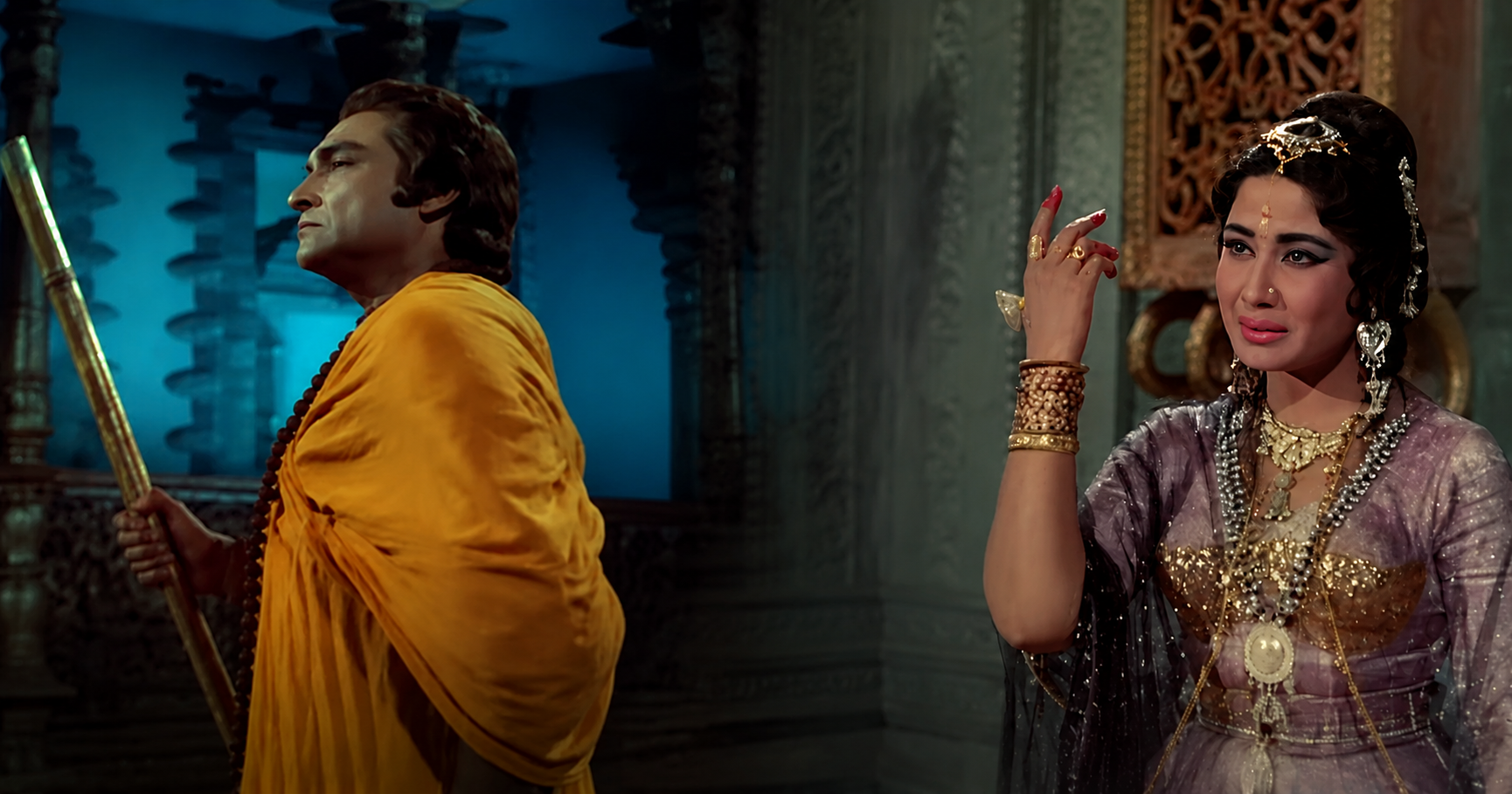
The rebellious, the irreverent, the questioning mind has often been the fountainhead of the most critical and vital changes in the long road to the evolution of mankind. Time and again ordinary people have risen to voice their anger against accepted beliefs and established conventions. Though many of them were reviled initially, they stayed the course and became instruments of change.
Hindi film poetry too has often celebrated this spirit of questioning. One such unforgettable expression comes from Sahir Ludhianvi in the mid-sixties film Chitralekha. The protagonist of Chitralekha is a doubting diva. And when Chitralekha rises in rebellion, she asks a probing question. Her sarcastic challenge begins to expose the hollowness of moral posturing—
Sansar se bhaage phirte ho
Bhagwan ko tum kya paoge
Is lok ko bhi apna na sake
Us lok mein bhi pachhtaoge
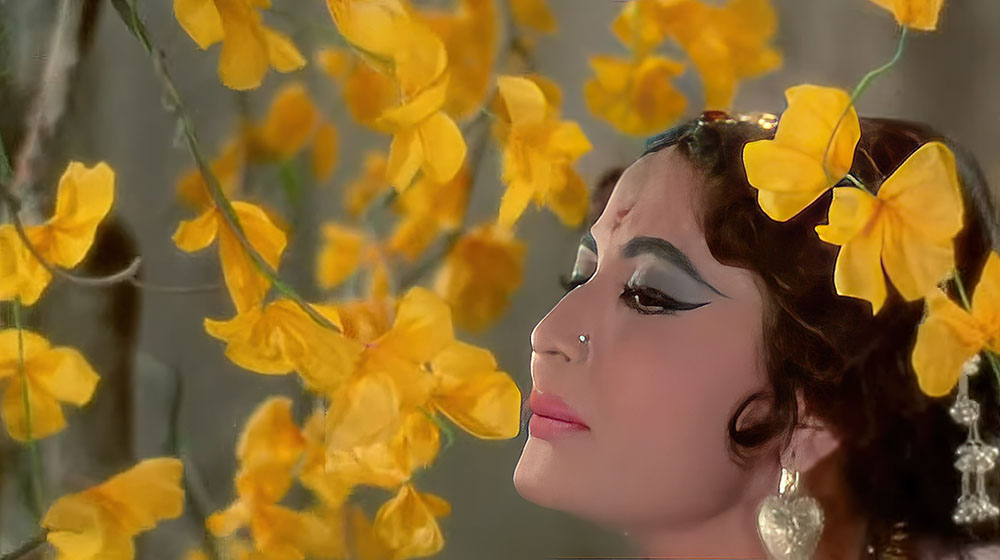
The renowned poet T. S. Eliot wrote, “Most of the evil in the world is done by people with good intentions.”
The world of Chitralekha reflects this irony beautifully. The institution of ganikas or nautch girls conveniently serves to satisfy the desires of society, yet the very same society refuses them dignity or acceptance.
The system remains unquestioned until Chitralekha rises in protest and decides to call out this hypocrisy. Her questions are real, albeit uncomfortable—
Yeh paap hai kya, yeh punya hai kya
Reeton par dharm ki muharein hain
Har yug mein badalte dharmon ko
Kaise adarsh banaoge
She asks, who has framed this code of conduct, these edicts? Who decides what is virtue and what is sin? Customs change with every age, and so do interpretations of morality. Can such shifting standards really become eternal ideals?
It is a remarkably bold question, and Sahir gives these lines to a woman whom society itself refuses to respect. That irony makes the lyric even more powerful.
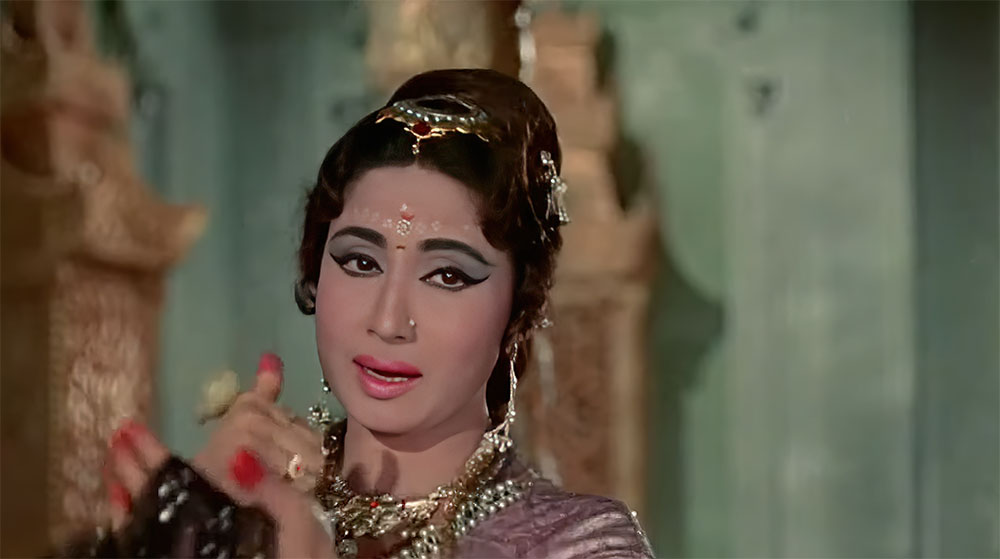
She then tells him an eternal but unpalatable truth of her own—
Yeh bhog bhi ek tapasya hai,
tum tyaag ke maare kya jaano
Apaman rachaita ka hoga,
rachna ko agar thukraoge
For Chitralekha, life is not something to be denied but something to be understood and experienced. Those who glorify renunciation, she argues, may never fully appreciate the significance of creation itself. To reject life completely is, in a sense, to reject the very gift that has been bestowed upon us.
Without becoming argumentative, Sahir quietly reminds us that creation cannot be separated from the creator. Chitralekha’s words celebrate life in all its complexity rather than seeing it merely through the narrow prism of denial. It is this philosophical balance that gives the song its enduring appeal.
But Chitralekha refuses to look beyond the present in search of fulfillment. Her faith lies in life as it is lived here and now. And Sahir expresses that conviction with extraordinary clarity—
Hum kehte hain yeh jug apna hai
Tum kehte ho jhootha sapna hai
Hum janma bita kar jayenge
Tum janma ganwa kar jaoge

Sahir Ludhianvi
It is Sahir’s fearless questioning of accepted certainties. His words strip away pretence and challenge hollow moral posturing. The song does not offer easy answers; instead, it asks us to reflect on what it really means to live a meaningful life.
As is said, “When the silent tongues have spoken, a lot of idols lie broken.”
A lot of things about Chitralekha, the movie, lie dumped in the vaults of memory. The star cast, well past their prime, didn’t help either. But the music shines like a lighthouse atop a sunken rock. Shiploads of music lovers pass safely, their spirits revived after savouring the strains of Roshan’s unforgettable compositions.
And then there is the sublime poetry of Sahir saab. He writes in chaste Hindi to suit the period and background of the film. And he writes some eternal truths – Koi na sang mare and Sansar se bhaage phirte ho have both earned a permanent place in the Hall of Fame of Hindi film lyrics. Written yesterday, they continue to speak to us today.
Even today, Chitralekha’s voice rings with remarkable clarity. More than six decades later, Sahir’s questions continue to provoke, unsettle and inspire. That is the mark of great poetry, it refuses to remain imprisoned in its own time.
Sansaar se bhaage phirte ho
Bhagwan ko tum kya paoge
Perhaps the greatest triumph of this song is that it asks profound questions without insisting on easy answers. Roshan’s haunting composition and Lata Mangeshkar’s luminous rendition elevate Sahir’s words into an experience that lingers long after the song has ended.

Lata Mangeshkar with music composer Roshan (Pic: Google Image Search)
Sansar se bhaage phirte ho (Chitralekha, 1964) Roshan / Sahir Ludhianvi / Lata Mangeshkar
(The views expressed are personal)
More Must Read in LnC
Sahir Ludhianvi: The People’s Poet
Main Dekhoon To Sahi Duniya Tumhe Kaise Sataati Hai
Those Songs Were Made from the Soul: A Musical Cab Ride
Ghazal, and Its Place in Music


Got a poem, story, musing or painting you would like to share with the world? Send your creative writings and expressions to editor@learningandcreativity.com
Learning and Creativity publishes articles, stories, poems, reviews, and other literary works, artworks, photographs and other publishable material contributed by writers, artists and photographers as a friendly gesture. The opinions shared by the writers, artists and photographers are their personal opinion and does not reflect the opinion of Learning and Creativity- emagazine. Images used in the posts (not including those from Learning and Creativity's own photo archives) have been procured from the contributors themselves, public forums, social networking sites, publicity releases, free photo sites such as Pixabay, Pexels, Morguefile, etc and Wikimedia Creative Commons. Please inform us if any of the images used here are copyrighted, we will pull those images down.









“Har yug mein badalte dharmon ko. Kaise adarsh banaoge.” This, in a nutshell, is the
conundrum that everyone has faced who has stopped to think about ‘Dharm’ and its interpretation down the centuries. It is the cornerstone of this song. And Shri Waghmode
has, in his very well written comments, successfully brought out the crux of the confusion that we encounter. One analysing a Sahir rachna has a real challenge on hand to interpret his depth. An excellent song to pick for commenting on Sahir’s poetry and an
equally accomplished task in having done it very well.
Sahir’s poetry always strikes a delicate balance between existential critique and tender humanity, and your post elucidated that duality so effortlessly. This song brings out the difference
between worldly renunciation and embracing the same world with selfless abandon, which you mark finely in your words.
It’s rare to come across writing about classic song lyrics that feels both academically rich and emotionally resonant. Reading your perspective was a genuine treat Shirish Ji.
Best regards,
Vandana Nigam
Shirish Waghmode has dealt with this song in depth. The charismatic combination of Sahir Ludhianvi, Roshan, and Lata Mangeshkar embeds this song in your being. The meaning makes you think hard and you realize that Sahir has struck at the very root of our society. In so many years, how much has our society changed? Truly haunting questions!
Your Erudite comments always work as a Tonic ,(without expiry date ), for me .
Thanks ever so much!
Rajan ji , Your erudite comments serve as an energizing tonic , for me every time !
Thanks ever so much!
The lyrics of this song have been profoundly explained. This indeed is a song worthy of discussion and contemplation. The world is full of people who are doing things that please themselves and then calling those things wrong.
The questions raised in this song are agnostic of situation and timeless, and that is why this song will live on forever.
Thank you for this article 🙏
Thanks Anupama. Your taste is as sweet as your rendition. Your charm for music lovers is abiding! Wish you a Melodious musical career.
Fly, Robin, Fly,
The sky and clouds are yours to conquer!