Stay tuned to our new posts and updates! Click to join us on WhatsApp  & Telegram
  Channel
& Telegram Channel & Telegram Channel 




For nearly three decades following India’s independence, Uttam Kumar was the surest bet behind the success of Bengali films as commercial products, his fame even spreading across the eastern border. Someswar Bhowmik explores the actor behind the legend.

Uttam Kumar
Uttam Kumar (1926–1980) is not just a significant name, but a legend, in the history of Bengali cinema. For nearly three decades following India’s independence, this actor was synonymous with the mainstream of Bengali cinema. During this period, Uttam Kumar was the surest bet behind the success of Bengali films as commercial products, his fame even spreading across the eastern border. While he was primarily known as an actor (appearing in 211 films), his contribution to the film world was manifold. He was also a producer (of 7 films), a director (of 3 films), a music director (for 2 films), and even a playback singer—albeit in just one film. The aura of Uttam Kumar has far outlived his temporal existence—he lived as Uttam Kumar for 29 years, and the legend continues 46 years after his demise.
There are 75 films starring him that celebrated or surpassed a silver jubilee during their initial theatrical runs. This means these films were released simultaneously in three Kolkata cinema halls and based on combined figures, ran continuously for twenty-five weeks or longer. Additionally, ten films starring Uttam Kumar celebrated or surpassed a golden jubilee during their initial release. In other words, these films ran continuously for 50 weeks or more across three cinema halls simultaneously. Three other films starring him celebrated or surpassed a ‘Platinum Jubilee’ during their initial release—meaning they ran for 75 consecutive weeks or longer across three halls. Furthermore, the majority of his films have been re-released on multiple occasions. Beyond theatrical release, his films have been disseminated through digital technologies (CDs, DVDs) and are now available on streaming platforms also. What lies behind, and beneath, such remarkable sustainability?
In the post-independence era, when the Bengali film industry was struggling with a devastated production landscape and a fragmented market—prompting skilled artists and technicians to head towards Bombay due to the dismal local situation—Uttam Kumar emerged on the scene. It was around him that Bengali cinema found a new lease on life during that profound crisis. Commercial success is the key indicator of this resurgence. The actor who was dubbed ‘Flop Master General’ at the start of his career came to be known as a ‘one-man industry’ after his passing.

Uttam-Suchitra in Saare Chuattor
Such an approach to assessment has given rise to exaggeration. There was no shortage of powerful contemporary actors and actresses. Moreover, a host of talented directors and technicians worked on mainstream films during that era. In all fairness, it must be acknowledged that their contribution to the popularity and commercial success of films starring Uttam Kumar was significant. It is entirely reasonable to ask: could Arun Kumar Chatterjee have become Uttam Kumar without the presence of figures such as Suchitra Sen, Pahari Sanyal, Chhabi Biswas, Bibhuti Laha, and Ajay Kar? There can be no doubt about the greatness of Uttam Kumar. Yet, an unhistorical aura of divinity has been needlessly ascribed to him. The phenomenon that is Uttam Kumar possesses a skilfully-crafted structure—a coherent text with a distinct beginning, middle, and end, much like the majority of the films in which he starred.
The genesis of this text lies in the transformation of Bengal’s social fabric following independence. Prior to independence, the primary patrons of Bengali cinema were the established urban middle class; despite their urban residence, they maintained close ties with rural life and agriculture. At the dawn of independence, the social influence of this class dwindled drastically, coming down to virtually nothing. They were succeeded by a new middle class, eager to keep pace with the changing times. At the forefront of this group were city dwellers who had made a quick buck through various forms of brokerage and illicit trade during the war. Joining them were internal migrants who had moved to the city from the rural areas of Bengal—educated individuals from affluent village families, seeking stable livelihoods and permanent homes in the urban landscape.
This urban middle-class contingent was further swelled by the influx of people uprooted from East Bengal, a significant portion of whom also belonged to the middle class. In other words, at the dawn of independence, a new configuration of upwardly mobile middle class suddenly assumed the role of the primary driving force within Bengali society. They were drawn to scientific inquiry and rationalism and were deeply committed to evolving modern institutions and social values. They were also acutely conscious of their cultural identity and fiercely eager to preserve their distinctiveness.
It is upon these very characteristics that the cultural project of post-independence Bengali cinema began to take shape—a narrative chronicling the social, economic, cultural, and psychological ascent of the middle class. This cultural project of Bengali cinema is an integral part of the new nationalist agenda that emerged after independence, driven by the avowed goal of forging a self-reliant nation and a self-sufficient state; it represents an exploration of the characteristics of the ‘race’ (or people) within a circumscribed scope.

Sahajatri booklet (Starring Uttam Kumar and Bharati Devi)
The rise of the educated middle class as an influential social force—marked by their preference for ‘modern’ systems, a mindset inclined towards discarding the old, an interest in eradicating social inequalities, and a commitment to social causes—infused a new dimension into Bengali cinema. During this period, Bengali cinema devised various frameworks to examine the dilemmas faced by the ‘new man’ of the modern era across diverse contexts, including the nation, state, society, family, and the institution of marriage. Amidst these various formats, melodrama emerged as the dominant mode—offering a cathartic release of pathos-laden emotion. Hints of this emerging trend were visible in Bengali films during the early 1950s, even though the sophisticated influence of Pramathesh Barua and New Theatres remained potent in the industry. At the same time, the elements of this potential new style had not yet been clearly defined. The kind of actor-persona suited to the themes and mood of the new wave of films was not clearly defined. The new projects also called for fresh faces. Uttam Kumar emerged in the mid-1950s as the answer to that need.
Subsequently, throughout the 1960s, Uttam Kumar reigned over the world of Bengali cinema like the full moon. The era itself is noteworthy. At the time of independence, the Indian economy was dominated by agriculture and agro-based industries. For any ‘modern’ economy, this was then perceived as a kind of weakness. It was even believed that the country’s overwhelming reliance on agriculture was the primary cause of her backwardness.
Back in the 1950s, an attempt was made to lay the groundwork for overcoming this weakness through the first two Five-Year Plans (1951–56, 1956–61). Initiatives were launched to enhance the importance of the industrial sector within the Indian economy. It was envisioned that manufacturing and heavy industries would pave the way for development. The State—or government circles—was not merely the source of this vision but also stepped forward to lead the effort to translate it into reality. This theory of the ‘economics of development’ injected a certain momentum into social life, bringing about significant upheavals in the process. Bengali society, too, felt the impact of these changes; the local urban, educated middle class, in particular, began to reap the benefits. West Bengal was among the key regions where the initial thrust of state-led industrialization—focusing on mechanized and heavy industries—was concentrated.
Consequently, the state witnessed a rapid expansion of industrialization and urbanization, creating an environment highly conducive to the flourishing of the film industry. At the same time, one must bear in mind the uprooted people who left East Bengal to settle here, establishing themselves in colonies or suburbs surrounding these industrial and urban areas. Consequently, driven by the need to offset the loss of market in the East, Bengali cinema had to make itself acceptable to the average audience in these regions. As a key condition for achieving this acceptance, the narrative focus of Bengali cinema shifted from the village to the city. Rural-centric narratives and portrayals of the agrarian elite—even those among them who resided in cities—were prominent during the heyday of New Theatres.
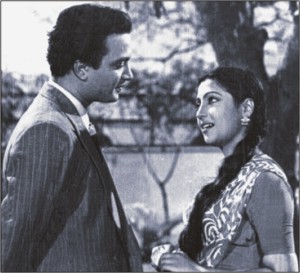
Uttam and Suchitra in Agni Pariksha based on a story by Ashapoorna Devi
However, the majority of narratives in contemporary mainstream Bengali cinema are urban-centric. Another trend also emerged within this cinematic landscape: faced with the dominance of ‘pan-Indian’—specifically Hindi—cinema, where entertainment had become the supreme priority, Bengali cinema had to seek its own path to providing entertainment—albeit in its own distinctive style. In search of this new path, Bengali cinema had to move away from its exclusive reliance on literature. The trajectory had been set as early as the 1930s, within the framework established by New Theatres. However, in the post-independence era—particularly by the 1950s—it became evident that adapting literature for the screen carried an air of elitism or insularity. Literature-based cinema seemed to imply that it was not meant for everyone but rather reserved for the appreciation of the true connoisseur. However, in the 1950s, cinema was seeking to connect with the masses. It was through this process of seeking that the rise of Uttam Kumar took place.

Grace personified – Suchitra Sen and Uttam Kumar
The story and screenplay for most of his films were conceived specifically with Uttam Kumar in mind. Every facet of his physical persona—his handsome face, guileless gaze, radiant smile, rich voice, upright bearing, captivating mannerisms, and the vast range and diversity of his expressions—was harnessed for the sake of commerce and entertainment. On screen, he embodied a variety of roles: at times the boy-next-door, at others a suave gentleman, or perhaps a formidable landlord, a successful industrialist, or a scion of royalty, an heir of a large feudal estate, at times a passionate lover, at other times a caring husband. More examples could be cited, but there is no need. The crux of the matter is that the roles portrayed by Uttam Kumar embodied exactly the personas the average Bengali viewer of that era (the 1960s) imagined for themselves—representing everything they deemed desirable or aspirational. It was a form of wish fulfillment—a tangible manifestation or reflection of the collective subconscious. Modern theorists term this a ‘cultural construct’. Naturally, a tendency towards exaggeration creeps into this process of construction. A character that transcends reality often emerges from the confluence of diverse expectations and emotions within a fictional framework. Most of the characters portrayed by Uttam Kumar fall into this category.
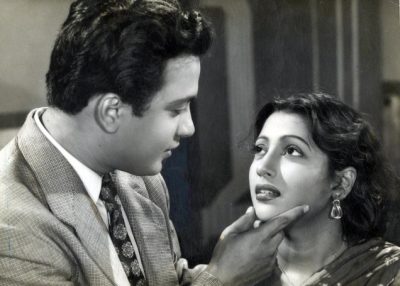
Uttam Kumar and Suchitra Sen in Sagarika
The 1960s saw a flood of melodramas centered around Uttam. He could never break free from the constraints of the cultural persona that had been constructed around him; or, to put it another way, it was the audience itself that did not grant him release from that image. The average audience of Bengali cinema—or rather, the legion of Uttam Kumar’s admirers—never fully embraced the possibility that there could be other realms of acting and multiple layers of expression beyond his charming smile, romantic persona, and refined mannerisms. The average Bengali film audience has delighted in and remained satisfied with the rehash of the very process of cultural image-building centred around Uttam Kumar—a process that began with films like Agni Pariksha (1954, dir. Agradoot), Shapmochan (1955, dir. Sudhir Mukherjee), and Sagarika (1956, dir. Agragami). That construct was enriched and nourished by films such as Saheb Bibi Golam (1956, dir. Kartik Chattopadhyay), Mayamriga (1960, dir. Chitta Basu), Saptapadi (1961, dir. Ajay Kar), Shankhabela (1966, dir. Agragami), Nayika Sangbad (1967, dir. Agradoot), Anthony Firingee (1967, dir. Sunil Bandyopadhyay), and Ananda Ashram (1977, dir. Shakti Samanta). Through a succession of such roles, a desire to embody a “larger-than-life” persona became imprinted upon Uttam Kumar’s own personality. This acquired superhuman aura undoubtedly played a pivotal role in his transformation into the “Mahanayak” (Superstar) during the 1960s. It is precisely this image of the romantic hero that constitutes the beloved and popular identity of Uttam Kumar. A ‘golden cage’ apparently ensnares and imprisons the screen legend. This powerful actor completely merges with the very essence of the icon.

Uttam and Arundhati in Jatugriha
During this decade, Uttam demonstrated his acting prowess by portraying a variety of diverse characters. In keeping with the scale of the character, he continuously incorporates minute details into his performance that align with its stature and temperament—allowing his distinctiveness to shine through. However, the characters portrayed by Uttam Kumar in films such as Khokababur Pratyabartan (1960, dir. Agradoot), Jatugriha (1964, dir. Tapan Sinha), Thana Theke Aschi (1965, dir. Hiren Nag), Nayak (1966, dir. Satyajit Ray) and Chiriyakhana (1967, dir. Satyajit Ray) were regarded as mere exceptions.
However, by the end of the decade, a radical shift in the socio-economic landscape became evident. The targets of the Third Five-Year Plan (1961–66) were severely disrupted by various internal and external crises. Wars with China in 1962 and Pakistan in 1965 compelled economic policymakers to rethink their approach. Consequently, ‘development-oriented’ activities—such as the manufacturing and heavy industries—were relegated to the background. A decision was taken to place the utmost emphasis on the manufacture of ‘defence’ equipment. To implement this decision, the momentum of the Five-Year Plans was even halted for a three-year period following the Third Plan. The government’s focus shifted entirely to the defence industry—a sector that has no direct socio-economic impact. This led to an economic downturn—or a recession, in economic terms.
This economic crisis was reflected in Indian society, and West Bengal was no exception to this process. The industrial crisis manifested itself in the retrenchment of workers from factories and a rise in the number of registered unemployed individuals. At the local level, these issues were compounded by a shortage of food grains—stemming from a crisis in agricultural production—and the constant influx of refugees from East Bengal. Instead of mutual cooperation and interdependence, the society witnessed the emergence of anger, anxiety, deceit, selfishness, and even violence.
Amidst such a complex social landscape, the old-school characters portrayed by Uttam Kumar were bound to lose their relevance. Certain inherent qualities in his persona had transformed him into a superstar in the earlier decade; however, in the altered circumstances—which reflected a different collective subconscious—those very qualities not only fell short of, but, in some instances, even clashed with the prevailing reality. The tender style and poignant tone of those melodramas failed to stir the audience’s emotions to the same extent in the 1970s. The character archetypes crafted for Uttam during the 1960s became obsolete or were discarded in the 1970s.
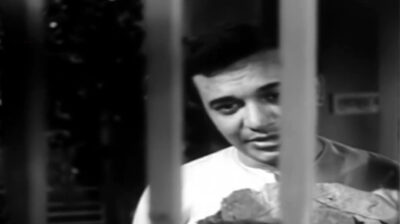
Uttam in Nishipadma
In films such as Bilambita Laya (1970, dir. Agragami), Nishipadma (1970, dir. Arabinda Mukhopadhyay), Stree (1972, dir. Salil Dutta), or Bonpalashir Padabali (1973, dir. Uttam Kumar), the radiance of the characters he portrayed began to dim; they started to appear defeated, drab, murky or complex. In films such as Jadubangsha (1974, dir. Parthapratim Chowdhury), Sannyasi Raja (1975, dir. Piyush Bose), Agnishwar (1975, dir. Arabinda Mukhopadhyay), Bhola Moira (1977, dir. Piyush Ganguly), or Sabyasachi (1977, dir. Piyush Bose), the characters portrayed by Uttam Kumar—while central or pivotal—are not romantic in nature; instead, they shine through a variety of other distinctive qualities. At the same time, through his impeccable comic performances excelled in comic genre films such as Chhadmabeshi (1971, dir. Agradoot), Dhanyi Meye (1971) and Mouchak (1974, dir. Arabinda Mukhopadhyay in both), Nidhiram Sardar (1976, dir. Rabi Ghosh), Brajabuli (1979, dir. Piyush Bose), or the posthumously released Ogo Bodhu Sundari (1981, dir. Salil Datta), he demonstrated the vast range of his repertoire. These portrayals are marked by layered, nuanced, and ostensibly cerebral characterization, and represent, as it were, the ‘Other’ of his acting craft—an eclipsed realm—of his acting persona.
Pity he was not offered chances to underscore his versatility and complement his formidable oeuvre as the ‘Romantic Superstar’. This latter identity, meticulously crafted and nurtured through the 1950s and 1960s, was rapidly falling out of sync with the fluid cultural landscape in West Bengal through the 1970s. During this tumultuous decade, the state was reeling under the impact of some ongoing paradigm shifts in the socio-political ecosystem. But, both materially and cerebrally, there wasn’t as yet enough incentive for him in the Bengali film industry to fully transition, and blossom, into the character actor’s varied, but interesting, space. He was unwittingly stuck in a stagnated space, and the Bengali audience missed out on the myriad facets of his histrionic talent.

Whether you are new or veteran, you are important. Please contribute with your articles on cinema, we are looking forward for an association. Send your writings to amitava@silhouette-magazine.com

 An Actor Arrives: Uttam Kumar Through 5 Landmark Films of the 50s
 Dear Deceiver: Agni Pariksha versus Chhoti si Mulaqat
 Mahanayak Comes to Life in Posters
 Nayak in the Classroom: A Before-and-After Study
 Uttam Kumar: The Changing History of the Bengali ‘Dada’
 Partnership of the Two Titans — Uttam & Soumitra
Silhouette Magazine publishes articles, reviews, critiques and interviews and other cinema-related works, artworks, photographs and other publishable material contributed by writers and critics as a friendly gesture. The opinions shared by the writers and critics are their personal opinion and does not reflect the opinion of Silhouette Magazine. Images on Silhouette Magazine are posted for the sole purpose of academic interest and to illuminate the text. The images and screen shots are the copyright of their original owners. Silhouette Magazine strives to provide attribution wherever possible. Images used in the posts have been procured from the contributors themselves, public forums, social networking sites, publicity releases, YouTube, Pixabay and Creative Commons. Please inform us if any of the images used here are copyrighted, we will pull those images down.






































































A rewarding piece of article. A poignant analysis to identify, how a formidable acting talent, while merged with changing social reality, immediately after independence, through following decades, could produce a phenomenon called Uttam Kumar. Importantly, the article ends with the “other realm” of his acting prowess, though we had few glimpses, but not nurtured enough.