Stay tuned to our new posts and updates! Click to join us on WhatsApp  & Telegram
  Channel
& Telegram Channel & Telegram Channel 




How did a Bengali classic become a Hindi disaster? Madhulika Liddle compares Agni Pariksha and Chhoti si Mulaqat—and finds two very different Uttam Kumars at the heart of the story.
In 1952, Bengali writer Ashapurna Debi published her novel Agni Pariksha (‘Trial by Fire’). The story of a woman who finds herself caught between tradition and ‘modernity’—between the teenager she was married off to, and the man she now loves—was a success. Within two years, it had been made into a film: Agni Pariksha was produced by MP Productions and directed by the group that called itself Agradoot. For the lead pair, they chose Uttam Kumar and Suchitra Sen, who had first made an impact as a romantic couple in Nirmal Dey’s comedy Saare Chuattar (1953).
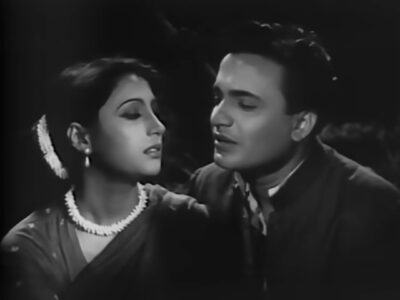
Uttam Kumar and Suchitra Sen in Agni Pariksha
Agni Pariksha cemented the Uttam Kumar-Suchitra Sen pairing and was a hit, both at the box office and with critics. The success of the film was such that in 1959, Tamil (Manjal Mahimai) and Telugu (Mangalya Balam) versions, both made by the same producer, the same director and mostly the same cast, had been released, with equal success.
One wonders, therefore, why it was thirteen years before a Hindi version, Chhoti si Mulaqat, was made. After all, through the 50s and 60s, umpteen Hindi films had been remakes of Tamil, Telugu, and even Bengali films. Uttam Kumar’s first hit film, Basu Paribar (1952) was a case in point: it was remade in Hindi as Hum Hindustani (1960).
There had, too, been previous attempts to get Uttam Kumar to work in Hindi films. Raj Kapoor had offered him the lead role in Jaagte Raho and the role of Gopal in Sangam; Hemant had wanted him to star in Bees Saal Baad—but Uttam Kumar, for various reasons, had turned down all these roles. Some of his co-stars, notably Sharmila Tagore and Suchitra Sen, had had considerable success in Hindi films, and one might have expected that Uttam Kumar, with his looks, his charisma and his undoubted acting ability, might have done well in Hindi cinema.
As it was, it was 1967 by the time Uttam Kumar first appeared on the Hindi silver screen. He was the producer of Chhoti si Mulaqat, which was directed by his friend Alo Sarcar, with a screenplay by veteran scriptwriter-director Sachin Bhowmick. Starring opposite Uttam Kumar was one of Hindi cinema’s most popular leading ladies, Vyjayanthimala. The music was by Shankar-Jaikishan, with lyrics by Shailendra and Hasrat Jaipuri.
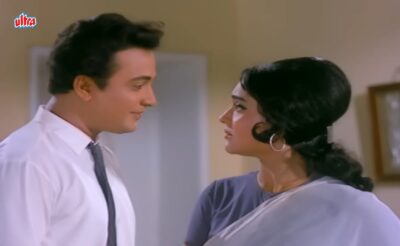
Uttam Kumar and Vyjyanthimala in Chhoti si Mulaqat
It sounded like it had all the ingredients for success, the perfect vehicle to add a Hindi-speaking audience to Uttam Kumar’s fan following.
Or was it? Because Chhoti si Mulaqat flopped, and so resoundingly that it ruined Uttam Kumar and left him pretty much bankrupt, leading him to sign films indiscriminately in an attempt to make up his losses. The failure of Chhoti si Mulaqat might also have been a contributing factor in the star’s deteriorating health: in 1967 itself, while shooting Satyajit Ray’s Chiriakhana, he had a heart attack, the first of three which eventually led to his death.
Why did Chhoti si Mulaqat bomb the way it did? To understand this, a closer look at the story is essential.
Both Agni Pariksha as well as Chhoti si Mulaqat begin over a decade in the past, with a teenager (Tapasi—’she who does penance’—in the Bengali film, Rupa in the Hindi) accompanying her grandmother on a trip to their ancestral village. This journey causes friction in the family; Tapasi’s/Rupa’s mother’s modern views are the antithesis of her conservative mother-in-law’s, and she dislikes the idea of her daughter going to the village, even if only briefly. Up against the pleas of her husband and mother-in-law, however, she gives in.
In the village, the grandmother takes Tapasi/Rupa to call on an elderly acquaintance, her late husband’s best friend. This old gentleman has a grandson (Bulu in Agni Pariksha, Rajju in Chhoti si Mulaqat) a few years older than Tapasi/Rupa. The old gentleman and Tapasi’s/Rupa’s grandfather had long ago decided that their grandchildren would be married to each other.
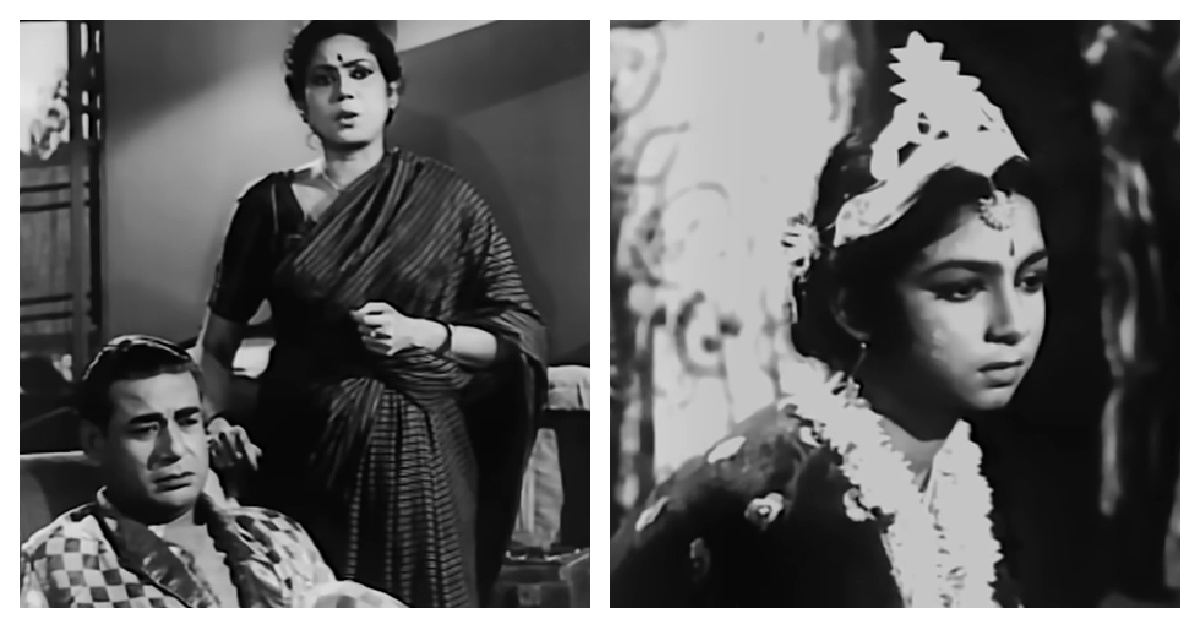
(L) Tapasi’s mother reluctantly allows Tapasi to go to the village (R) Tapasi is married to Bulu
One thing leads to another. The old man, already ailing, has a heart attack and, on his deathbed, uses emotional blackmail to get Tapasi’s/Rupa’s grandmother to allow the two to be married. Right then, right there.
The wedding takes place, and the old man dies right after. Tapasi’s/Rupa’s father, summoned by his mother, comes to find his teenage daughter still in her bridal finery. He is shaken; his wife is livid when she discovers what has happened. She vows she will erase every sign of this farcical ‘marriage’, that she will not let her child’s life be wrecked.
The story now moves forward to the present, i.e., 1954/1967, when Tapasi//Rupa, now grown up, has no memory of that ceremony that turned her life topsy-turvy for a while. On a visit to their relatives in the hills, she meets a stranger, a man called Kiriti Mukherjee (in Agni Pariksha)/Ashok (in Chhoti si Mulaqat). Kiriti/Ashok is well-educated, handsome, urbane, and Tapasi’s/Rupa’s mother (now widowed) approves. He is exactly the sort of man she wants her daughter to marry.
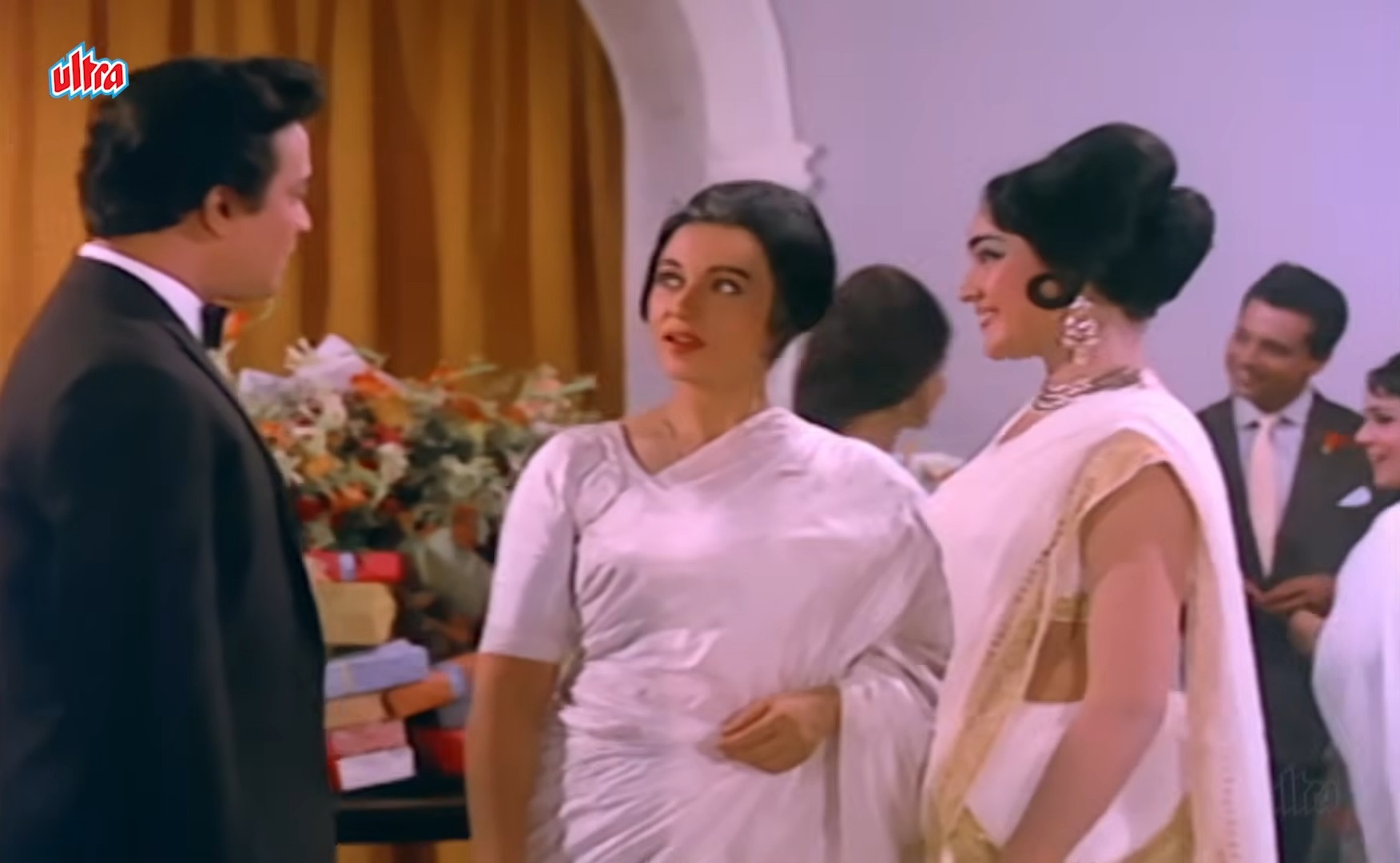
Rupa’s mother meets Ashok—and approves of him
All might have been well for the lovers, but there is Tapasi’s/Rupa’s long-ago wedding, which now comes back to haunt her. Suddenly—as a result of a jolt to her memory—she remembers it, and from then on, she finds herself on the horns of a dilemma. As Rupa (in the voice of Lata Mangeshkar, expressing Shailendra’s words) sings in Jeevan ke doraahe pe khade sochte hain hum: Taane hai dil idhar ko toh kheenche udhar kadam (My heart pulls me this way, my steps take me that way). Should she follow her heart and take Kiriti’s/Ashok’s hand? Or should she follow her conscience, conditioned by her grandmother’s conservative views, and go to the man she was married to as a teenager, though he is an utter stranger to her?
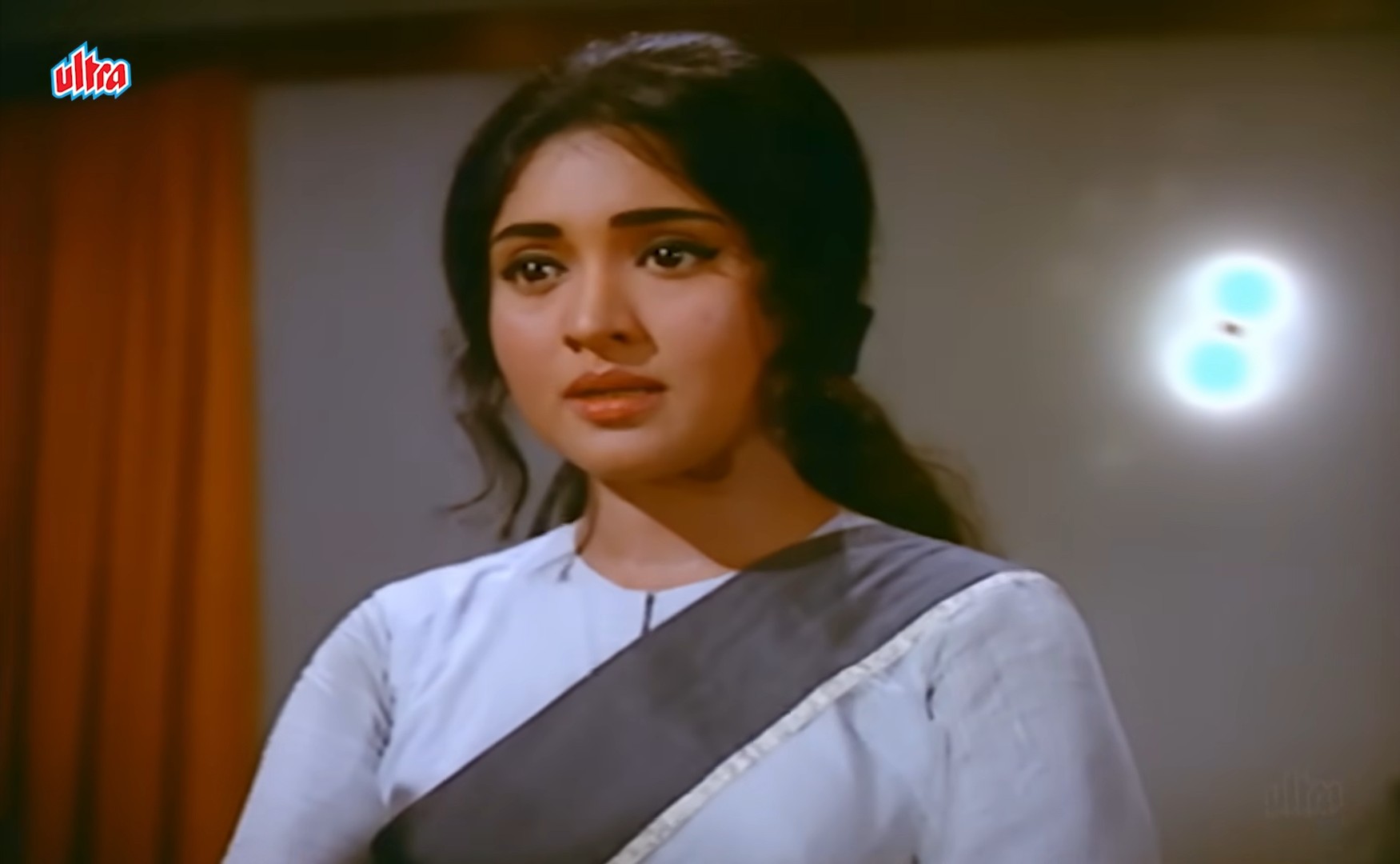
Rupa finds herself in a dilemma
One of the reasons for the failure of Chhoti si Mulaqat is immediately obvious: it is regressive, in a way that might have been uncomfortably familiar (if not necessarily acceptable) in the 1950s, but certainly not so a decade later. In the late 60s, a well-educated, urban woman was no longer acceptable as also a woman who regarded a child marriage as sacrosanct, or who thought of her unseen, unknown ‘husband’ as her swami, the be-all and end-all of her existence.
There were other problems, too. In an attempt to make the film more in keeping with general trends in mid-60s Hindi cinema, Sachin Bhowmick introduced several elements that might have seemed de rigueur, but which dilute the love story and make the film a loud, melodramatic one.
For one, there is the romance itself. In Agni Pariksha, the Kiriti-Tapasi love story plays out through conversations, even though Tapasi (singing in Sandhya Mukherjee’s voice, to the music of Anupam Ghatak) does sing some beautiful solos, especially the stunning Gaane mor kon indradhanu. In Chhoti si Mulaqat, the romance proceeds pretty much exclusively through rather standard duets, and lacks the depth or believability that conversation can convey.
Then, there are the secondary characters. While Agni Pariksha gives Tapasi two younger brothers, of whom one, Amit, provides some comic relief, Chhoti si Mulaqat has Rupa as an only child—and introduces, instead, an annoying admirer named Sam Cooper aka Shyam Kapoor in a (misguided and lacklustre) attempt to lighten the mood. There is, too, the character of Lily (in Agni Pariksha) and Sonia (in Chhoti si Mulaqat), a relative of Tapasi’s/Rupa’s own age, who has a crush on Kiriti/Ashok. When she realizes that Kiriti prefers Tapasi, Lily confines herself to some snide but subtle remarks; Sonia, on the other hand, spews venom and is revealed as a gold-digger, pursuing Ashok only for his wealth. There is little that is subtle here.
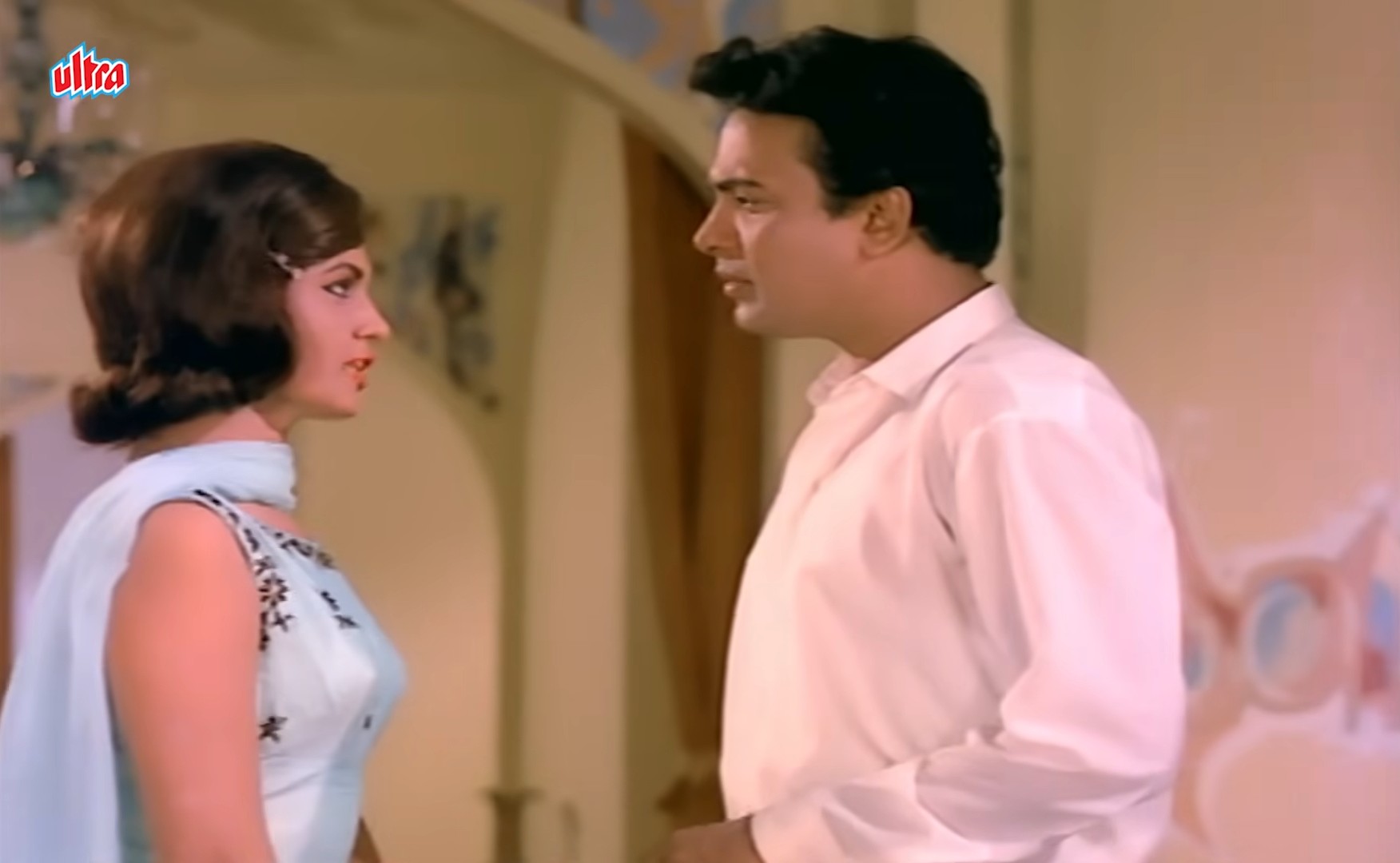
Sonia, nasty and scheming, is also a gold-digger
Agni Pariksha has Tapasi torn two ways mostly because of her own inner turmoil: her dilemma stems from within. Chhoti si Mulaqat does have some of that, but there is also external censure. At Rupa’s and Ashok’s engagement, for example, Rajju’s gumashta arrives with the news of Rupa and Rajju’s long-ago wedding, and announces that Rajju will sue. The resultant sensation among the assembled guests is the start of a scandal for Rupa, which sees her being humiliated by all and sundry. In the Hindi film, society forces Rupa to reconsider her commitment to Ashok. In Agni Pariksha, Tapasi is in torment more because of her own conscience than anything else.
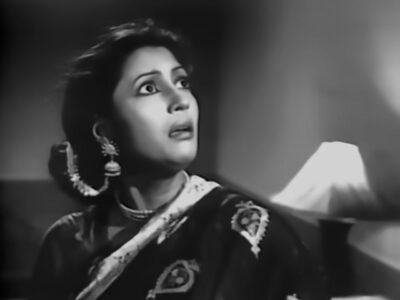
Tapasi finds herself in torment because she is pulled two ways
Tapasi comes across as a more mature character than Rupa, but it is in the character of the leading man that Chhoti si Mulaqat really falls flat when compared to Agni Pariksha. Kiriti is a sensitive, gentle man, his love for Tapasi believable; Ashok, on the other hand, is very much the quintessential ‘hero’ of 60s Hindi cinema: brash, swaggering, demanding love. The first time we see him, on the ski slopes, he is watching Rupa through a pair of binoculars. Later, when she visits his home and finds a photo of herself there, he candidly admits that he has been watching her from afar in Bombay.
This is stalking, not love.
There are other examples of how Ashok is a far less likeable character than Kiriti. Kiriti, for example, harbours a secret, which he tries several times to tell Tapasi, only to have her brush his words aside. Ashok, on the other hand, doesn’t merely hide a secret, he nurtures it and concocts a drama to keep it going, to pressurize Rupa.
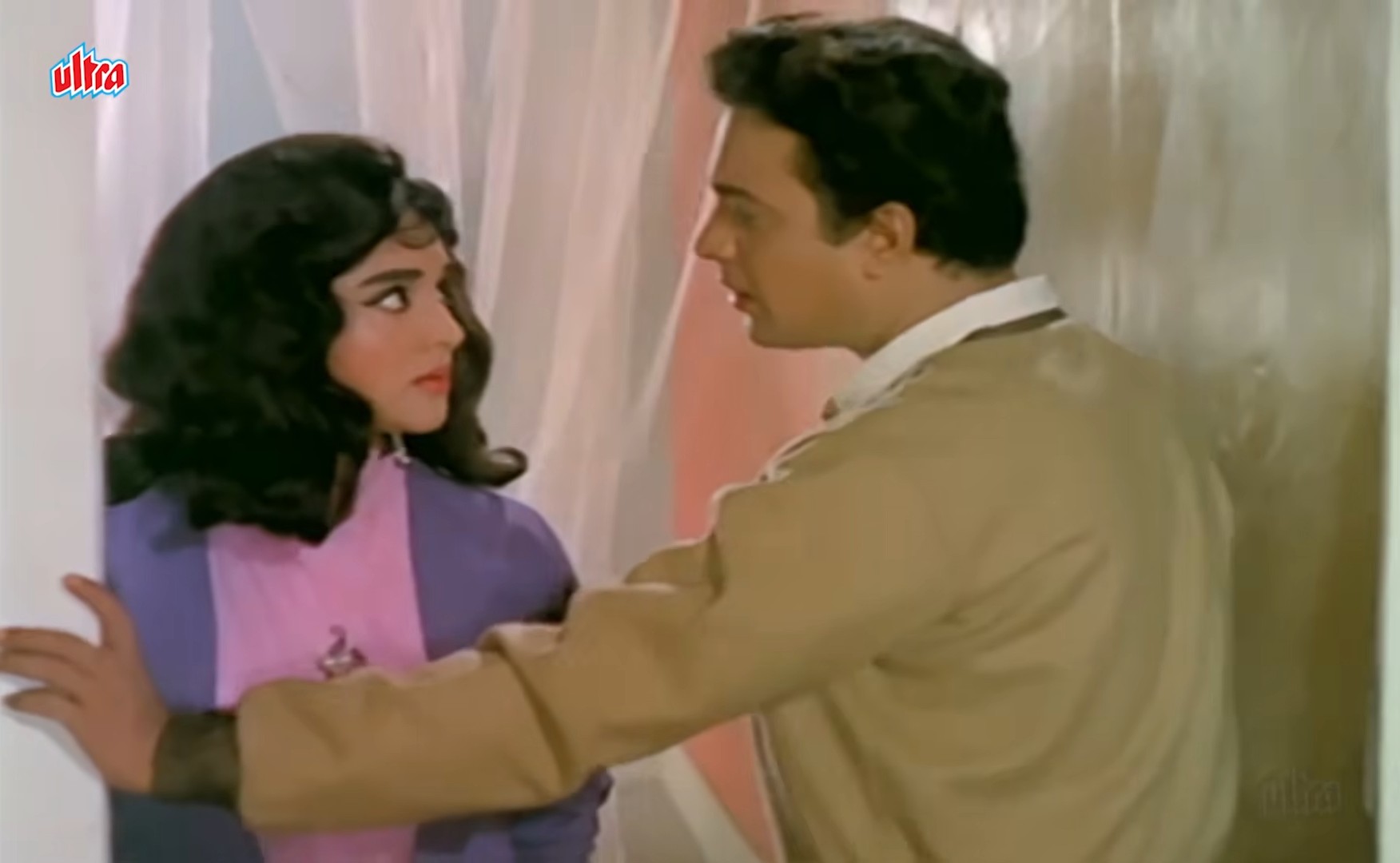
Ashok admits he’s been spying on Rupa for a while now
One of the most insightful glimpses into Kiriti’s/Ashok’s personality comes through in incidents involving men ill-treating women. In Kiriti’s case, the episode revolves around a bunch of men who notice some of Kiriti’s women friends dancing at an outdoor party he’s hosting. They start passing lewd remarks, but Kiriti stands up to them, and makes it clear he won’t tolerate this disrespect shown to the women (note: Tapasi here has not been at the receiving end of any unwelcome attention, which makes Kiriti’s stance that much more laudable).
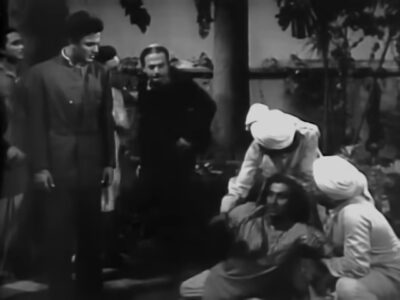
Kiriti comes to the rescue of some women friends being harassed
In Ashok’s case, the situation is different. He and Rupa, walking along a beach, see a screaming fisherwoman being dragged along the sand by her husband. When Ashok turns away, Rupa asks him why he didn’t stop the fisherman ill-treating his wife, and Ashok replies that they are man and wife. When you’re married, nothing and no one can come between you. Ashok is undeniably regressive, no matter how urbane and well-educated he may appear to be.
While both uphold worn-out traditions, while both make a point about a child marriage being binding, while both underline a woman’s ‘duty’ to her husband, irrespective of anything else—Agni Pariksha, perhaps paradoxically (given that it’s the earlier film), is slightly more progressive. It is quieter, more believable, and generally better acted.
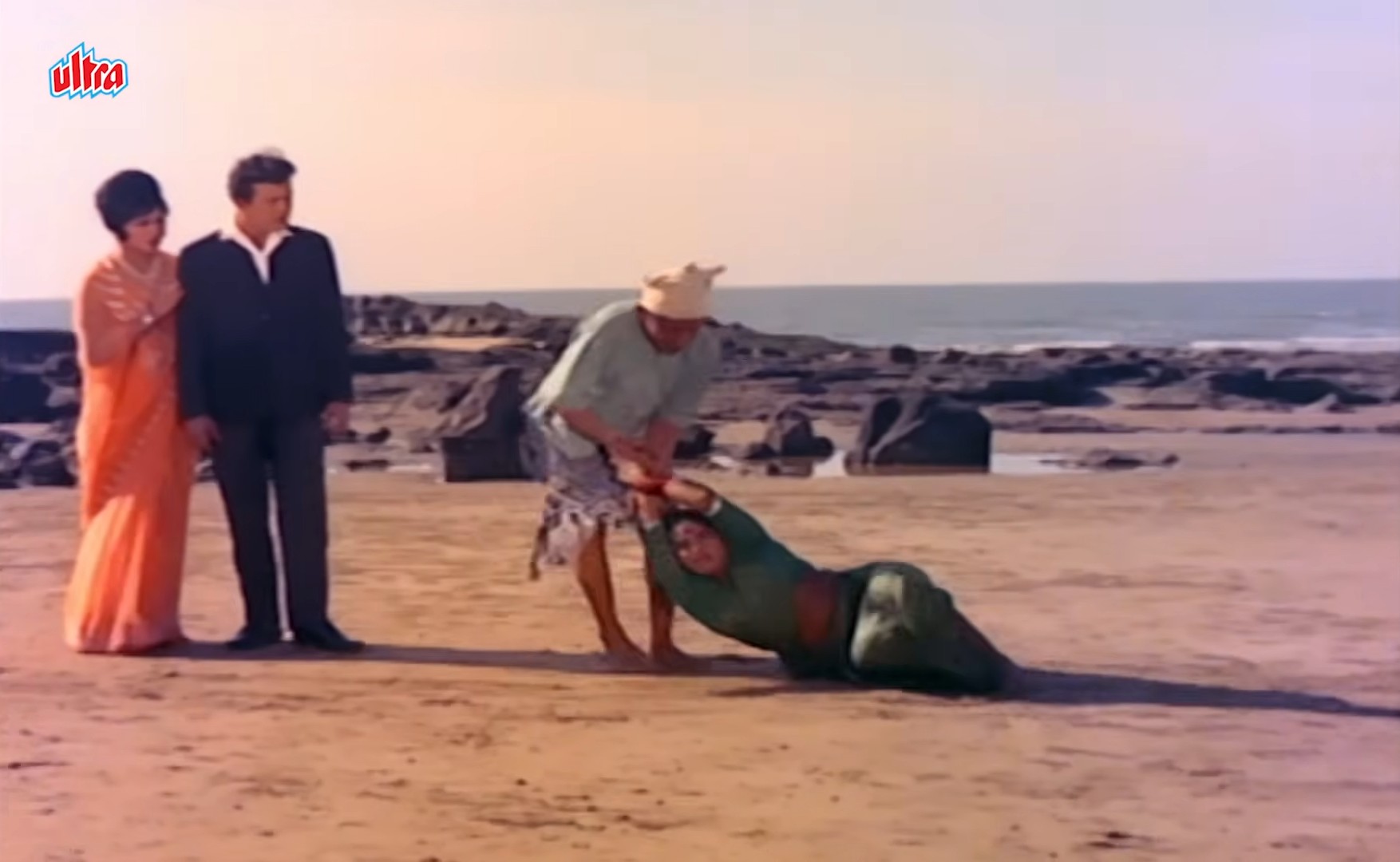
Ashok refuses to help a woman in distress, because it would be ‘interference’
And Uttam Kumar as Kiriti is far more likeable than Uttam Kumar as Ashok. There is a wisdom and a quiet maturity about him that is just as forceful as his steadfastness when he stands up to the lechers at the garden party. Even when he is angry at these men, he does not rave and rant and throw a fit; he is dignified, controlled. While Agni Pariksha has been called a Bollywood-ized Bengali film, it is still rooted very much in Bengal, and Uttam Kumar’s portrayal of Kiriti is that of the quintessential bhadralok: this is a gentleman through and through.
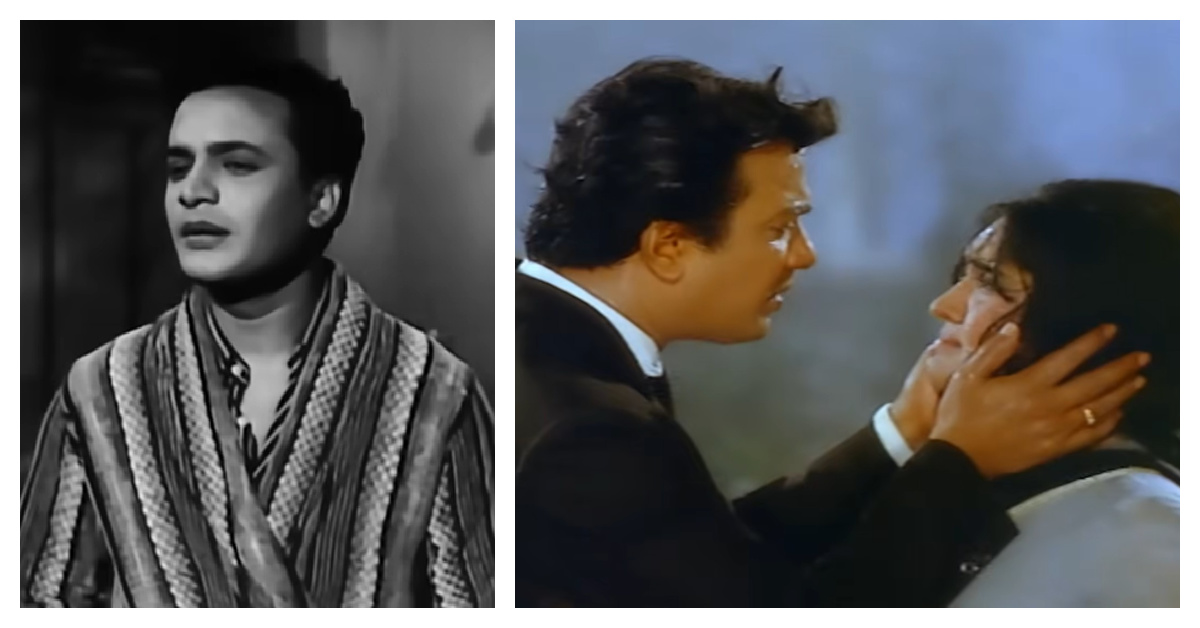
(L) Uttam Kumar as Kiriti Mukherjee (R) Uttam Kumar as Ashok, distressed by Rupa’s anguish
Contrast this with Uttam Kumar’s portrayal of Ashok. Those twinkling, teasing eyes and that rakish grin when he’s flirting with a huffy Rupa. The way he matches steps with Vyjayanthimala in the title song. And, when Rupa finds herself tugged every which way, his anguish—the helplessness that comes to his face, as he stands in the rain and watches her crumble before his eyes…
Ashok is by no means as likeable a character as Kiriti; but Uttam Kumar managed to make both men fit their respective films to a T. He was soulful, kind, gentle Kiriti; he was flirtatious, brash, but eventually loving Ashok. Two characters, two films, one actor who aced them both.

Whether you are new or veteran, you are important. Please contribute with your articles on cinema, we are looking forward for an association. Send your writings to amitava@silhouette-magazine.com

 Brando, Bogart, Paul Muni and Beyond — Understanding Uttam Kumar
 Uttam Saw Bengali Cinema Revive and Was Pained by Its Fall Again
 An Actor Arrives: Uttam Kumar Through 5 Landmark Films of the 50s
 The Legend of Uttam Kumar
 Nayak in the Classroom: A Before-and-After Study
 Uttam Kumar: The Changing History of the Bengali ‘Dada’
Silhouette Magazine publishes articles, reviews, critiques and interviews and other cinema-related works, artworks, photographs and other publishable material contributed by writers and critics as a friendly gesture. The opinions shared by the writers and critics are their personal opinion and does not reflect the opinion of Silhouette Magazine. Images on Silhouette Magazine are posted for the sole purpose of academic interest and to illuminate the text. The images and screen shots are the copyright of their original owners. Silhouette Magazine strives to provide attribution wherever possible. Images used in the posts have been procured from the contributors themselves, public forums, social networking sites, publicity releases, YouTube, Pixabay and Creative Commons. Please inform us if any of the images used here are copyrighted, we will pull those images down.





































































Uttam Kumar has matured film after film since his first film, in my belief. His first Saare Chuattor to Agnishwar, Stree, etc., support my statement. His acting skills/talent proof, was his character in Khoka babur Protyaborton, at his younger age, while Bengal had placed him as a romantic heartthrob. A mahanayak indeed, in the categories of Ashok Kumar, Dilipkumar, is personal opinion. Truly great.
I agree with you, definitely in the same league as Ashok Kumar and Dilip Kumar – his acting is very natural, no matter what role he’s in. Of course Chhoti si Mulaqat was an aberration all around and not a good testament to his acting – he was capable of much more.
Yet another good essay from you, Madhu. I was hoping for more of a comparison between the two Uttam performances but as a comparison piece of the two films, this is outstanding.
Anu, thank you! Praise from you is always something to be treasured. 🙂
This is a worthy read, and I must return for another read. I need to share that I was a fan of Dilip Kumar and Ashok Kumar, Suchitra Sen and Balraj Sahni and Waheeda. My Bengali friends would sing hymns to Uttam Kumar. Then I watched Chhoti Si Mulaaqaat, which didn’t move me too much. Later, after watching Amanush, I wondered what the fuss was about. But later yet, I thought that my friends couldn’t be wrong, that he must be a great actor, though fortune didn’t smile on him in mainstream Hindi cinema. One day I hope to watch his Bengali films 🙂
Thank you so much, Manek. I have to admit I haven’t got around to watching Uttam Kumar’s other Hindi films (that needs to be amended sometime). But I would strongly recommend his Bengali films – Nayak, Thana Theke Aschi, Ekti Raat, Chaowa-Pawa and Deya-Neya are among my top favourites.
Really enjoyed reading this, as always!
Thank you so much, Ritika! I’m glad you enjoyed this.
This was such an insightful comparison, Madhulika. Agni Pariksha had everything going right for it — the smash-hit Uttam-Suchitra pairing, a superhit album of songs composed by Anupam Ghatak to Gauriprasanna Majumdar’s lyrics, led by Gaane mor kon indradhanu, that became the signature song of Sandhya Mukhopadhyay and cemented her place as Suchitra’s voice. Add to that a strong supporting cast — Anup Kumar, Chandravati, Kamal Mitra, Jahar Ganguly, Jahar Roy and others — and a treatment that made such a tricky subject convincing. That was 1954, when Bengali cinema thrived on social subjects, middle-class romance and a lead pair that manifested the dreams of many a Bengali in newly independent India.
In comparison, the Hindi version came rather too late in the day, when films had moved into colour and the rock-and-roll era. Above all, the direction was weak, the script unconvincing and hence even good music and a good-looking lead pair could not save the day. Your comparison brings out so well why the same story could work so beautifully in one version and fall flat in another.
“When you’re married, nothing and no one can come between you. Ashok is undeniably regressive, no matter how urbane and well-educated he may appear to be.” – I believe this brilliantly sums up why the Hindi film did not connect. Even Bengalis must have thought… our Uttam couldn’t just walk past a woman being abused and not do anything. 😊 In so many films, he has stepped in, much to his own loss.
Thank you for sharing this review, Madhulika. It was enlightening. ❤️
Antara, thank you so much for this thought-provoking comment. You know, when I was (re)-watching Chhoti si Mulaqat, it struck me that this trope – of people married as children and then falling in love as adults, all unawares- is not so very uncommon. After all, even Sahib Biwi aur Ghulam has it. But the handling of the subject, and what surrounds it (in SBaG it is just one element, and that rather sidelined) makes a huge difference. The very fact that the Chhoti Bahu is the focus of SBaG, and that her emotions are explored so sensitively, makes it a pretty female-centric film – in an empathetic way. CsM, even though it has Rupa at the centre, has her as the focus only in order to drive home the message that this is how a ‘good woman’ behaves. 🙁
Madhu,
I am impressed by your analysis. But there must be something more to it. I was surprised to see Uttam Kumar in one of the sidey roles in Desh Premee. I couldn’t believe my eyes. What was he doing here as a sikh goon?
I saw a Bengali film in which Uttam Kumar was in the lead role, and Biswajit the second lead. That was also commensurate with their standing in the Bengali film industry. I never cease to wonder at the irony that the same Biswajit became a superhit hero in Hindi films. Another one was Joy Mukherjee. And Uttam Kumar was a big flop. I always associated Satyajit Ray with Soumitra Chatterjee, he never ventured into Hindi films.
On this I am with Manek Premchand. A thought for you, Antara, Anu and all the experts to ponder.
AK
Thank you, AK: I’m glad you liked this piece. I have to admit to not having watched any of Uttam Kumar’s other Hindi films, but I can well imagine your surprise on seeing him as a Sikh goon (I can’t believe it, either). Yes, I wonder why… a friend of mine, Bengali but grown up in North India, said “Bollywood wouldn’t let him in” but I am not sure – after all, Hemant and RK offered him some really meaty roles. Or could it have been the after-effects of Chhoti si Mulaqat? Did that ruin him so completely that he was wiling to take any role in even any Hindi film? I honestly don’t know.
I watched both films about six months ago, and I absolutely agree with your comparison/analysis. I too found the story surprisingly dated for 1960s Bollywood, especially since the original had come out 13 years earlier, in 1954. It also felt somewhat regressive. Beyond that, I thought the screenplay was weak and rather dry, while the direction, cinematography and set design were all fairly subpar.
As for Uttam Kumar, right from his first song, *”Na Mukhda Modke Jaao”*, I felt the role and the film simply weren’t suited to him. He didn’t quite have the flamboyance and rhythmic energy that mainstream Hindi cinema of that era demanded. A role like this needed its movements and charm dialled up to 100, à la Shammi Kapoor. Uttam certainly tried, but he mostly approached it with the more restrained, realistic style associated with Bengali cinema. That’s not really his fault, but it doesn’t quite work for this particular kind of role in a Hindi film. Interestingly, Tarun Bose’s daughter has also recalled Uttam telling her father that he himself felt uncomfortable doing the film.
I also didn’t feel much chemistry between him and Vyjayanthimala. The one thing I genuinely loved in the movie was the song *”Kal Nahi Paaye Jiya More Piya”*. I’d seen stills and short clips of it online for years and always assumed it was from *Amrapali* – it has such an *Amrapali*-ish aesthetic that I completely understand why I made that connection. 😅
And *”Mat Jaa, Mat Jaa Mere Bachpan”* really feels like it may have inspired *Chocolate, Lime Juice* from *Hum Aapke Hain Koun..!* although Vyjayanthimala did feel a little too old to be lip-syncing those particular lyrics.
Honestly, I think Uttam Kumar might have had a much better entry into Bollywood with his own mystery thriller *”Sesh Anka”* with its treatment along the lines of its Tamil remake *”Puthiya Paravai”*. That kind of role would probably have suited his strengths far better and could have resulted in a much warmer acceptance from the Hindi-film audience.
Plus, there’s the popular rumour that the film’s distribution was allegedly sabotaged by the RK camp after Uttam had antagonised Raj Kapoor by declining the role in *Sangam*. Whether or not there’s any truth to that, it certainly became part of the film’s narrative and, along with all the other factors, contributed to its eventual failure.
Thank you for that long and very insightful comment, Tashmi. I can completely understand your assumption that Kal nahin paaye jiya was from Amrapali – very much the same vibe! But yes, Uttam Kumar doesn’t look comfortable doing the sort of role that a Shammi Kapoor or a Dev Anand (perhaps? Though I always think Shammi more suited) might have pulled off.
I hadn’t heard about that rumour of the RK camp sabotaging the distribution of the film; even if that is true, I’m not sure how much of an effect it could have had on the film’s success. It’s really not at all the sort of film that would have succeeded in the 60s.