Stay tuned to our new posts and updates! Click to join us on WhatsApp  & Telegram
  Channel
& Telegram Channel & Telegram Channel 




Hrad was conceptually ahead of its time — and so was Uttam Kumar, who chose to take part in it despite the pull of glamour elsewhere. Soumalya Chatterjee explores the film that fetched Uttam the coveted B.F.J.A (Bengal Film Journalists’ Association) award.
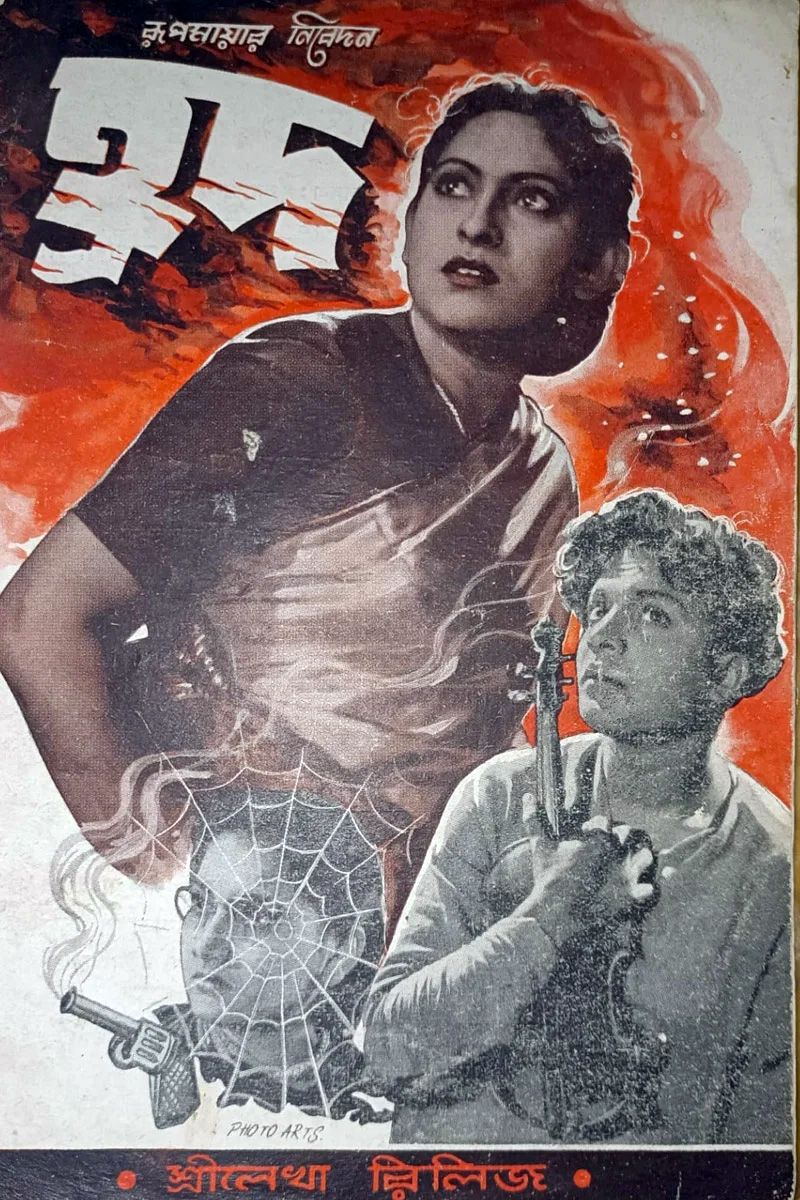
Hrad poster
The posthumous reconstruction of matinee idol Uttam Kumar’s charismatic persona has largely turned him into an urban legend — a phenomenon consciously built by a cohort of virtuous literati keen to revive the actor’s legacy for the present. I call them “virtuous” deliberately, because their efforts have more to do with politico-cultural aspirations than with simple ethno-cultural fandom.
This cohort is made up chiefly of academics, journalists, cultural activists, liberal politicians, and individuals from the Bengali film industry. It bears no resemblance to the maddening fandom Uttam enjoyed in his own time, nor does it aim to recreate that fanaticism — an impossible task anyway, given the urbane, multiplex-driven distribution system of contemporary West Bengal.
What makes these intellectuals worth naming here are the political implications underlying their revival of Uttam’s work, which compel us to engage with their arguments even as we critically examine the actor’s performances. This scholarship is driven by a wish to reconnect the star’s nostalgic, mass appeal with today’s urban intelligentsia — and, in doing so, to offer a relatively neutral re-reading of the thespian through a historical lens. That re-reading inevitably exposes the gap between how successive West Bengal governments, across two very different eras, have read Uttam’s relevance.
Because any renewed engagement with Kumar today is necessarily posthumous, his legacy cannot escape being filtered through the present’s political lens. Especially since, in Uttam’s own time, government and party apparatchiks regularly intervened in the seventh art – then still an evolving medium – as part of the welfare state’s sense of responsibility toward cinema, with results that were sometimes beneficial and sometimes disastrous.
The sparse historical record of the Bengali film industry suggests that Uttam Kumar — an amateur turned matinee idol — was its first true star, and arguably its only and last one. Post-globalisation, the Bengali film industry struggled to produce a star whose hold on the popular imagination could rival his. As a result, Uttam’s legacy continues to shape contemporary Bengali cinema: his aura haunts a financially struggling industry with an incurable nostalgia, and remains the undisputed reference point for what mass stardom looks like.
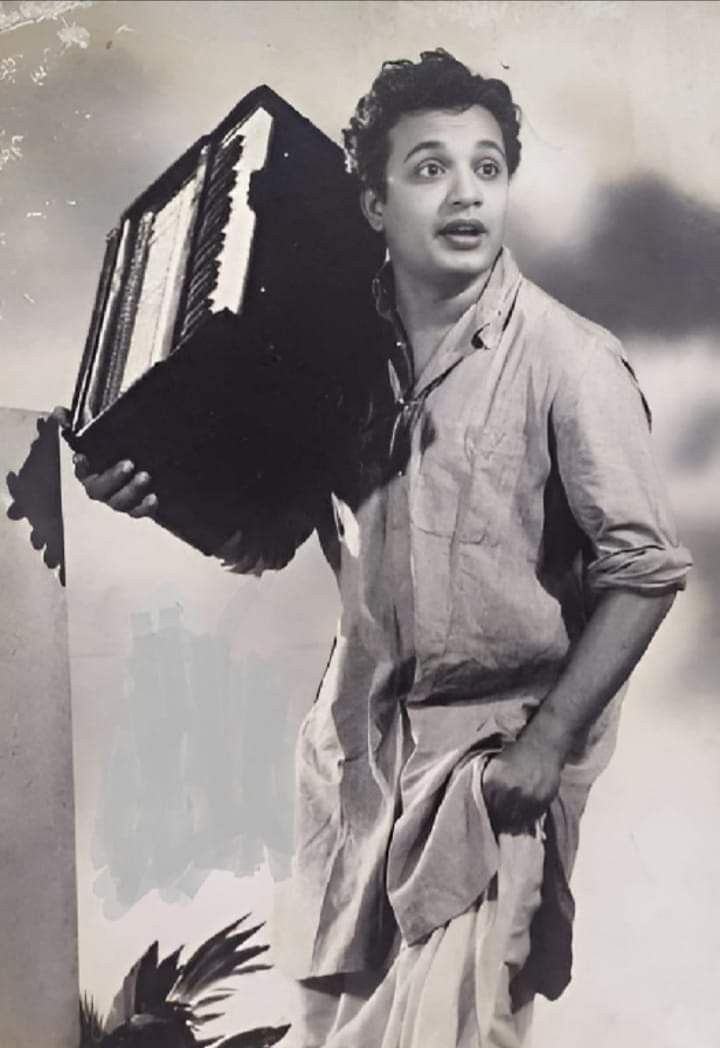
Uttam Kumar in one of his early films
The spectre of Uttam Kumar that haunts modern Bengali cinema is, in essence, the ghost of a lost era — one that invites us to resettle certain grey areas of the past in order to better examine the dissonances of the present.
Uttam’s entry into the world of chhaya chobi was no providential intervention. His early years were far from the fanciful image of walking a red carpet in Berlin; the welcome was, if anything, unkind. As Uttam Kumar scholar Sayandeb Chowdhury has noted, a 1951 cartoon in the satirical periodical Achalpatra depicted Kumar as a waddling baby embracing his beloved and asking, “Darling, do you love me?”
Uttam, however, seized his moment that same decade: several of his films gave him a momentum he would ride for the next three decades, and the popularity he’d only glimpsed in the 1950s soon met with near-total acceptance from audiences. The most serious critical pushback came instead from the radicals who later formed the government in West Bengal. They kept their distance from a star who represented, to them, the indiscreet charm of the bourgeoisie — a reading rooted not in film criticism but in a dialectical view of a materialist society, itself a site of class struggle. From the communist apparatchik’s standpoint, anything that risked working against the working class’s interests was to be dismissed.
This disavowal rested on a misreading of Uttam’s performances, reducing his screen presence to a simplified emblem of bourgeois identity. It culminated in a fraught official distancing from the star — one that, in turn, alienated the people’s government from the people themselves. The liberal re-examinations of Uttam that followed were essentially post-communist in spirit, but remained a simplified re-exploration of his work, missing several key performances. One such overlooked performance is his role in Ardhendu Sen’s 1955 film Hrad, which deserves to be revisited.
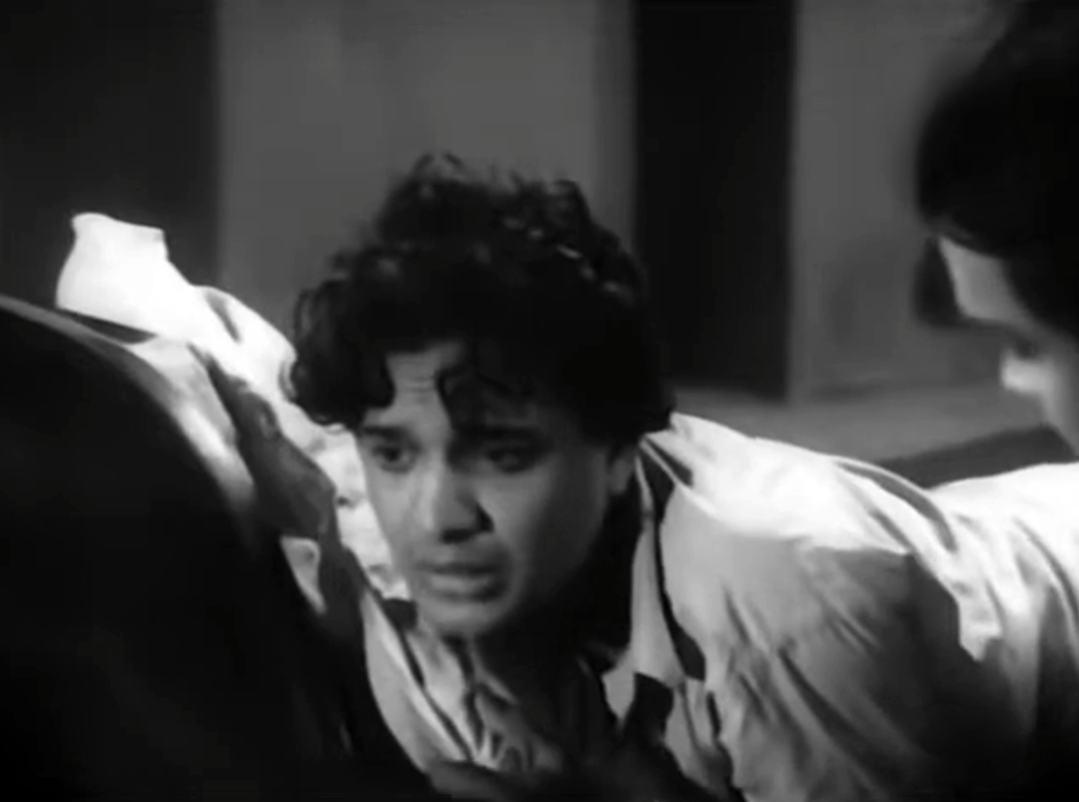
Uttam Kumar and Asit Baran in Hrad (1955)
Situated as it is in our collective amnesia, Hrad first demands an explanation: why, above all other films starring Uttam Kumar, must we revisit it today? Some might attribute the film’s disappearance to shortcomings in the making — but that is a defensive argument at best, since a film’s longevity rarely depends on its craft alone. Hrad could instead have survived in collective memory for its subject matter, and for the actor’s evident desire to work outside a purely consumerist discourse, and his conscious intent to bring previously untouched subjects into Bengali cinema.
Before turning to the film itself, a few lines from Uttam’s semi-autobiography Amar Ami might help illuminate what Hrad meant to him, and how it catapulted his career, threatening the throne of Bengali cinema’s reigning star, a status even Satyajit Ray had to acknowledge.
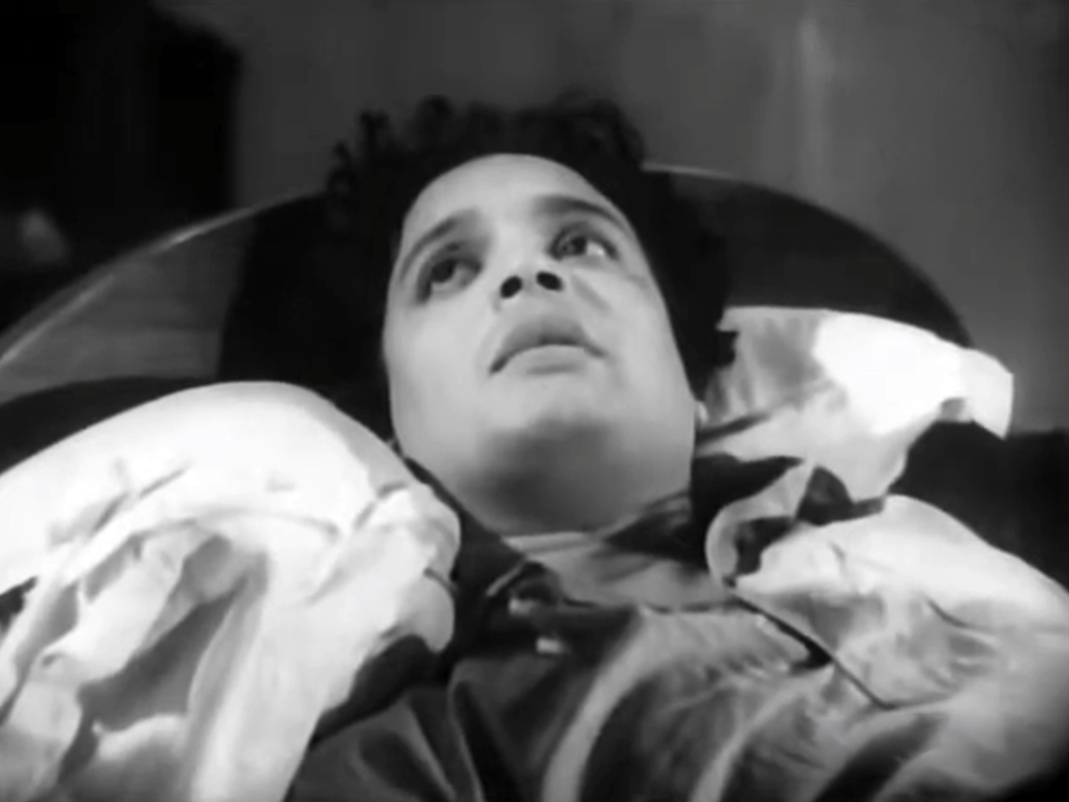
A still from Hrad
Uttam writes with evident joy: “Hrad released. In this Ardhendu Sen film, I played the character of an amnesiac young man… The critics said, “Uttam Kumar, in the character of an amnesiac patient, bewitches the audiences from the beginning to such an extent that the audiences become anxious when he is absent on the screen”… Some critics excitedly compared me with Gregory Peck and said, “Uttam Kumar has delivered his till date career-best performance in Hrad”… This year (1955) changed the track of my life … the accolades that came my way were unimaginable … in the meantime B.F.J.A (Bengal Film Journalists’ Association) made my actor’s life successful. When I first heard that they had decided to confer the best actor’s award to me in 1955 for Hrad, the joy I felt at that moment was unfathomable and cannot be described by any means.”
It would be a mistake to read this as a purely personal recollection, ignoring the hint of critical reception folded into Uttam’s own narration. Since documentation is scarce, we can only hypothesise that the attention Hrad earned stemmed from its engagement with psychological narrative — making it, perhaps, one of Indian cinema’s pioneering works in the genre, and opening a chapter that many later films would follow.
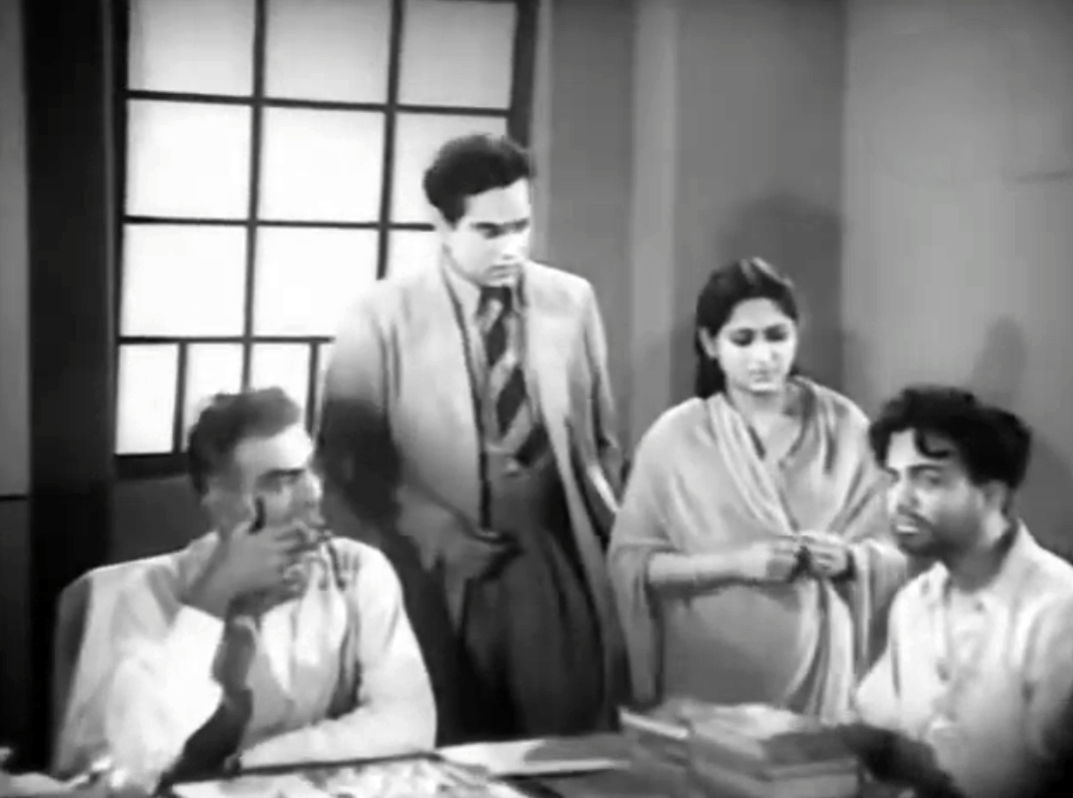
Asit Baran and Sandhya Rani with Uttam Kumar at the mental asylum
Hrad is set largely in a mental asylum, though the space bears little resemblance to a Foucauldian panopticon. The patients are free to joke and are not kept under surveillance — quite unlike a modern asylum. Early in the film, we meet Banibrata (Uttam Kumar), who oddly refers to himself as “Manoj,” inside an asylum on the edge of a suburb. Before we see his troubled countenance, the camera lingers on his fingers, miming the trigger of an imaginary pistol.
The image of an innocent Banibrata in a dhoti-kurta suggests he belongs to the bhadralok, set apart from the other residents, shown simply as lunatics presumably belonging to the working class. This class status gives him added proximity to the doctors, to whom he narrates the dream that keeps haunting him.
Mapped out, these dreams — which encode the events that led Banibrata to the asylum — suggest a case of Post-Traumatic Stress Disorder; the doctors, however, diagnose him with psychosis. Banibrata initially blames himself for his mother’s death, and, already vulnerable, is further shattered when a friend lures away his beloved. These fragments surface partly in his wrathful rejection of the very idea of ‘friendship’, but mostly in dream visions emanating from his subconscious. These visions unfold in surreal settings: a bed floating on a lake that quickly dissolves; a bridge where a dog barks at him with revulsion; and finally an isolated horizon, where he seeks refuge with a girl in a desolate house, only to glimpse a gallows rope and hear voices shouting “Police! Police!”
The climax revisits the source of his trauma in a telling montage: Banibrata finds his beloved being courted by his own friend, which culminates in the friend’s mysterious murder. In a Kafkaesque turn, Banibrata ends up first in police custody, then in the asylum. The sequence is necessary to close the narrative’s gaps, but the film’s melodramatic mode gives Uttam ample room to work his charm — so much so that the pistol’s anticipated gravitas is reduced to little more than a MacGuffin.
Hrad could well have been one of the pioneering whodunits, but its melodrama lets it engage with psychological narrative all the more effectively, while keeping it tethered to the other melodramas of the 1950s. One descendant is Harano Sur (1957), in which Kumar again played an amnesiac and won national acclaim. Given that Harano Sur effectively grew out of Hrad, the earlier film’s significance shouldn’t be diminished by its uneven direction.
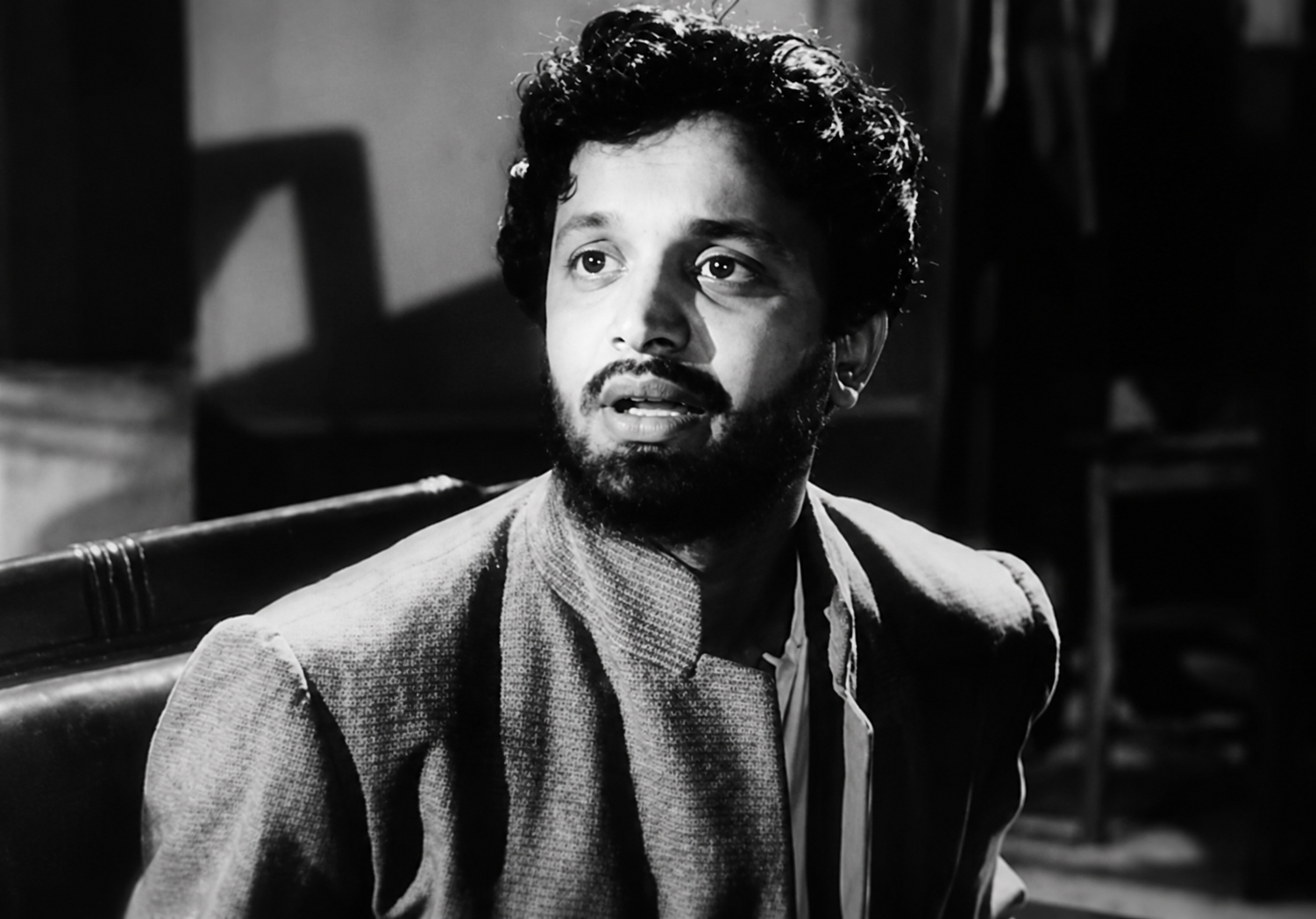
A man who has lost his memory – Uttam Kumar in Harano Sur
The film does have narrative lapses. More pressingly, it currently survives only as a poor-quality print, recorded off a cable broadcast via a Tata Sky set-top box. This mode of viewing has its own politics: with no restoration available, the print resists close scrutiny and sometimes obscures meaning altogether, as technical glitches drop crucial moments and post-globalisation soap-opera ads interrupt the viewing. A full judgment of the film’s narrative craft is, for now, simply unfair to make.
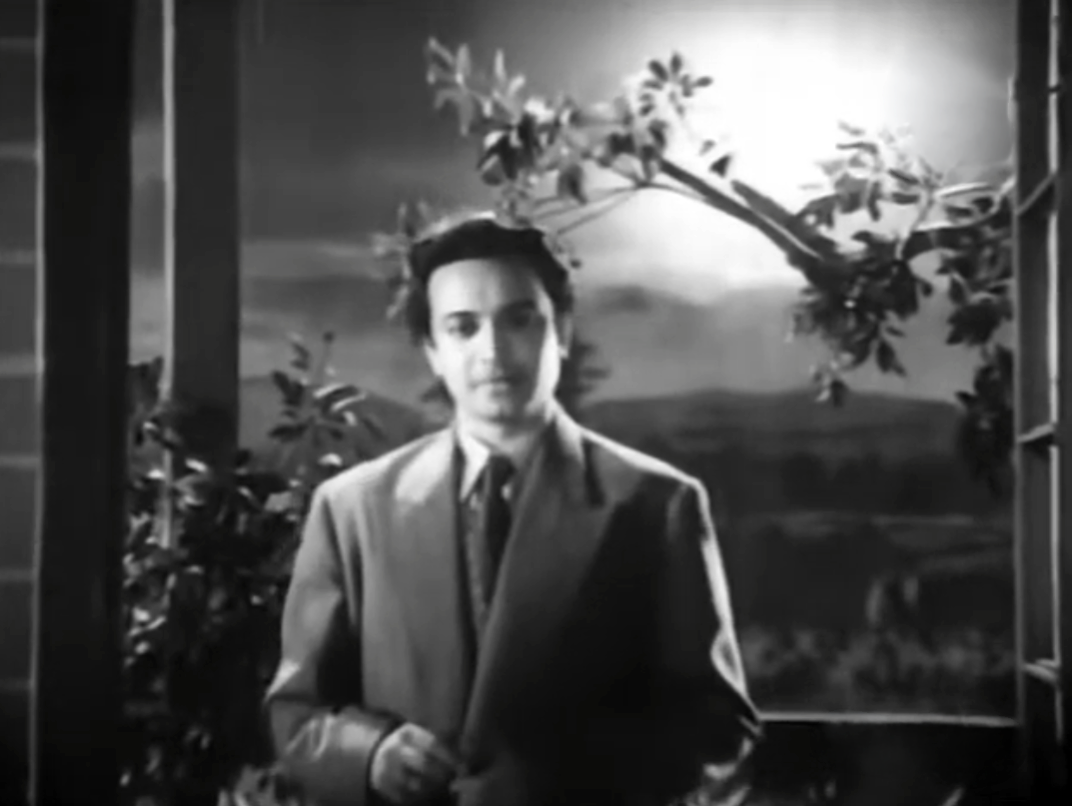
Uttam Kumar in a scene from Hrad
Still, Hrad was conceptually ahead of its time — and so was Uttam Kumar, who chose to take part in it despite the pull of glamour elsewhere. That choice was itself a small political redefinition of the culture industry and the star system: proof that actors hungry for popular success needn’t always choose substance-light, advertisement-heavy films to satisfy consumerist appetites. This refusal to fully embody commodity fetishism is what makes Kumar distinctive, and in today’s post-globalised media landscape, it’s worth asking whether Kumar and stars like him even belong in the same category as contemporary stars. Hrad, then, is not a perfect film, but an exemplary one — representative of the uncut gems still lost in the valley of oblivion, and deserving of our renewed attention.
(Pictures are courtesy the Internet)

Whether you are new or veteran, you are important. Please contribute with your articles on cinema, we are looking forward for an association. Send your writings to amitava@silhouette-magazine.com

Silhouette Magazine publishes articles, reviews, critiques and interviews and other cinema-related works, artworks, photographs and other publishable material contributed by writers and critics as a friendly gesture. The opinions shared by the writers and critics are their personal opinion and does not reflect the opinion of Silhouette Magazine. Images on Silhouette Magazine are posted for the sole purpose of academic interest and to illuminate the text. The images and screen shots are the copyright of their original owners. Silhouette Magazine strives to provide attribution wherever possible. Images used in the posts have been procured from the contributors themselves, public forums, social networking sites, publicity releases, YouTube, Pixabay and Creative Commons. Please inform us if any of the images used here are copyrighted, we will pull those images down.