Stay tuned to our new posts and updates! Click to join us on WhatsApp  & Telegram
  Channel
& Telegram Channel & Telegram Channel 




A filmmaker becomes a legend after death. But beyond the mythology, what remains of Anik Dutta’s cinema? A tribute to the filmmaker, his films, politics, satire, and legacy, by Silhouette editor Amitava Nag.
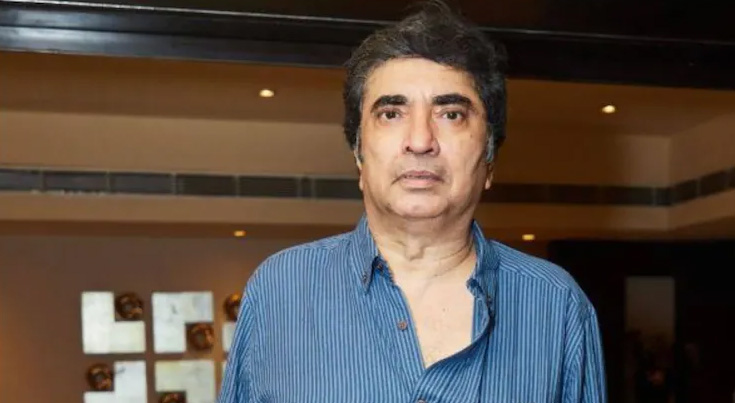
Anik Dutta (Pic: Anik Dutta/ Facebook)
From 27 May 2026 till now, for over a week that Bengali film director Anik Dutta jumped to his death by falling from the roof of a high-rise, the media, social and otherwise, is teeming with personal stories, anecdotes, and gossip. Friends, colleagues, common public – all have risen to the occasion, sharing their proverbial two cents on a director whose claim to fame happened in 2012 with Bhooter Bhabishyat. In the next fourteen years, Dutta made seven films, not always with the regularity of a clockwork. Incidentally, his first film happened a year after the erstwhile regime of West Bengal politics ushered in, and his death coincided with the shift in administration along the corridors of power. We know, already, Dutta was vocal about his resentment of the administrative stranglehold that kept West Bengal at bay for many years, so much so that his films were targeted specifically. At least one film, Bhabishyater Bhoot was banned immediately after release for its overtly political tune and no-nonsense resemblance with some of the active super-powers of the then-governance of West Bengal.
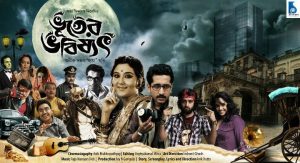
Bhooter Bhobishyot Poster
It is not new that the death of a creative person sparks a curious debate in the public discourse. We have often observed that even artists who were at one time considered bootlickers are suddenly looked upon as prophets selling dream quotients to a class of impoverished and hungry middle-class hypocrites. For that matter, even a difficult novelist of the grade of Kamal Kumar Majumder has been retroactively declared a ‘visionary’ and artists like Ramkinkar, once dismissed as eccentric, are now celebrated as uncompromising. In this mayhem of gooey adulation from critics, colleagues and general audience, in this celebration of laudatory flatulence, what surfaces is a hagiographic tendency where discussion of art, after death, gives way to discussion of personality.
It took a centenary celebration of Ritwik Ghatak to break out of this blind veneration and present us with a number of critical documentations of his work. This affinity is affecting our critical appreciation of Rituparno Ghosh as well, in equal measure. So, it is no wonder that Anik Dutta’s (whose repute as a filmmaker, or even as a rebel is far less than both Ghatak and Ghosh), sayings, gestures, eccentricities, political opinions, and the much-hyped ‘uncompromising attitude’ begin to overshadow the actual merit and complexity of the canon of his seven films themselves. In the end, he is being transformed into a symbol of the middle-class Bengali’s own wish fulfillment, its failed attempt to rebel against the daily mortification of basic human values. So, it is no surprise that reels and snippets of Dutta’s comments, interviews and anecdotes of his mercurial temperament are now strewn all over social media as an urban mythology. In the most profound philosophical way, it is an irony that death halts the possibility of change, for good or for worse, based on which side of the fence you are looking from. Mortality transcends a creator, or for that matter any individual, from the ignominies of future failures and contradictions. Death, has this peculiar quality, it freezes a figure into a permanence of benevolence.
If we look to the West, as we always do to support our arguments, and when we fish for compliments from those who barely care for us, or our culture, we can bring up the case of Vincent van Gogh. In his life, he was never considered important; his paintings were rarely sold–an eccentric more than an extraordinary artist. Post his death, the legend of a suffering genius overtook discussions of his technique, composition, perspectives and an absolute riotous use of colour. Popular culture became obsessed with his severed ear, his narcissistic ambition for self-portraits, his mental breakdowns, and his tragic loneliness. Van Gogh, the man, became more famous than his paintings.
As stories of Dutta’s loneliness make rounds, and the reshuffling of several actors and actresses who testify his loneliness by their farcical account of suspicious closeness with him, van Gogh’s case comes to mind. As does that of Guru Dutt’s whose self-indulgent melancholy never got his due in his lifetime, only to be turned into the archetype of an uncompromising artist destroyed by a consumerist, insensitive and crude industry. Like Dutt’s, public discourse on Dutta’s has also gravitated toward the cause of his mysterious death than toward his biting wit and razor-sharp dialogues in some of his films.
This tendency of hagiography and posthumous fascination reflects a bigger truth–an abhorrence for any serious engagement with art in its native form. Discussing merit of an artwork, be it a lengthy feature film or even a short poem, requires intellectual labour, critical openness, readiness to disagree and a fearless mind not to cower in front of names that seem daunting. Discussions on any art form, most often not, need to be inconclusive, yet brutal. It is easier to circulate comments and quotes than to sell ideas, or even, notions. Because art remains to be experienced, a far more difficult job than consuming the life of an artist.
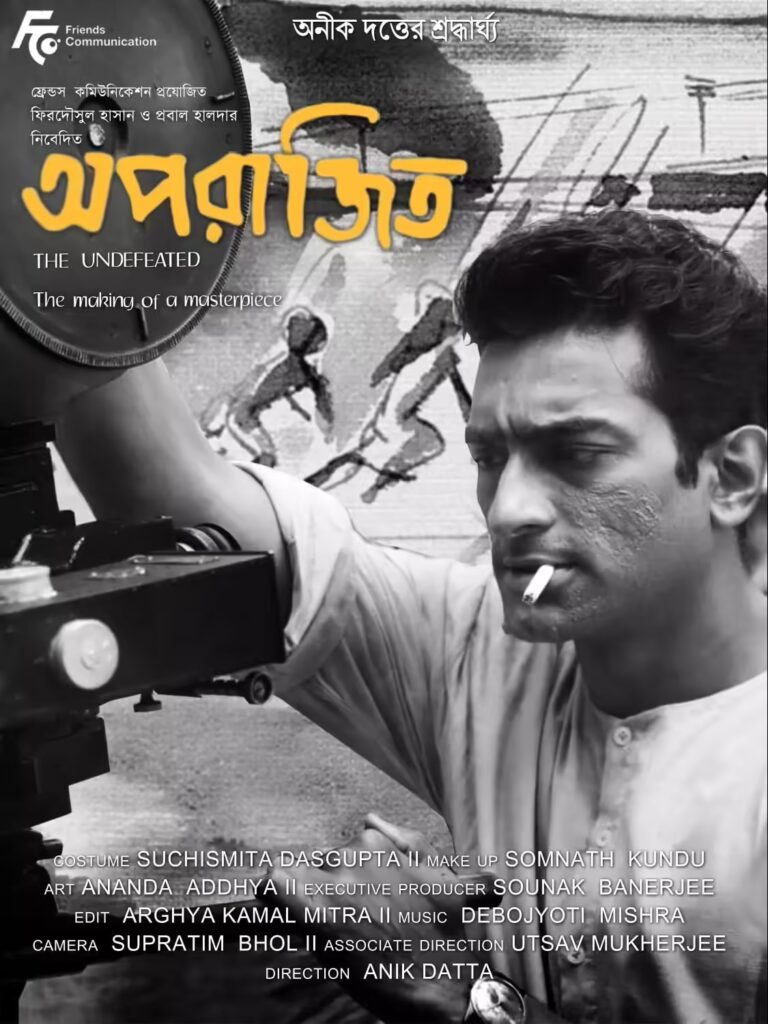
Aparajito – film by Anik Dutta (Pic: Facebook)
This is exactly where Dutta’s film Aparajito fails. A film that aspires to look at the making of Satyajit Ray’s Pather Panchali, doesn’t ever try to engage us with emotional, psychological or creative confusions of Ray, the artist. It takes a simpler path, by abandoning critical reassessment of Ray’s frailties and compromises and relying largely on anecdotes which most Ray aficionados already know. Dutta forgets that reverence is not akin to understanding, Satyajit Ray’s art should not be untouchable. Where Dutta lacks is in his unwillingness to discuss the failures of Ray’s first film as Dutta perceives himself, not the ones Ray narrated eons ago, readily available in print and media. Because, for any art form, and for any artist, it is only when we look at the inconsistencies alongside the genius, the imperfections adorning the brilliance that we may respect art and not worship an artist’s personality.
While mainstream media and bit-sized filmmakers laud Aparajito for exactly the elements for which it should be banished, Dutta’s second film, Aschorjyo Pradeep (2013), holds a very conspicuously peculiar place within his filmography. Made at a time when Bengali cinema was reeling under the onslaught of the success of Dev (following the box-office conquests of Challenge (2009), Le Chakka (2010), Dui Prithibi (2010), Paglu (2011) and Challenge 2 (2012)), Dutta’s film looks at the moral anxieties of the Bengali middle-class and its hypocritical extensions. It is a film that exposes the ambition of the morally vulnerable, reducing him to be a slave of consumerist practices and habits. It is a mirror to all of us. Unlike many of its predecessors, say the films of Mrinal Sen (Kharij, 1982 and Ek din Pratidin, 1979 for that matter), Dutta’s film is overtly cynical to the brink of near-absurd. Because the protagonist of the film is too recognizable, the film’s symbolic satire becomes overly uncomfortable for popular success. It still remains an important film in Dutta’s oeuvre as it places the Bengali middle-class in the psychological cage it loves to be trapped into–a contradiction between a morally upright self-image and materialistically insecure self-ambition.
If Aschorjyo Pradeep remains, to me, an ‘important’ film of Dutta, undoubtedly his most emotionally experienced, nuancedly laced one is the first, Bhooter Bhabishyat, made a year earlier. It will not be hasty, if we may say that with this film unleashed a whole genre of ghost stories, and creepy satirical humour started surfacing on the Bengali screen. Make no mistake, there had been some of the most delicately palpable humour in Bengali cinema before Bhooter Bhabishyat as well, but none so fiercely witty, dipped in Bengal’s favourite nostalgia sauce. Both these aspects, wit and nostalgia, became causes for Dutta’s undoing in some of his later films.
Then, why does Bhooter Bhabishyat become a pioneer in the context of Bengali cinema as a whole, leave aside Dutta’s own slim filmography? It is in converting nostalgia into a political satire without being sentimental. Bengali non-mainstream cinema, name it ‘parallel’ or ‘art’ whatever suits you, at that time, was plagued with a certain sluggishness, thanks to a type of film-making that relied on low-placed, slow-paced dialogue delivery, all indoors with the characters dressed all prim and fine lamenting on the good old days, that there were. Bhooter Bhabishyat was a complete anti-thesis of that mindset and cinematic aesthetic by playing with the same cards–indoors and fine dressing. In the film, the dilapidated mansion is an abode of ghosts, not as dreadful creatures that mainstream films tend us to believe, but lovable ones, almost lifted from Sirshendu Mukhopadhyay’s many a delightfully crafted novels targeted for adolescents and teens.
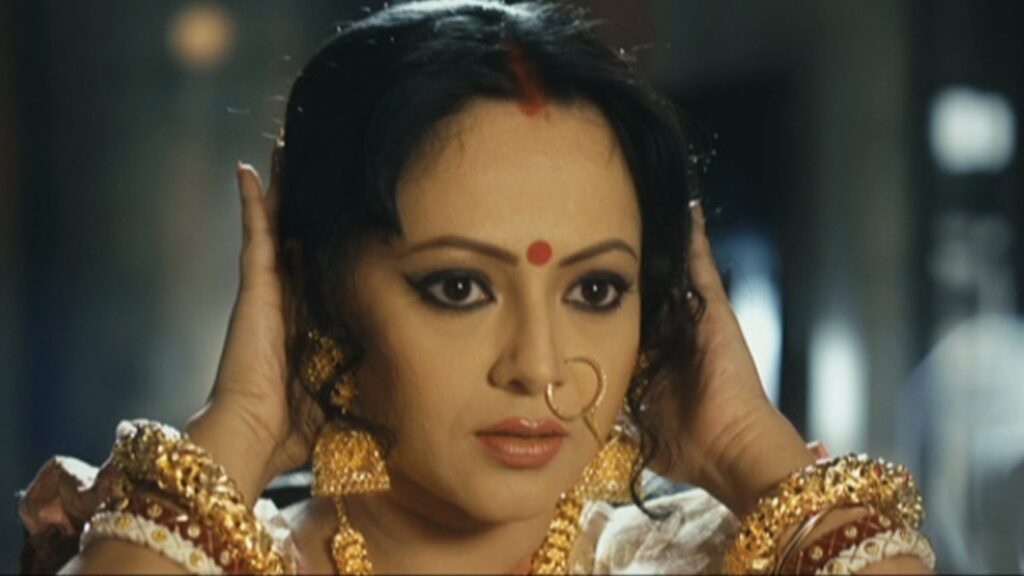
A still from Bhooter Bhabishyat
In Bengali, the word “bhoot” means both ghost and past, and to Dutta’s credit he dishes out the latter in the guise of the former. The mansion becomes a metaphor, not only of the metro city which once happened to be the political capital of British India, but more importantly, it symbolizes the battered, bruised Bengali identity struggling to keep afloat as the currents of urban modernism slowly and surely have taken the wind out of its sails. Where Dutta succeeds as a disciple of Ray is in incubating his film with similar fantasy musicality of Goopy Gyne Bagha Byne (1969). The ghosts were catalysts in Ray’s film; Dutta brings them to the centre, and yet, like Ray, he succeeds in weaving a carnival of historically archetypical ghosts (from zamindars to Anglo-Indians, theatre actors, revolutionaries, nawabi retainers, and so on), a cinemascope of Bengal’s heritage culture. While Ray’s film is a comment on the perils of war at a time (1969) when the world was brimming with student revolutions all over, Dutta’s film articulates the post-liberal anxieties of the Bengali psyche.
Why does Bhooter Bhabishyat flourish commercially even though its sharp wit is beyond the scope of the average? It is simply because the audience can relate to the trembling undertone of collective fear for a diminishing cultural, social and political identity. In making a Marwari businessman as the prime villain, Dutta hits the right chord that echoes Bengali sentiments for decades. So, even if, at quite a few times, his brand of humour tends to become shallow caricature of stereotypes, Dutta drives home a point so languidly poised in the Bengali mind–the decadence of the ‘bhadralok’ at the hands of the ‘baniya’ Marwari. It is precisely for this reason, when in Aschorjyo Pradeep the villain is no longer a racial difference but inherent in the genetic paradigm of the impish ‘bhadralok’ that the audience finds it too hot to handle.
The biggest asset of Bhooter Bhabishyat is the fact that its director doesn’t lecture much, he shows. If one film goes closest in terms of that directorial philosophy, of not being a prophet, it has to be Barun Babur Bandhu, though structurally, thematically and culturally it has nothing similar to Bhooter Bhabishyat. Like Aschorjyo Pradeep here again it focuses on the erosion of social values and ethics but not with an exaggeration of satire, but with a silence of societal discomfort. Here, Dutta’s political signaling is more inclusive, as if, like Sen’s films ,mentioned earlier, he wishes to go under the knife with melancholic restraint. In the protagonist Barun Babu, Dutta paints the last traces of a fading ‘Bengali bhadralok’ identity, a reservoir of cultural memory, not as nostalgia but as a crumbling artifice itself.
In portraying Bengal as an aftermath of decline, a space of wounded realism, Dutta at times evokes similar hopeless paranoia one experiences in the films of Ritwik Ghatak, albeit with different markers and diverse methods. This decline in intellectual civility, which Dutta cranked up in film after film, quite ironically, represented itself in reducing his cinema to a handful of quotable quotes! In this short cut, we will probably realize that this surge of public glorification is essentially a retrospective compensation. It is, as if, to reassure ourselves that at least Anik Dutta has got a recognition however late it be–a collective guilt for our ignorant humbuggery. Our frivolous vacuity tends to ignore art, in our blinding impulse to transform every dead artist into a moral mascot convenient for our crocodile tears.
Each artist, great, average or poor, measures up not in what he has said in interviews or how eccentric he looks like in front of an unsympathetic media. The merit of an artist lies in the fact, whether his work has the ability to reveal new dimensions of human experience, even long after it is made. Dutta’s Bhooter Bhabishyat will expectantly take the hits of forgetfulness for another generation or so and yet shine brightly. When today’s ripples die down, the media and its demigods become busy with a new gossip element, we will wait to see if any of Anik Dutta’s other works bear a stamp of permanence.
Asit Sen: The Director Who Became an Unforgettable Comedian
Tapan Sinha: The Humanist Filmmaker

Whether you are new or veteran, you are important. Please contribute with your articles on cinema, we are looking forward for an association. Send your writings to amitava@silhouette-magazine.com

Silhouette Magazine publishes articles, reviews, critiques and interviews and other cinema-related works, artworks, photographs and other publishable material contributed by writers and critics as a friendly gesture. The opinions shared by the writers and critics are their personal opinion and does not reflect the opinion of Silhouette Magazine. Images on Silhouette Magazine are posted for the sole purpose of academic interest and to illuminate the text. The images and screen shots are the copyright of their original owners. Silhouette Magazine strives to provide attribution wherever possible. Images used in the posts have been procured from the contributors themselves, public forums, social networking sites, publicity releases, YouTube, Pixabay and Creative Commons. Please inform us if any of the images used here are copyrighted, we will pull those images down.