Stay tuned to our new posts and updates! Click to join us on WhatsApp  & Telegram
  Channel
& Telegram Channel & Telegram Channel 




Guru Dutt’s films reveal something new with every viewing. Drawing from her learnings in the ‘Basic Course in Appreciating Songs in Guru Dutt Films’ and her own observations, Anshula explores the songs, visual motifs and subtle cinematic details that continue to make his cinema endlessly rewarding to revisit.
When we talk about a person’s professional journey, it feels only natural to begin at the beginning. So, let’s start with Guru Dutt’s first film, Baazi.
________________________
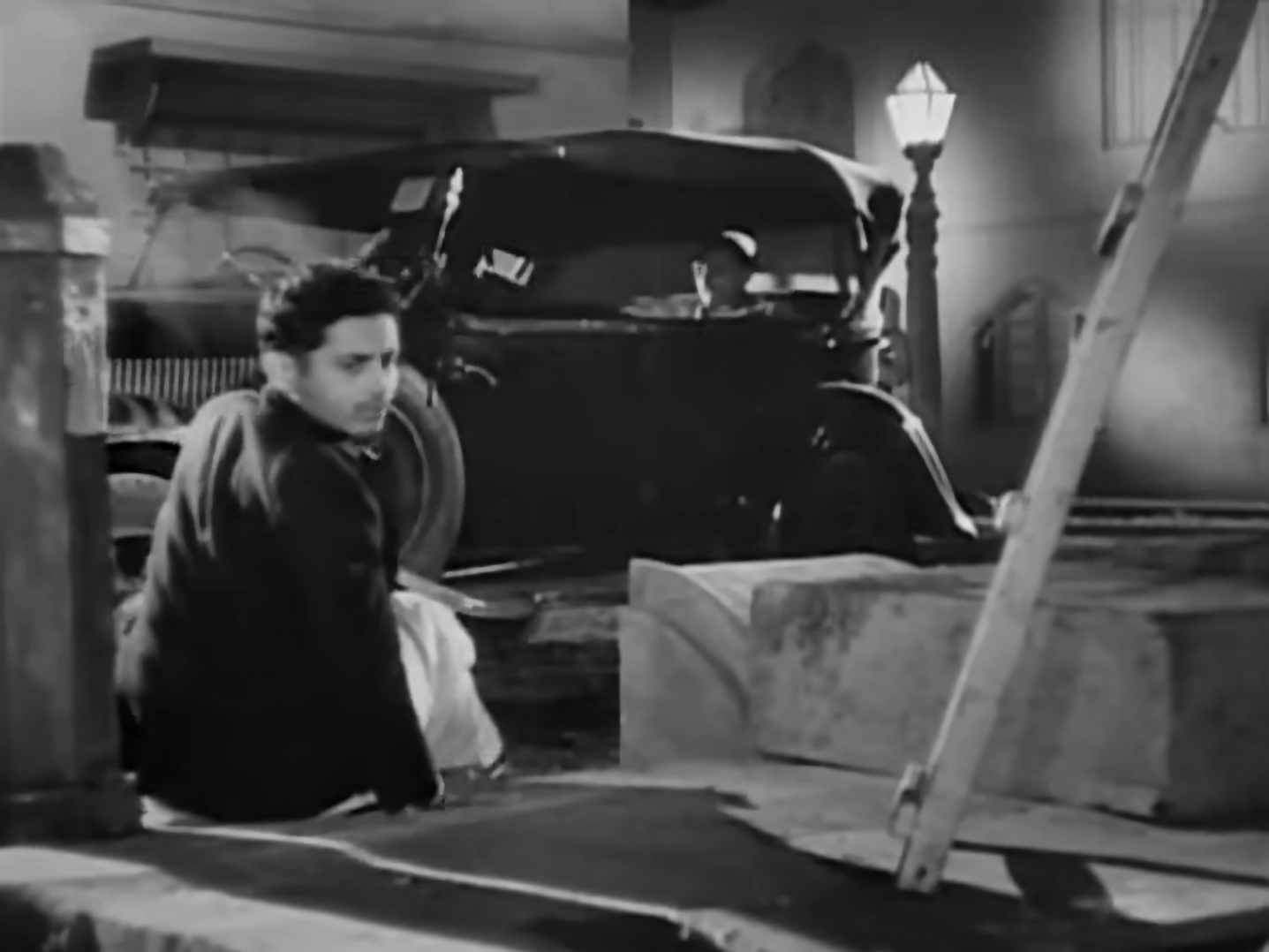
Guru Dutt is shown sitting alone by the roadside
As Baazi opens, Guru Dutt is shown sitting alone by the roadside. A car arrives, and a man steps out before entering the building in front of him. Inside is a scattered crowd. In just a few moments, Guru Dutt establishes the protagonist as an individual before placing him within the larger world around him. It is a simple opening, but an effective one.
In Baazi, Dev Anand plays a poor young man who desperately needs money for his sister’s treatment. His circumstances eventually force him to join K. N. Singh’s gang and become involved in illegal activities.
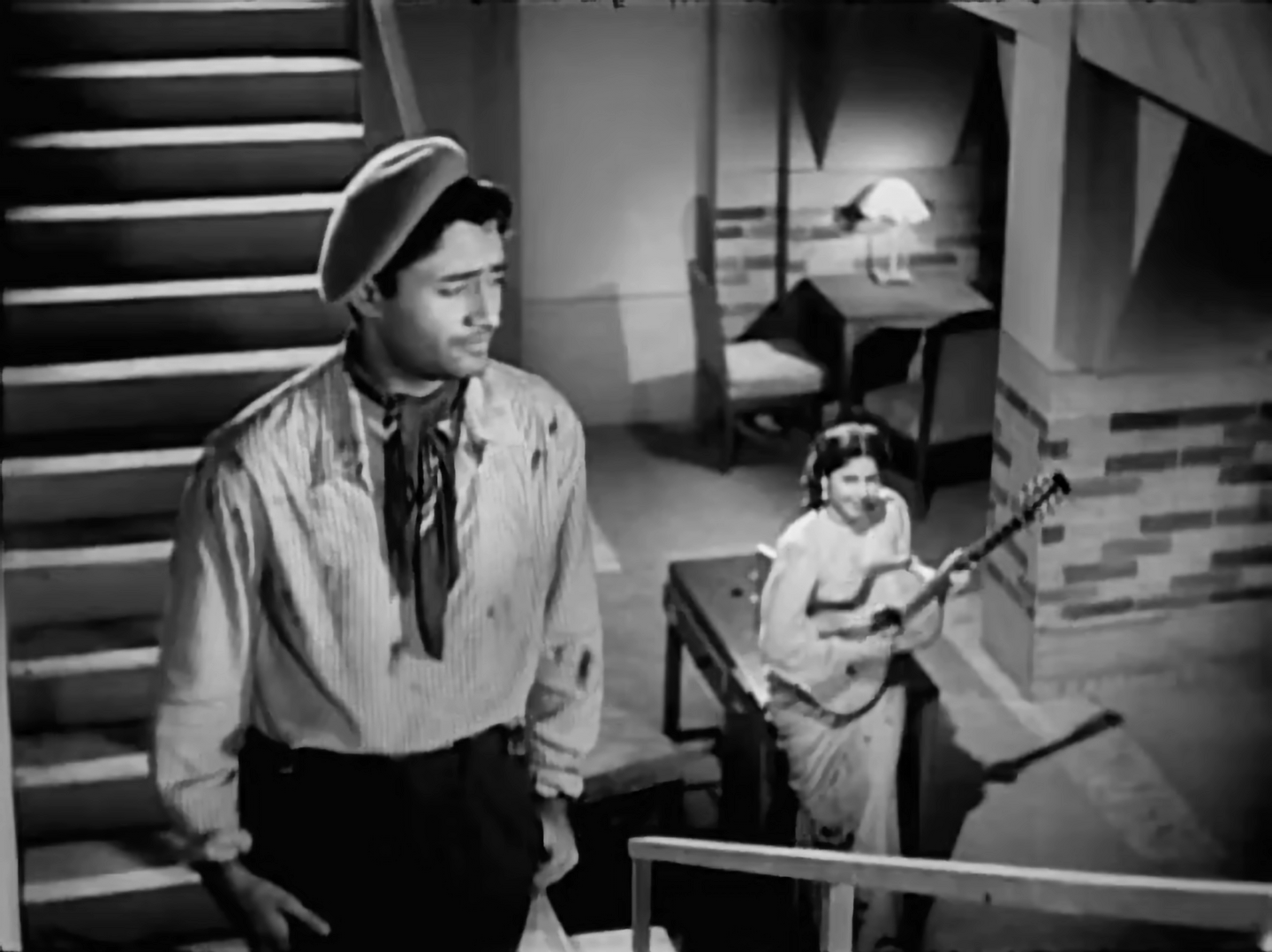
Dev stands at the top of a staircase
One of the film’s most striking visual moments comes in the song Tadbeer se bigdi hui taqdeer bana le. Dev stands at the top of a staircase while Geeta Bali sings. As the song progresses, he slowly walks down, one step at a time. By the end of the song, he has agreed to join the gang. His movement down the stairs almost mirrors the moral compromise he is about to make.
________________________

In Pighla hai sona, the waves, the trees and the soft sunlight come together
With Jaal, Guru Dutt once again demonstrates how beautifully he uses the surroundings to strengthen the mood of a scene. In Pighla hai sona, the waves, the trees and the soft sunlight come together to create imagery that feels calm and soothing. Rather than allowing the bright sunlight to overpower the frame, he lets nature blend effortlessly with the music.
Another memorable sequence is Chori chori meri gali. Before the song begins, the camera first focuses on Dev Anand. The shot then shifts to a man playing the guitar, but the moment Geeta Bali starts singing, he quietly slips out of the frame. It is a small detail, yet it naturally shifts the audience’s attention to the characters and the emotion of the song.
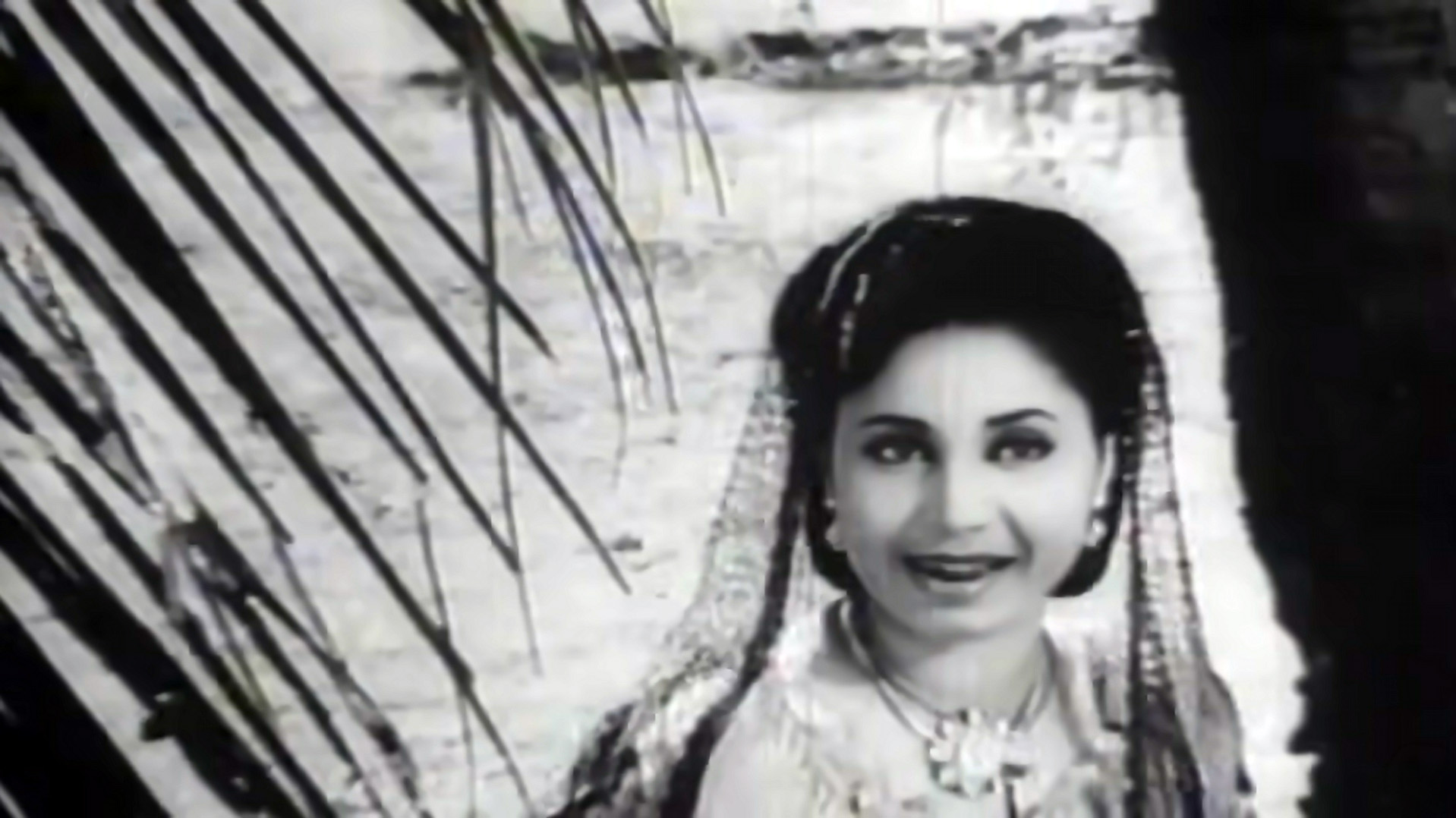
Geeta Bali briefly steps away from the crowd
There is another lovely touch during the line Dil aa gaya hai toh pyaare. Geeta Bali briefly steps away from the crowd and stands alone. As soon as the line ends and the music takes over, she returns to the group. The moment is fleeting, but it almost feels as though the song gives her a brief space to acknowledge her feelings before she becomes part of the crowd again.
A particularly beautiful visual appears later in the film. K N Singh threatens to inform the police that Lisa is a smuggler. Geeta Bali stops him and says, “Yeh faisla karne wale…” At first, it appears as though she is looking towards the sky. In reality, her gaze falls on the cross visible through the window in front of them. It quietly suggests that she is placing her faith in a higher power while speaking those words.
Another scene that stays with me is the one leading into Yeh raat yeh chandni. Dev confidently tells Geeta that she will eventually come to him, no matter what happens. She refuses and walks into her room, shutting the door behind her. Moments later, the door swings open again because of the storm outside.
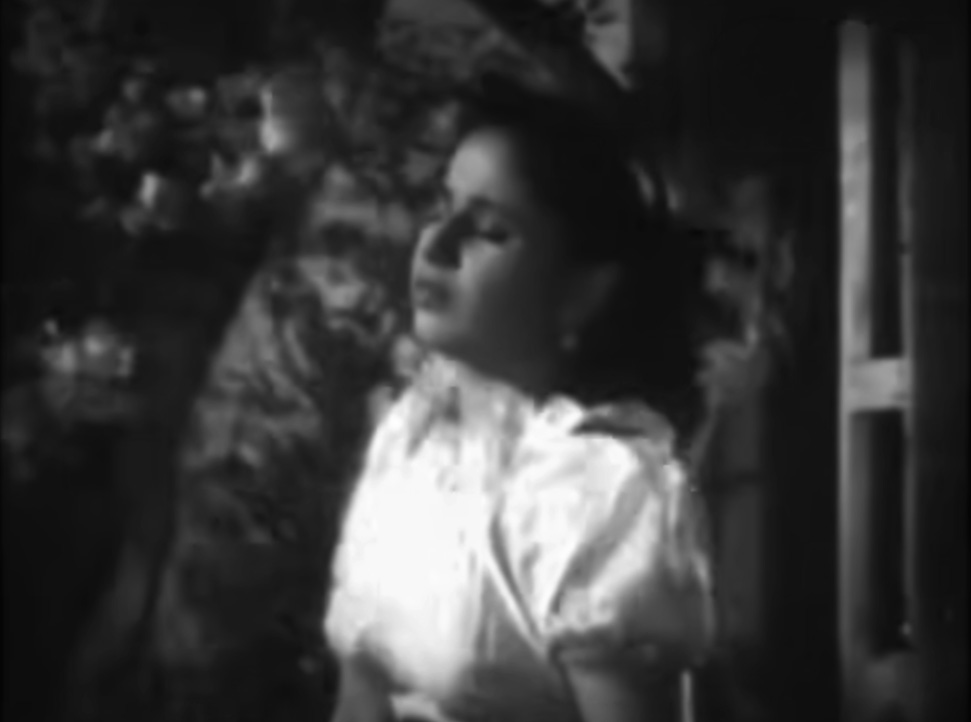
The storm appears much closer to Geeta
Interestingly, the storm never really seems to exist where Dev is singing. It appears much closer to Geeta, almost reflecting the conflict within her. She is torn between her feelings for Dev and the knowledge that he is a criminal. By the end of the song, when she finally walks towards him, she is caught in the jaal, both physically and emotionally.
Another visual that quietly reflects her state of mind comes when Dev is shown riding a merry-go-round. Because of its constant movement, he is never seen clearly. The spinning image almost creates a feeling of dizziness, hinting at the emotional confusion Geeta herself is experiencing.
________________________
With Baaz, Guru Dutt and Geeta Bali came together not only as actors but also as producers. One song that stands out is Ae watan ke naujawan, which unfolds almost like a montage. The camera remains constantly in motion as Geeta Bali sings to inspire the Indian labourers to rise against British rule and fight for their dignity and self-respect. Here, the movement of the camera itself adds to the spirit of the song, making it feel energetic and purposeful.
________________________
Aar-Paar marks an important phase in Guru Dutt’s filmmaking. Here, songs are no longer just musical interludes. They become an integral part of the storytelling and, at the same time, help shape the film’s identity.
One of the best examples is Kabhi aar kabhi paar. Rather than simply presenting a romantic song, Guru Dutt lets Kumkum, playing the lady labourer, become an observer of the budding romance between Guru Dutt and Shyama. As she sings, she almost becomes the audience’s eyes, noticing the playful teasing and the affection gradually growing between the two characters.
The picturisation is equally engaging. Several frames are carefully composed to make the visuals more striking, adding to the charm of the song without distracting from it.
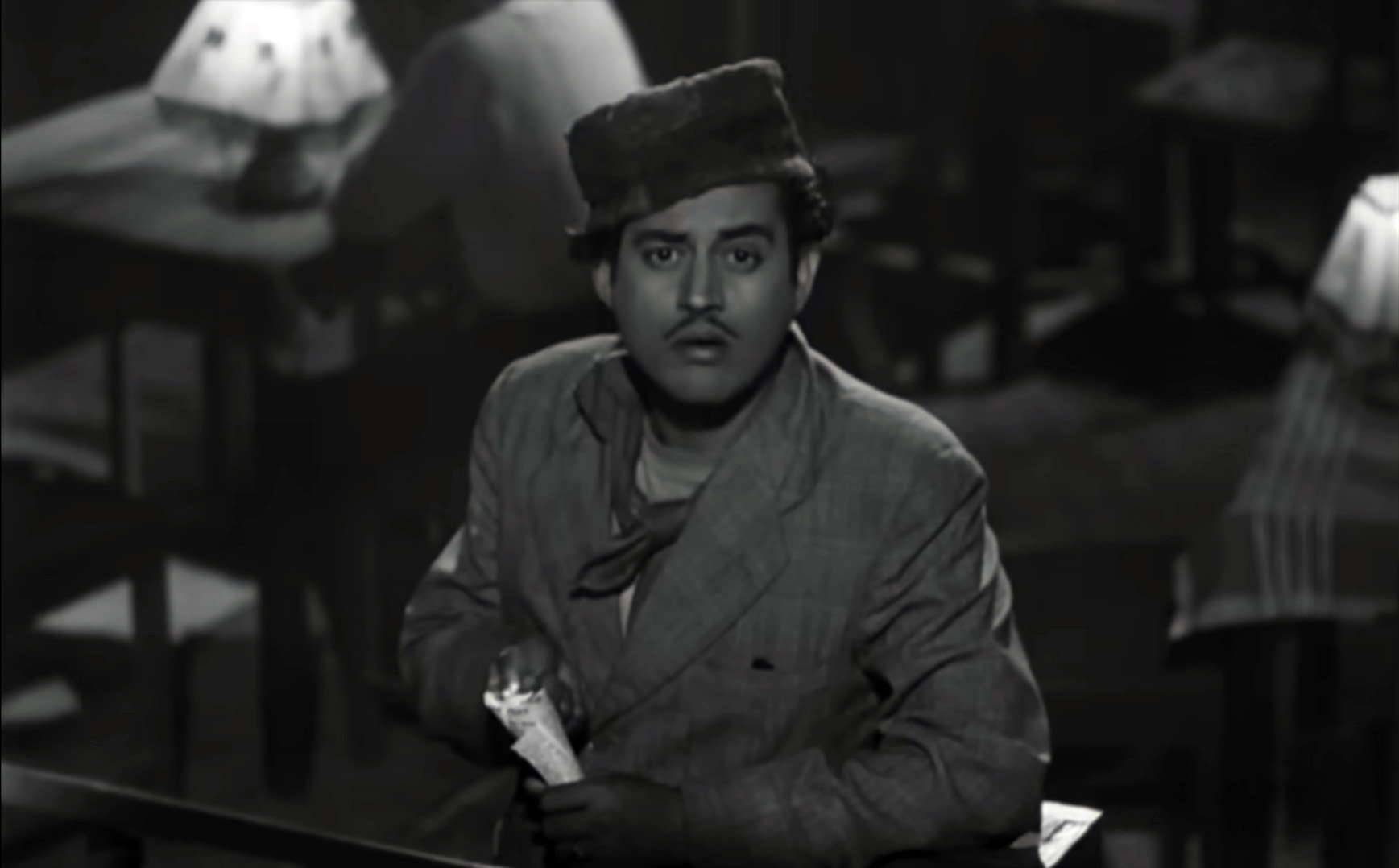
The close-up of Guru Dutt is reminiscent of Dev Anand’s close-up in Baazi
A similar visual idea appears in Babuji dheere chalna. The close-up of Guru Dutt is reminiscent of Dev Anand’s close-up in Tadbeer se bigdi hui taqdeer bana le from Baazi. It feels like a visual style that Guru Dutt continued to develop across his films. The song also ends on a delightful note when Johnny Walker suddenly appears in the frame from an unexpected direction, catching both the audience and the characters by surprise.
One anecdote connected with Aar-Paar beautifully reflects Guru Dutt’s instinct as a filmmaker. In an interview, Majrooh Sultanpuri recalled that while writing Sun sun sun sun zaalima, he had originally penned the line Pyaar mujhko tujhse ho gaya. Guru Dutt felt it lacked the right poetic flow and suggested changing it to Pyaar humko tumse ho gaya. Majrooh Sahab pointed out that the revised line was not grammatically correct. Guru Dutt’s response was simple: no one would come to the theatre to check grammar. What mattered was how naturally the line flowed with the music. The song went on to become immensely popular.
The same instinct can be seen years later during the making of Nau Do Gyarah. Dr Milind Damle, Course Director, told us at the ‘Basic Course in Appreciating Songs in Guru Dutt Films’ workshop, Majrooh Sahab had originally written sunehra baadal in Aankhon mein kya ji, but Vijay Anand felt the phrase did not sound quite right. It was eventually changed, once again showing how filmmakers of that era were willing to refine even a perfectly correct line if it improved the musicality of the song.
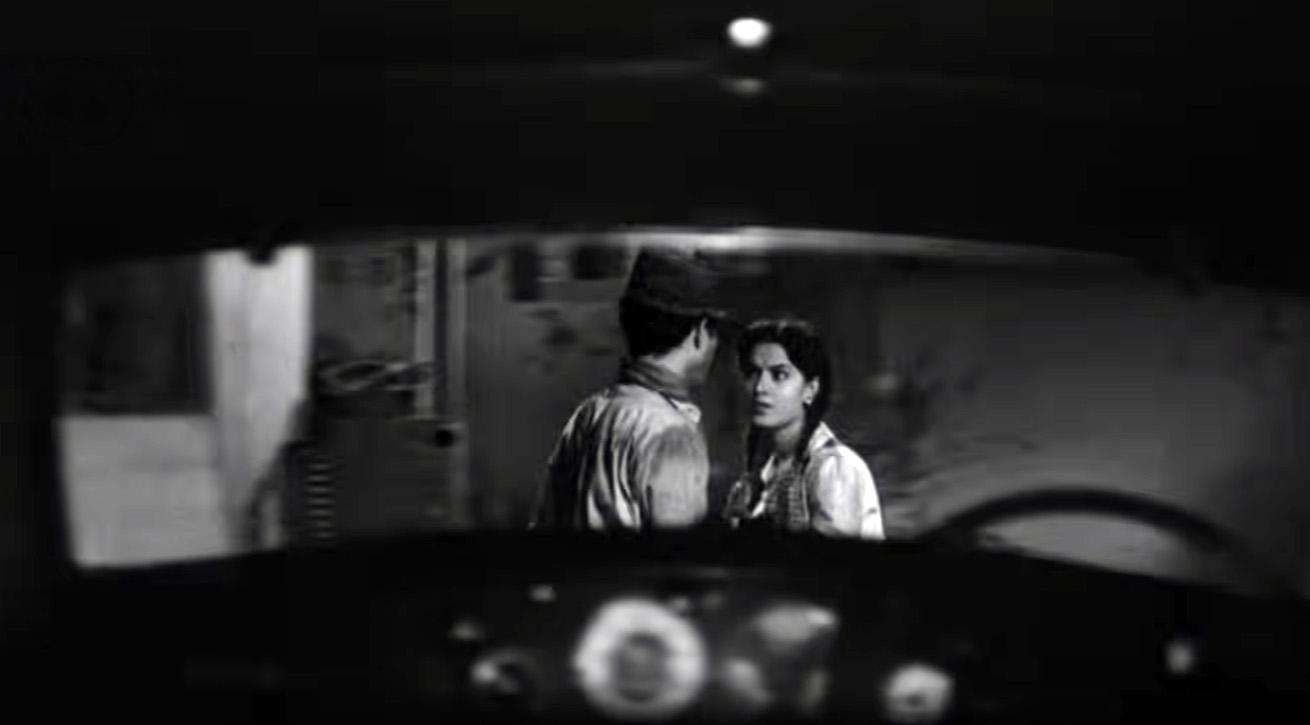
A garage is hardly a romantic location
Another aspect of Guru Dutt’s cinema that I find fascinating is the way he creates romance in the most unexpected places. A garage is hardly the first location that comes to mind while imagining a romantic song, yet Sun sun zaalima transforms it into a lively and affectionate space.
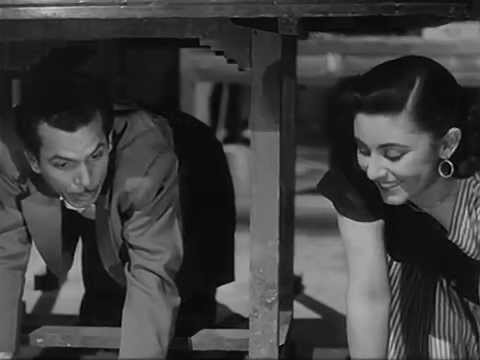
Romance in office
The same thought comes to mind while watching Hum the woh thi from Chalti Ka Naam Gaadi, which is also set in a garage. Even Jaane kahan mera jigar gaya ji from Mr. & Mrs. 55 unfolds in an office, proving that romance does not always need gardens or scenic locations. Sometimes, all it needs is the right setting and the right people.
Another technical detail that deserves appreciation is Guru Dutt’s use of back projection. It is very easy for such shots to look artificial, but he used the technique so convincingly that the illusion remained intact. Watching Yeh lo main haari piya, the moving vehicle sequences feel remarkably natural.
________________________
One scene in Mr. & Mrs. 55 that I particularly enjoyed is when Guru Dutt and Johnny Walker are thrown off a bus in the song sequence Dil par hua aisa jaadu. The transition is beautifully executed. The bus exits the frame, and the next shot reveals the two of them lying on the road. The sequence ends with Guru Dutt hugging a lamppost and slumping, singing ke haalat badal badal gayi, making the entire moment both funny and visually engaging.
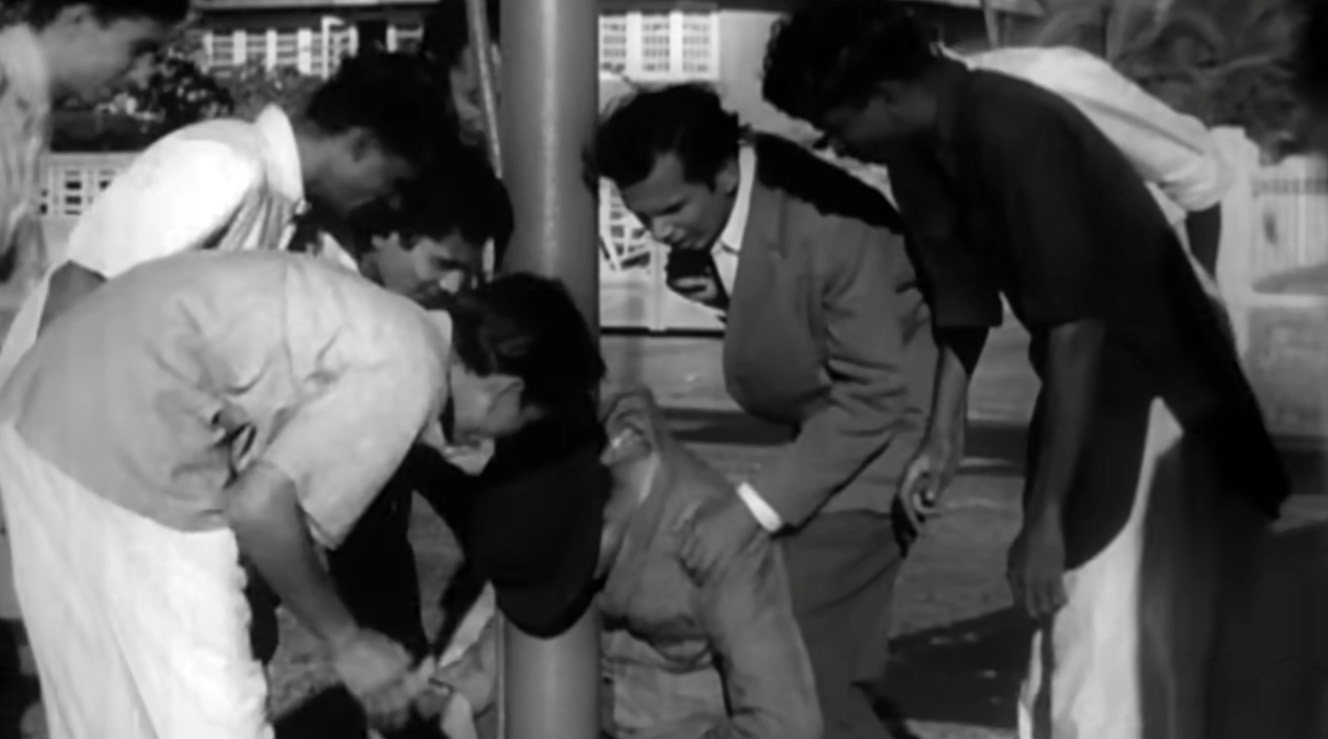
Guru Dutt slumping down a lamppost
Another aspect of Guru Dutt’s films that stands out is his approach to villains. He rarely creates characters who appear intimidating simply because they are evil. More often, the real antagonist is society itself, along with its rigid rules and expectations. In Mr. & Mrs. 55, Lalita Pawar certainly creates obstacles for Guru Dutt and Madhubala, but she never feels like a conventional Hindi film villain. Instead, she represents the social conventions that stand in the way of their happiness.
The film also gives Johnny Walker one of his most memorable songs, Jaane kahan mera jigar gaya ji. Like many of Guru Dutt’s films, the supporting characters are never treated as mere comic relief. They become an essential part of the film’s world.
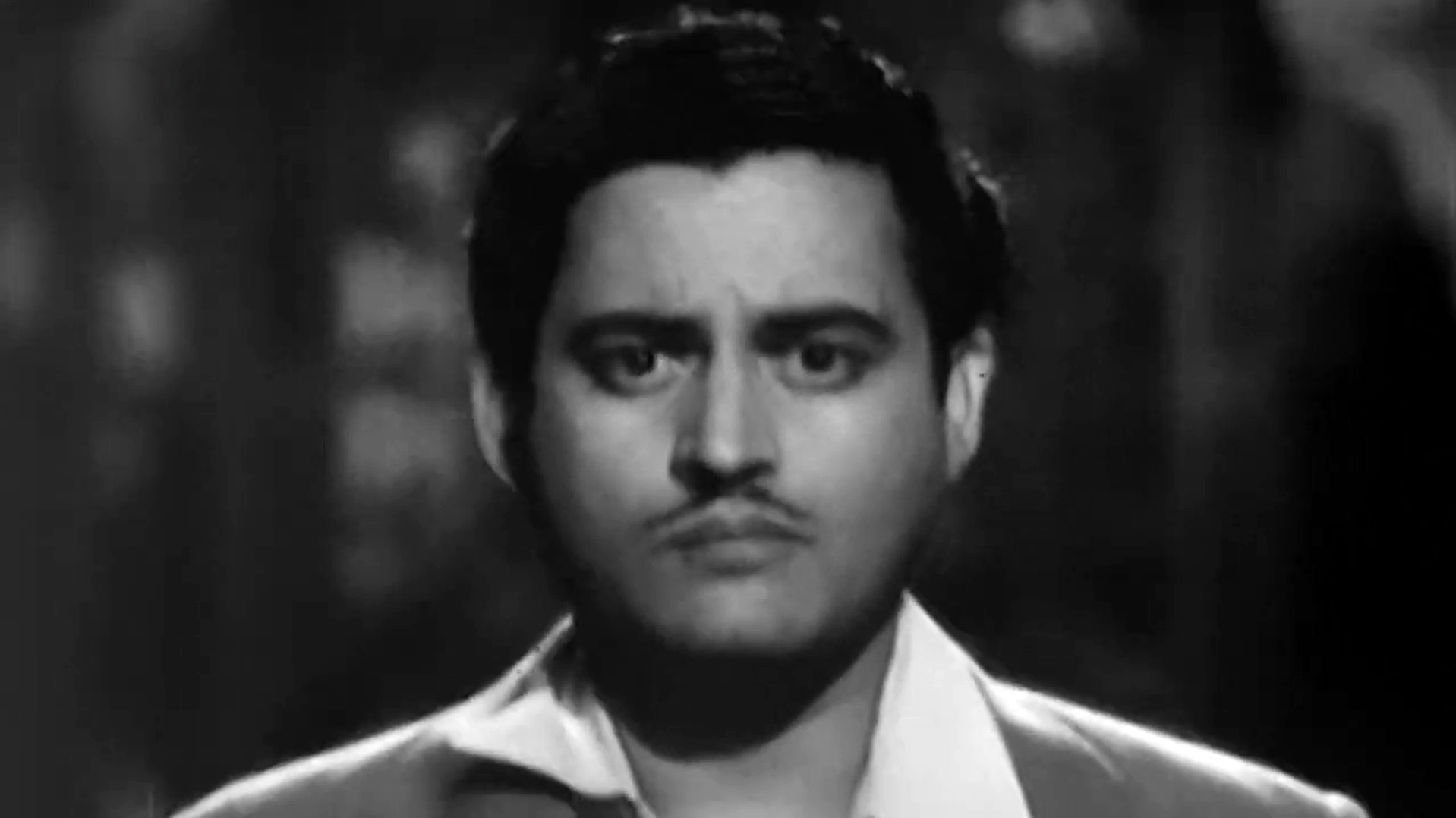
Guru Dutt walks towards the camera in Meri duniya lut rahi thi
Another beautifully filmed moment appears in Meri duniya lut rahi thi. Guru Dutt walks towards the camera in a close-up that perfectly captures the emotional weight of the scene. Here, the lyrics express what his character is unable to say aloud, allowing the song to become his emotional voice.
A similar use of light appears in Pritam aan milo. As the song begins, both Madhubala and Johnny Walker are shown in darkness. Later, Johnny Walker tells Guru Dutt, “Jo do ek nazar usne tujhe adalat mein phenki thi, wakai dardili thi,” before switching on the light to catch his reaction. It is a simple moment, but one that uses lighting to reveal emotion in a subtle way.
Although Mr. & Mrs. 55 and Aar-Paar are both commercial entertainers, Mr. & Mrs. 55 also carries a personal touch. In many ways, it perhaps reflects Guru Dutt’s own thoughts on marriage and relationships, making it feel partly autobiographical beneath its light-hearted surface.
________________________
With Pyaasa, Guru Dutt moved even closer to telling a deeply personal story. Like Mr. & Mrs. 55, it carries autobiographical elements, but this time the focus shifts from relationships to the professional world and the way society values art and artists.
The film tells the story of a poet Vijay whose work is rejected because he chooses to write about the harsh realities of society instead of romantic fantasies. Interestingly, the story had been conceived by Guru Dutt much earlier under the title Kashmakash. At that stage, the protagonist was not a poet but a painter whose work was exploited by art dealers even after his death.
When Guru Dutt approached Abrar Alvi to write the dialogues, Abrar suggested changing the protagonist from a painter to a poet. A painter’s story would have made it difficult to incorporate songs naturally, whereas poetry could become an organic part of the narrative. That one decision transformed the film. Once the protagonist became a poet, Guru Dutt turned to Sahir Ludhianvi, whose poetry gave Vijay’s character its voice and emotional depth. It is difficult to imagine Pyaasa without Sahir’s words.
The song Jaane kya tune kahi begins with both Vijay and Gulab standing in darkness. It almost feels as though they are two lonely souls searching for a little light in their lives. Gulab’s character was not part of the original Kashmakash story. Abrar Alvi later revealed that he had known a woman named Gulab, and Waheeda Rehman’s character drew inspiration from her.
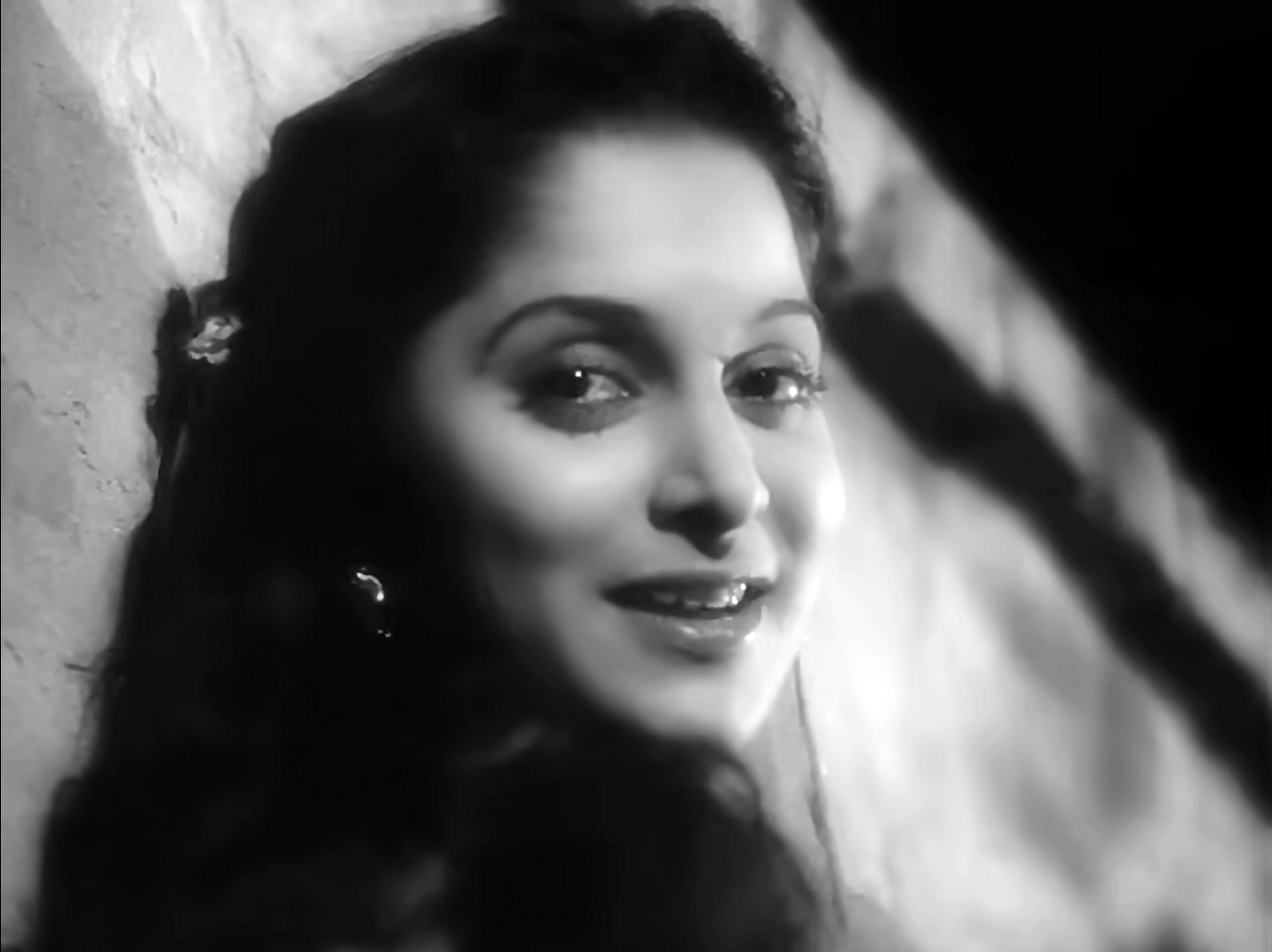
Zulf shaane pe mudi
One detail that caught my attention appears in the lyrics themselves. In Jaane kya tune kahi, Gulab sings:
Zulf shaane pe mudi, ek khushboo si udi,
Khul gaye raaz kai, baat kuchh ban hi gayi.
Later, in Hum aapki aankhon mein, Meena also refers to hair, but in a completely different way. When Vijay sings, In zulfon mein bo denge hum phool mohabbat ke, she playfully replies, Zulfon ko jhatak kar hum yeh phool gira dein toh?
Both songs speak about zulfein, yet the emotion behind them is very different. For Gulab, they carry an air of mystery and hidden secrets. For Meena, they become part of a playful exchange between two people in love. At the same time, they also become a motif for discarding what she does not value.
Johnny Walker’s character, Abdul, brings an entirely different energy to Pyaasa. In fact, Abrar Sahab himself was initially not in favour of including a character like Abdul. Yet he becomes an important counterpoint to Vijay. While Vijay is weighed down by disappointment and rejection, Abdul remains cheerful despite his modest circumstances. Even as a poor head masseur, he approaches life with remarkable optimism.
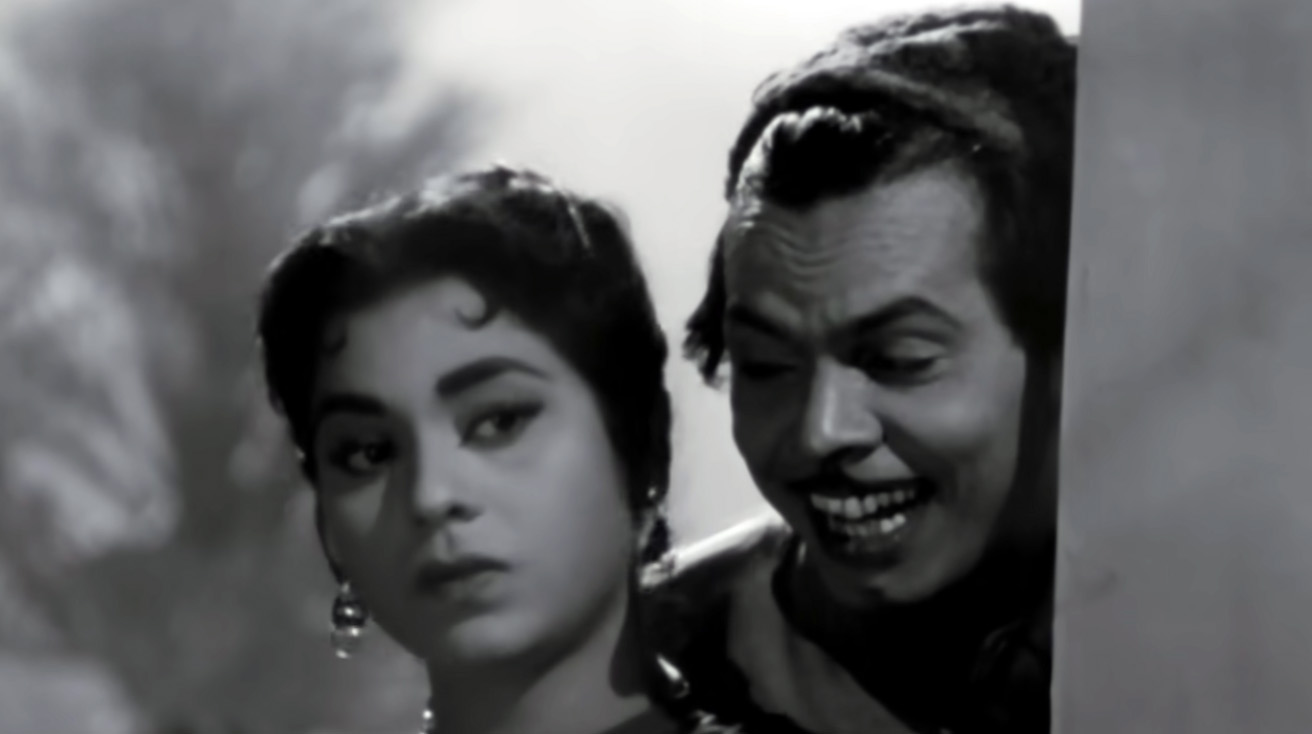
“Tu dono roti kha lena, main tujhe dekh kar hi khush ho jaunga.”
One of the film’s simplest yet most touching moments comes when Kumkum asks him what he would feed her if they were together. Abdul smiles and replies, “Tu dono roti kha lena, main tujhe dekh kar hi khush ho jaunga.” It is such an innocent line, but it tells us everything about his character. Sometimes, people who have very little are the ones who find the greatest joy in life. Through Abdul, Guru Dutt creates a character who is completely different from Vijay, yet equally memorable.
One visual pattern that appears repeatedly in Guru Dutt’s films is his use of stairs, pillars and close-ups of the eyes. These elements return so often that they almost become a part of his signature style.
When Baazi was released, Awara had already become a major success. Guru Dutt admired Raj Kapoor’s dream sequence in Ghar aaya mera pardesi, particularly the way the staircase becomes part of the visual storytelling. A similar idea appears in Pyaasa during Hum aapki aankhon mein. As the song begins, Meena gracefully walks down the staircase before joining Vijay in a beautiful waltz. By the end of the song, she climbs the stairs again and leaves the frame, bringing the sequence full circle. The staircase once again becomes more than just a part of the set.
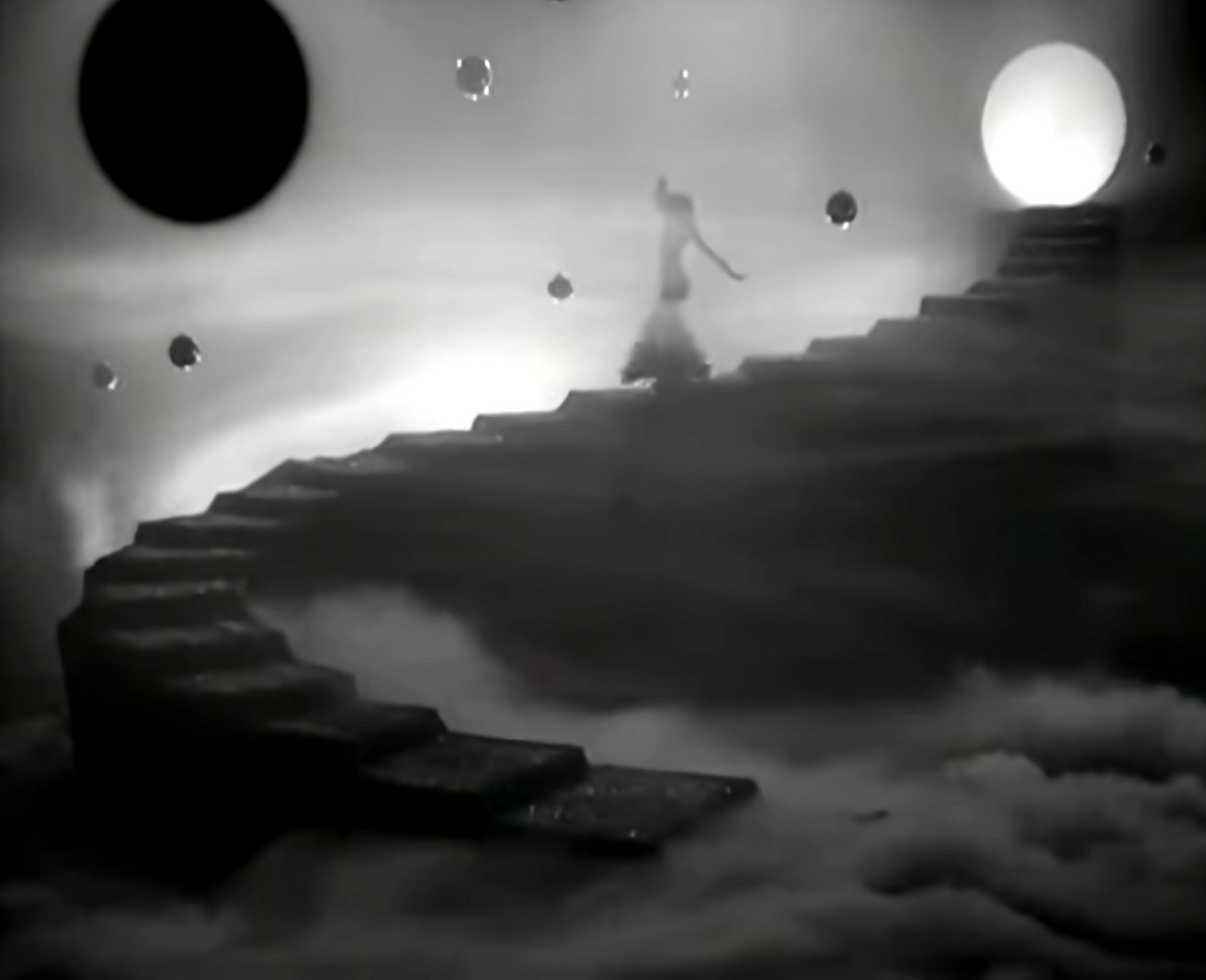
Meena climbs down the stairs in Hum aapki aankhon mein
It is interesting to compare the two women in Vijay’s life through the songs they are part of. In Jaane kya tune kahi, Gulab initially tries to draw Vijay towards her for practical reasons. She wants to earn money by seducing him. But as the story progresses, her feelings change completely.
Meena, on the other hand, has chosen a life of comfort and security by marrying an older, wealthy man. The contrast between the two women becomes even clearer through their songs. In Jaane kya tune kahi, Vijay follows Gulab in search of his lost poems. Later, in Aaj sajan mohe ang laga lo, it is Gulab who follows Vijay, not out of greed but out of affection and respect.
One small scene says more than any dialogue could. When a policeman asks Vijay who Gulab is, he immediately replies, “Yeh meri biwi hai.” For perhaps the first time in her life, someone introduces her with dignity instead of reducing her to her profession. That moment quietly changes the way she sees him.
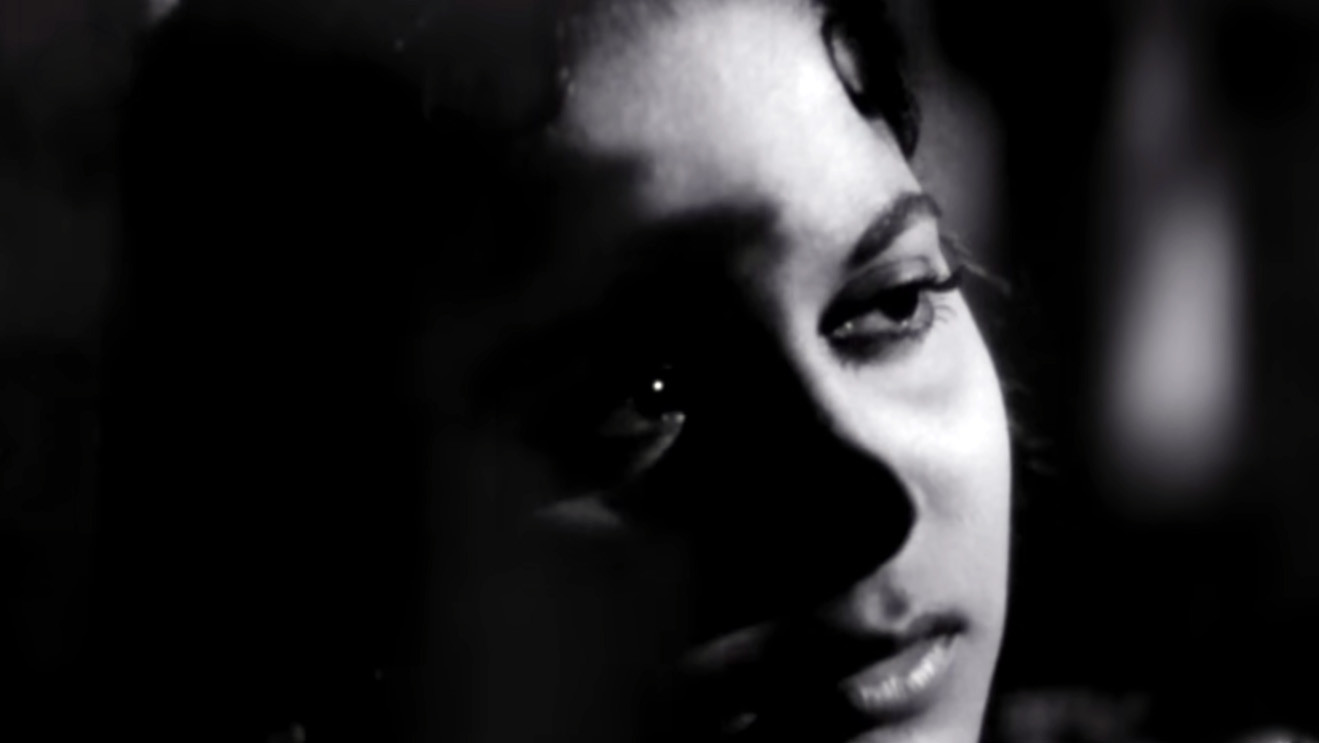
The moment that quietly changes Gulab
Another remarkable sequence comes just before Jaane woh kaise log the jinke. Guests at Ghosh Babu’s gathering are busy reciting poetry when Vijay begins reciting one of his own poems. Before he can continue, someone mocks him by remarking that even the servants in Ghosh Babu’s house write poetry. Another guest immediately responds that poetry is not the exclusive property of the rich and asks Vijay to continue. Encouraged by the conversation, Vijay resumes his recitation.
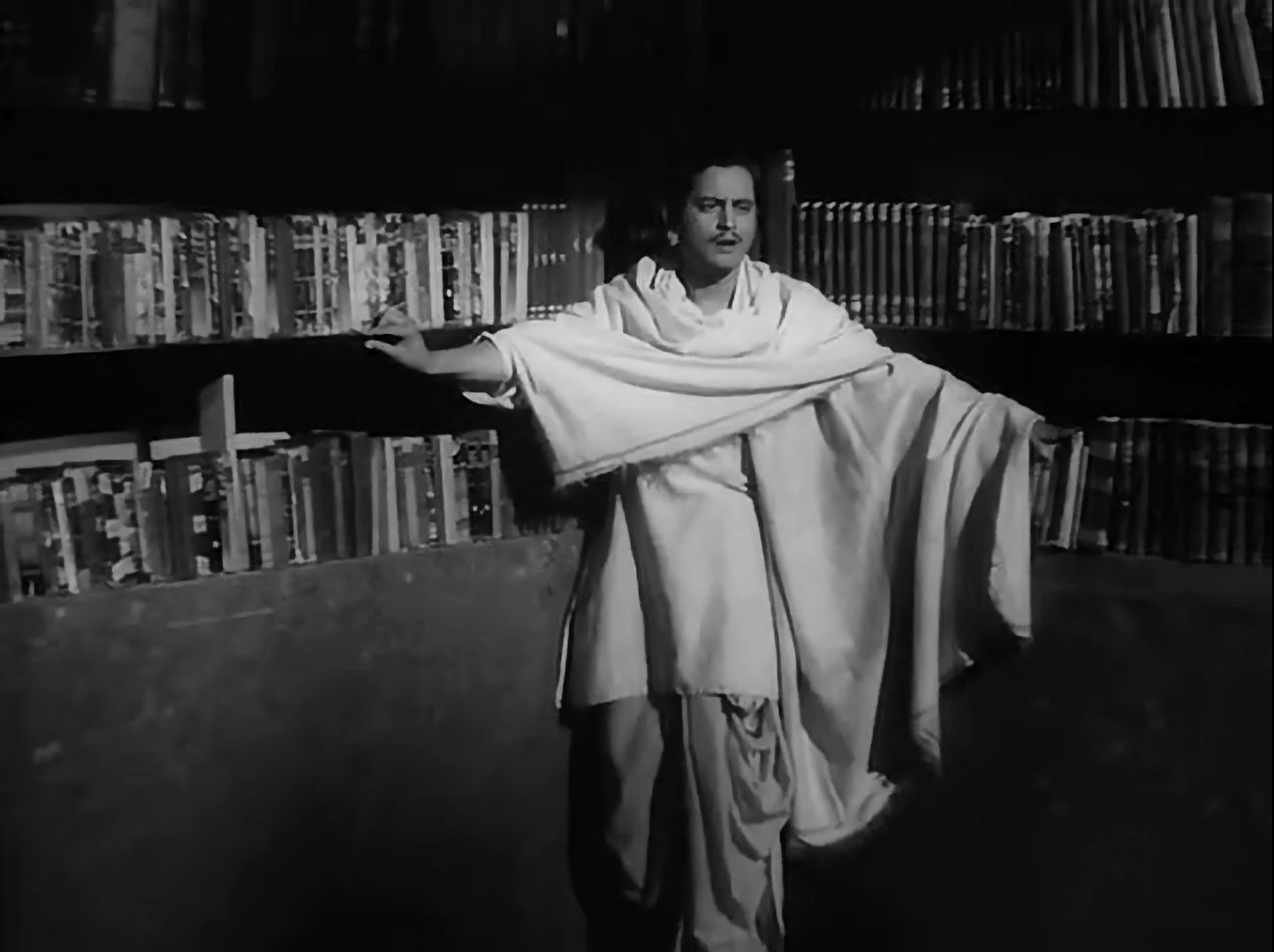
With arms stretched against the bookshelf, he clings to the only world that truly understands him
What follows is one of the film’s most powerful images. As the camera slowly pulls back, Guru Dutt stands with his arms stretched against the bookshelf, almost resembling the image of Christ on the cross. Surrounded by books, he appears to cling to the only world that truly understands him. It is a striking visual that reflects both his isolation and his unwavering faith in his poetry.
Guru Dutt also deserves immense credit for including a song like Jinhe naaz hai Hind par in a mainstream Hindi film. At just 31, he chose to confront the darker realities of post-Independence India instead of presenting an idealised picture of society. It was a courageous decision, especially at a time when commercial cinema rarely ventured into such territory.
Another detail I enjoyed discovering is the reference to Parchhaiyan, the title of Vijay’s book of poems published by Gulab. Parchhaiyan is the title of Sahir Ludhianvi’s second collection of poetry. Vijay noticed the book when the nurse was reading it by his bedside. Since Sahir wrote all the songs and poems for Pyaasa, the reference feels like a quiet tribute woven into the film itself.
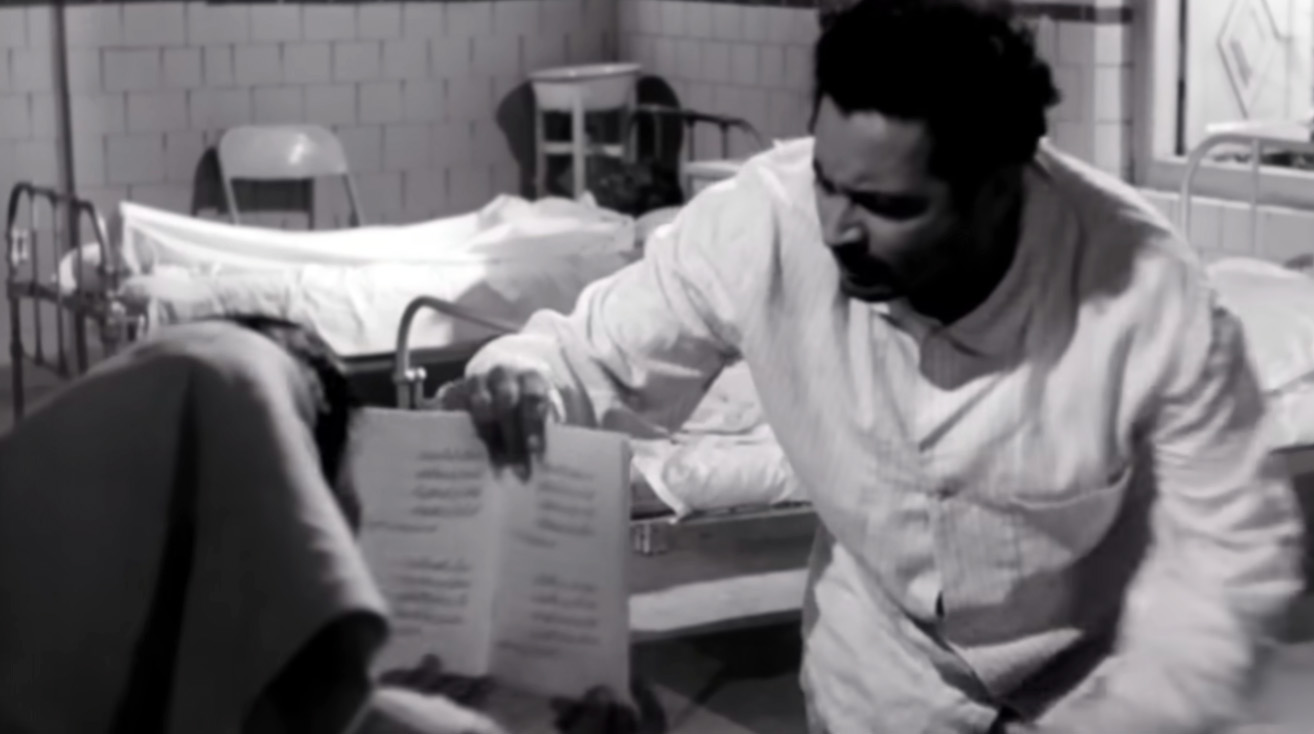
Vijay notices the book Parchhaiyan in the nurse’s hands
Perhaps that is what makes the climax of Pyaasa so unforgettable. It is not the achievement of one person alone, but the coming together of Guru Dutt’s direction, SD Burman’s music, Sahir Ludhianvi’s poetry, VK Murthy’s lighting, the performances of the actors and Mohammed Rafi, Hemant Kumar and Geeta Dutt’s voices. Each artist brings something extraordinary, and together they create a moment that continues to move audiences decades later.
________________________
Following the success of Pyaasa, Guru Dutt decided to make what was perhaps his most personal film. While Pyaasa reflected aspects of his professional struggles, Kaagaz Ke Phool went a step further. This time, the protagonist himself was a film director. Guru Dutt believed that the life of a director could only be told through the story of another director.
The film follows a man whose personal life is gradually falling apart even as he works on what is arguably the biggest project of his career, Devdas. Many of Guru Dutt’s friends, including S D Burman, advised him against revealing so much about the film industry. He chose to follow his instincts instead. Although Kaagaz Ke Phool failed at the box office when it was released, it is now regarded as one of Guru Dutt’s greatest achievements and a film far ahead of its time.
The film was also technically ambitious. Guru Dutt wanted to shoot it in CinemaScope, a format that had only recently begun gaining popularity. Since many theatres in India were not equipped to project CinemaScope films, special arrangements had to be made so that the film could still be screened properly. It reflected Guru Dutt’s willingness to embrace new technology despite the challenges involved.
Watching Kaagaz Ke Phool, I was reminded of Pyaasa more than once. In Pyaasa, Hum laakh chhupaye pyaar magar captures one of the happier moments in Vijay’s life. Similarly, in Kaagaz Ke Phool, San san woh chali hawa unfolds during one of the happiest phases in the relationship between Suresh Sinha (Guru Dutt) and Shanti (Waheeda Rehman). Although the situations are different, both songs preserve moments of joy that become even more poignant when viewed against the tragedy that follows.
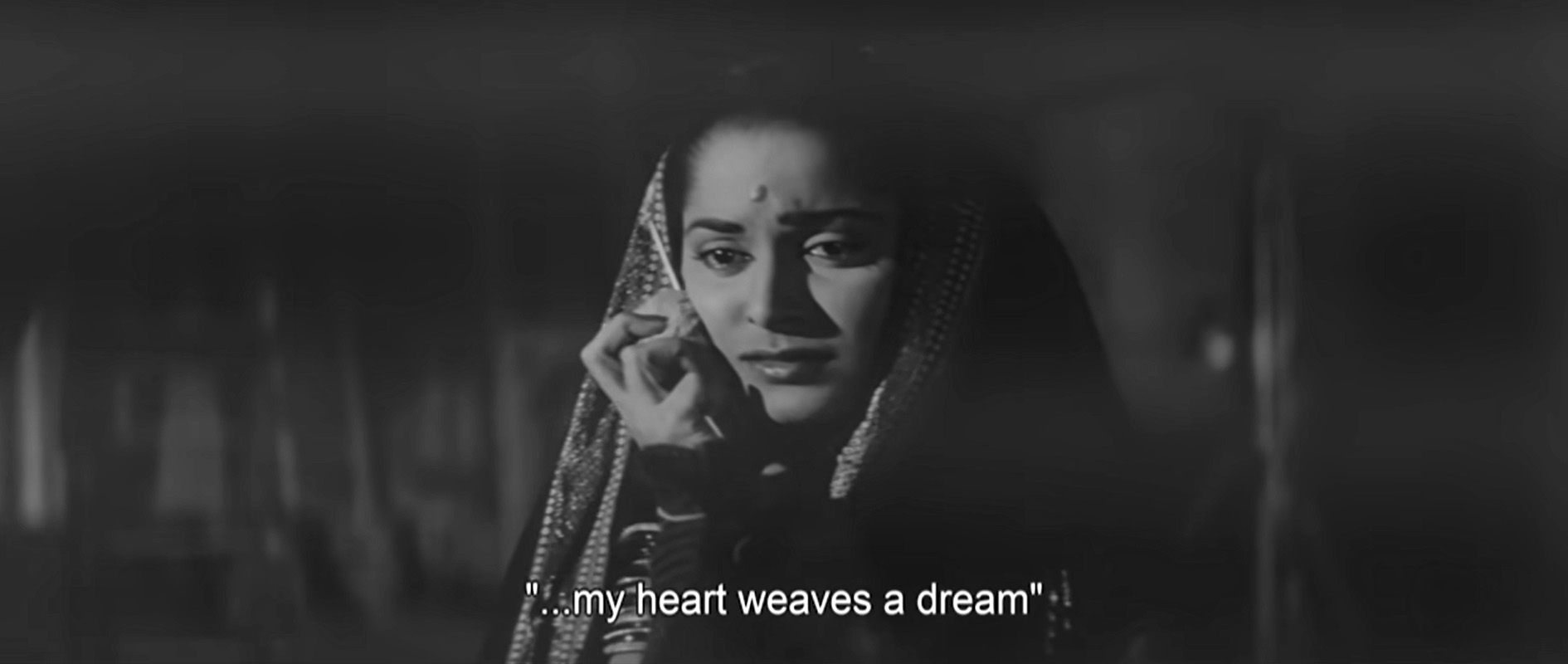
Shanti is quietly knitting a sweater
Just before Waqt ne kiya kya haseen sitam begins, Shanti is quietly knitting a sweater. Sinha asks her who it is for, and after their brief conversation, the song begins. It is such a simple transition, yet it makes the song feel even more intimate. A little later comes the line Bun rahe hain dil, khwaab dum ba dum. The image of knitting that appears just before the song almost seems to continue through the lyrics themselves.
The picturisation of Waqt ne kiya kya haseen sitam remains one of the most beautiful examples of Guru Dutt’s use of light. As the beam of light slowly brings the two characters together, they seem to step briefly into a world of hope and companionship. Yet, with the very next cut, they are once again surrounded by darkness. That contrast between light and shadow quietly reflects the fate of their relationship.
Like Mr. & Mrs. 55, Kaagaz Ke Phool also reflects Guru Dutt’s thoughts on marriage and relationships, though in a far more tragic way. Another example appears in Jisko kehte hain shaadi. While the song is light-hearted on the surface, it also offers a glimpse into Guru Dutt’s understanding of married life and the expectations that come with it.
Another delightful song is Ek do teen chaar aur paanch. Through its playful lyrics and picturisation, it quietly traces the growing bond between the two central characters. Even something as simple as counting numbers becomes part of their journey together.
One connection that came to my mind while watching the film was between Ud ja ud ja pyaase bhanware and Yeh mehlon, yeh takhton, yeh taajon ki duniya from Pyaasa. Although the two songs are very different in mood and situation, both carry a sense of longing to break free from the world around them. It is one of those echoes that make revisiting Guru Dutt’s films so rewarding.
________________________
Although Guru Dutt did not direct C.I.D., his influence can still be seen in many of its visual choices. Several moments reminded me of ideas that had already appeared in his earlier films.
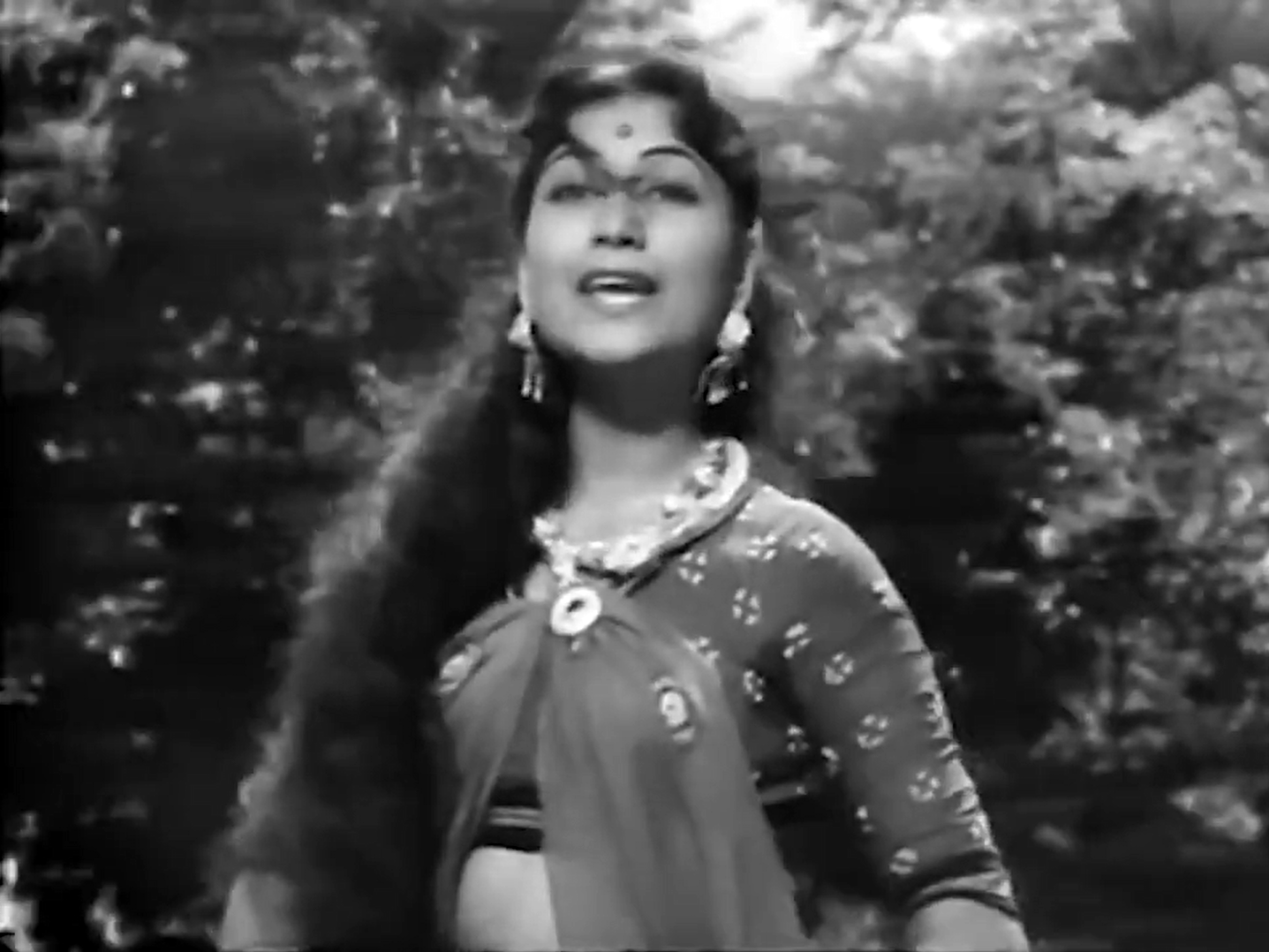
Boojh mera kya naam re uses an onlooker to observe the growing affection between the lead pair
One such example is Boojh mera kya naam re. Much like Kabhi aar kabhi paar from Aar-Paar, the song uses an onlooker to observe the growing affection between the lead pair. In Aar-Paar, Kumkum notices the playful romance between Guru Dutt and Shyama. Here, Meenu Mumtaz watches Dev Anand and Shakila teasing each other inside the car, almost becoming the audience’s representative once again.
The film also makes striking use of foreground and middle-ground compositions. Raj Khosla had worked closely with Guru Dutt, and many of the visual ideas he absorbed during that period find their way into C.I.D.
A delightful little detail appears just before Leke pehla pehla pyaar begins. As Dev Anand and Shakila climb aboard the bus, the tune of Mohabbat kar lo jee bhar lo from Aar-Paar can be heard playing in the background. It is a small touch, but one that creates an interesting connection between the two films.
The lyrics of Leke pehla pehla pyaar also echo an idea from Kabhi aar kabhi paar. In the earlier song, Kumkum sings, Baat mein gussa lekin, dil hi dil mein pyaar hai. Here, the female voice sings, Chali hothon pe bahaar, nikla gusse se bhi pyaar. Both songs play with the charming idea that affection often hides behind playful arguments.
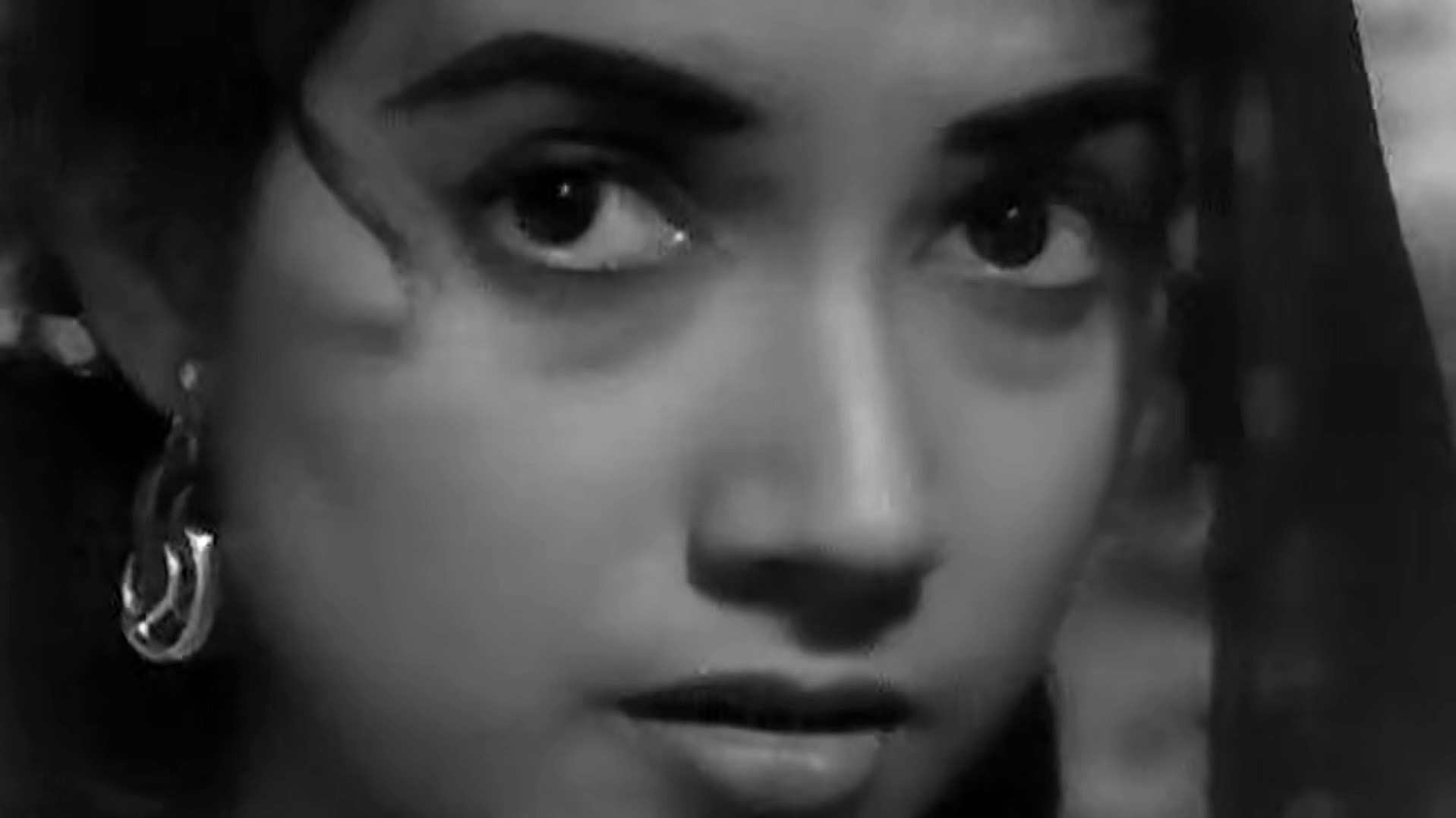
Aankhon hi aankhon mein uses closeup of the eyes
Guru Dutt often relied on close-ups of the eyes to communicate emotions more powerfully than dialogue could. A similar approach appears in Aankhon hi aankhon mein. The song first focuses on Dev Anand’s eyes before shifting to Shakila’s. At one point, Dev Anand’s face is framed between the branches of a tree, with the camera drawing attention to his eyes. A few moments later, Shakila occupies the same frame. The visual rhythm recalls Kabhi aar kabhi paar, where Guru Dutt similarly uses framing and composition to heighten the romantic mood.
________________________
One quality I deeply admire about Guru Dutt is the way he supported people he believed in. During the making of Chaudhvin Ka Chand, he invited M. Sadiq to direct the film at a time when the filmmaker was going through a difficult phase in his career. It was Guru Dutt’s way of helping a talented colleague find his footing again.
The title song, Chaudhvin ka chand ho, remains one of the film’s most beautifully picturised sequences. Once again, Guru Dutt’s fondness for stairs and pillars comes through effortlessly. In the low-angle shots, the staircase almost lifts the lovers towards the sky, making Waheeda Rehman appear every bit as radiant as the full moon she is compared to. The pillars quietly frame the scene, almost standing witness to the couple’s growing love.
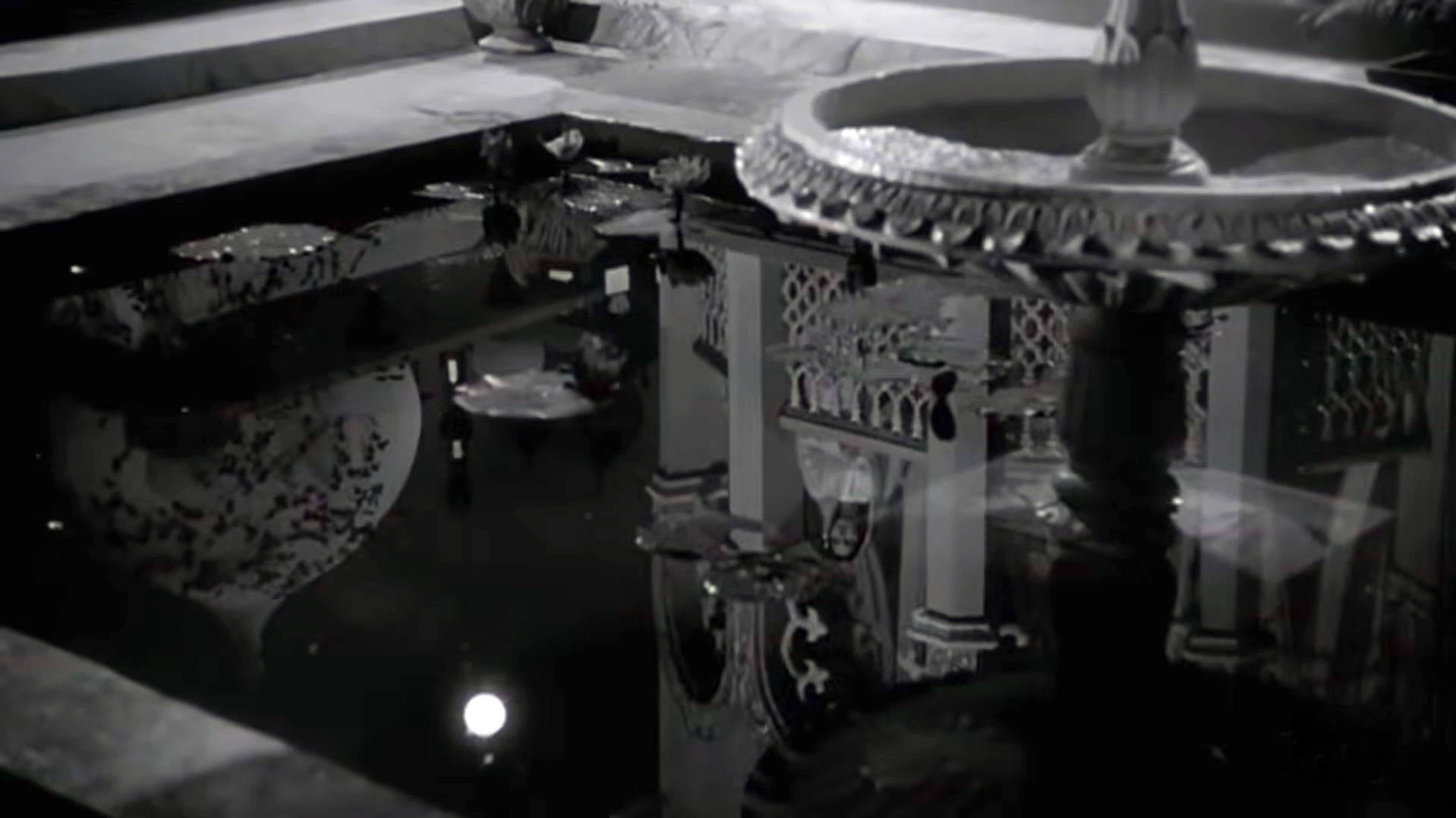
The reflection in water captures both the moon and Waheeda Rehman together
One of the most beautiful images in Chaudhvin ka chand ho comes through the reflection in the water. It captures both the moon and Waheeda Rehman together, beautifully echoing the way her beauty is compared to the full moon. The pillars surrounding her complete the frame, making it feel as though nature itself is quietly witnessing their blooming love.
Another memorable scene comes after the marriage, when the newlyweds meet for the first time. Guru Dutt presents the unveiling of Waheeda Rehman’s face in a wonderfully understated way. As she lifts her veil, the camera moves into a graceful close-up that captures both the beauty and the quiet shyness of a new bride.
________________________
By the time Guru Dutt reached Sahib Bibi Aur Ghulam, his command over visual storytelling had become even more refined. Almost every sequence contains a small detail that adds something meaningful to the narrative.
One such moment comes when Chhoti Bahu sings Koi door se aawaz de chale aao late at night while the rest of the haveli sleeps. Guru Dutt’s character turns in his sleep and slowly wakes up on hearing her voice. Outside, however, the guard at the gate dozes until Chhote Babu finally returns home in his horse carriage. The contrast is fascinating.
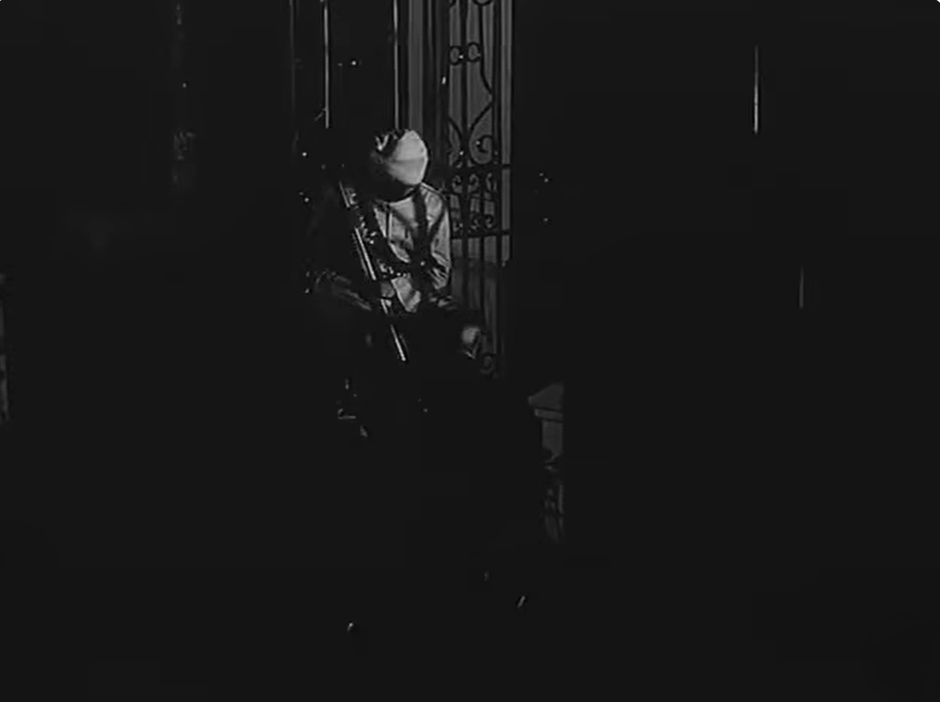
The guard at the gate dozes
For Guru Dutt’s character, Chhoti Bahu’s loneliness is something new and deeply moving. For the guard, it has become part of everyday life, something he has witnessed so often that it no longer surprises him.

Jaba (Waheeda Rehman) is introduced at the piano
Another small pattern runs through several Guru Dutt films. In Baazi, Geeta Bali is associated with a guitar. In C.I.D., Shakila is seen with an accordion. Here, in Sahib Bibi Aur Ghulam, Waheeda Rehman is introduced at the piano. It is a lovely visual thread connecting different films across Guru Dutt’s career.
Another beautifully composed scene appears when Bhootnath goes to apologise to Jaba. She walks forward and quietly switches off the light. The frame immediately changes, creating a striking balance between the foreground, middle ground and background. It is one of those moments where the composition itself tells part of the story.
One visual detail that particularly caught my attention appears just before Chhoti Bahu is introduced. The tiled floor resembles a chessboard, and when she asks Bhootnath to sit down, she places him right in the middle of it. The image almost suggests that the game has already begun. Without saying a word, the scene hints that she now knows exactly how to persuade him to help her. It is a small detail, but one that stayed with me long after the film ended.
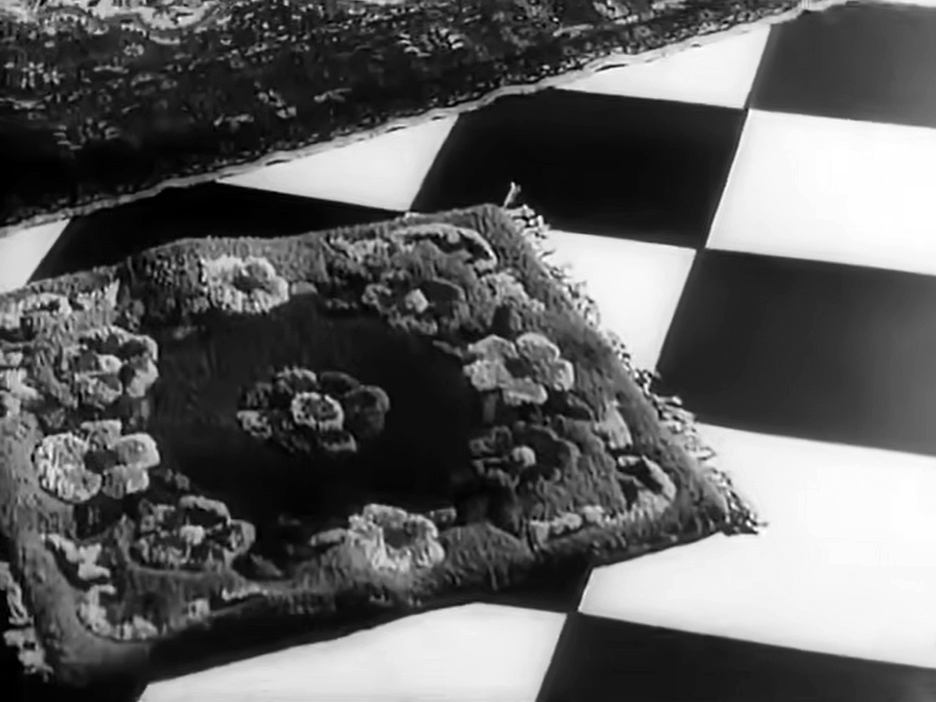
The tiled floor resembles a chessboard
The song Saqiya aaj mujhe neend nahin aayegi is presented almost entirely from Bhootnath’s point of view. Once again, VK Murthy’s lighting plays an important role. The main performer remains brightly lit while the dancers in the background stay in relative darkness, ensuring that the audience’s attention never shifts away from the centre of the frame.
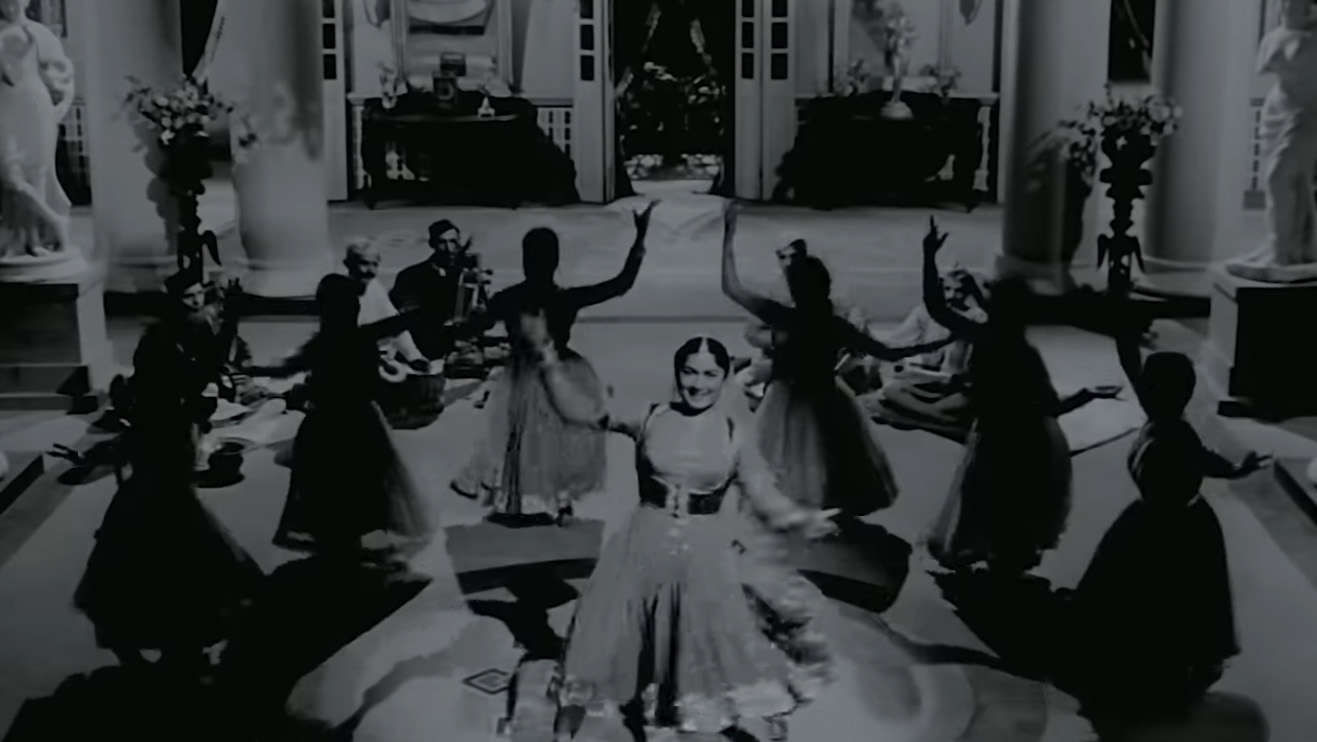
VK Murthy’s innovative lighting in Saqiya aaj mujhe neend nahin aayegi
A similarly thoughtful use of visual storytelling appears in Piya aiso jiya mein samaye gayo re. Throughout the song, the camera remains closely focused on Chhoti Bahu, allowing the audience to enter her dream world. Only at the very end does the camera shift towards the mirror. In that single moment, the dream gives way to reality. The mirror reminds her, and us, that the happiness she longs for exists only in her imagination.
Looking back at Guru Dutt’s films, what stays with me most is not just the stories he told, but the countless little details hidden within them. A staircase becomes more than a staircase. A beam of light changes the meaning of a scene. A pillar silently frames two people in love. A song carries forward the story instead of interrupting it. These details may seem small when viewed individually, but together they reveal the thought and care that went into every frame.
Watching Guru Dutt’s films has also reminded me that cinema is often about looking beyond the obvious. Sometimes, the most memorable moments are not the ones that immediately demand our attention, but the ones waiting quietly in the background. We probably discover them on a second or even a third viewing.
Perhaps that is why his films continue to fascinate audiences even today. Every revisit reveals something new, making the experience richer than the last. That, to me, is one of the greatest joys of watching Guru Dutt’s cinema.
________________________
Acknowledgment: Much of my understanding of Guru Dutt’s cinema has been shaped by the Basic Course in Appreciating Songs in Guru Dutt Films, conducted by Dr. Milind Damle, Course Director, FTII, Pune, in 2025. This article draws upon those learnings, along with my own observations while revisiting the maestro filmmaker’s films.
Baazi – ‘Thank You, Guru Dutt!’ Book Excerpt
Waqt Ne Kiya – A Song That Encapsulates a Tragedy
Of Incomplete Tales: My Friendship with Guru Dutt (Parts 1 & 2)
The Mesmerizing Moods of Jaane Kya Tune Kahi (Pyaasa)

Whether you are new or veteran, you are important. Please contribute with your articles on cinema, we are looking forward for an association. Send your writings to amitava@silhouette-magazine.com
 Waqt Ne Kiya – A Song That Encapsulates a Tragedy
 Of Incomplete Tales: My Friendship with Guru Dutt (Parts 3 & 4)
 Johnny Walker: Comedy’s Humane Face
 The Mesmerizing Moods of Jaane Kya Tune Kahi (Pyaasa)
 Baazi – ‘Thank You, Guru Dutt!’ Book Excerpt
 Of Incomplete Tales: My Friendship with Guru Dutt (Parts 1 & 2)
Silhouette Magazine publishes articles, reviews, critiques and interviews and other cinema-related works, artworks, photographs and other publishable material contributed by writers and critics as a friendly gesture. The opinions shared by the writers and critics are their personal opinion and does not reflect the opinion of Silhouette Magazine. Images on Silhouette Magazine are posted for the sole purpose of academic interest and to illuminate the text. The images and screen shots are the copyright of their original owners. Silhouette Magazine strives to provide attribution wherever possible. Images used in the posts have been procured from the contributors themselves, public forums, social networking sites, publicity releases, YouTube, Pixabay and Creative Commons. Please inform us if any of the images used here are copyrighted, we will pull those images down.









































































Every parent want their kid to be like them in their key skills. Only some succeed. For that the kid must have seen you doing it so consistently what you are good at. Antara and Anshula are one such mother daughter pair. It is a pleasure seeing her work after already being exumed by her mother expertise.
Thank you so much, Vineesh Sir, for your kind words. At the same time, many children also dream of becoming like their parents and making them proud in society.
Miti has nailed it! Her observations regarding ‘places of romance’ made me chuckle!
My thoughts about the photography:
Murthy sir’s photography doesn’t need introduction from me! But my comment goes beyond his work. Guru Dutt himself was good behind the camera. Better rather behind the camera than in front! IMHO.
Now that can be his inborn talent or also his training at Prabhat. Because in those times, Prabhat Studios was the pioneer in photography. The play with light and shadow on screen is a gift by Shantaram Bapu to Indian cinema. And he did all this when in Prabhat. So, figuratively speaking, Prabhat gave Guru Dutt बाळकडू or जनम घुट्टी of photography. He was a fast learner and a topper too! Basically, one strand of light is enough to lighten your path, if you are driven by passion.
Because we see influences of his learning in his earlier days at the Uday Shankar Cultural Centre in Almora too on his music, dance sequences, his outlook for his subject etc.
Look at the nails of Geeta Bali in ‘suno gajar kya gaaye’. They’re inspired by Balinese dance. Guru Dutt’s training in dance at Uday Shankar’s school can be seen here.
Life is all about learning and implementation of that learning. Guru Dutt lived it!
Thank you so much, Sharvari Mashi, for such a lovely comment; it truly means a lot.
Also, Guru Dutt and V. K. Murthy truly created pure magic whenever they came together behind the camera. Their shared vision, exceptional craftsmanship, and attention to every detail gave us timeless masterpieces that continue to inspire generations of filmmakers and cinema lovers. It’s always a joy to revisit and celebrate their incredible work.
This essay can only be the result of deep study and keen observations. I was absorbed by the read, especially when Anshula spoke about the physical descent of Dev Anand also mirroring his moral descent. I hadn’t noticed many things that are said here, especially the part about the diagetic part of Geeta Bali hearing the storm that reflects her own agitation. Must read story. Recommended read surely 👍
Thank you so much, Manek Sir, for such beautiful words. These words actually motivate me to research and work more on these things.
I was gobsmacked by Anshula’s article. For one so young, it is an absolutely brilliant piece and such a delight to read. What I liked most is that her observations come from watching the films closely, not simply from repeating familiar trivia.
Her points on the use of zulfein in Jaane Kya Tune Kahi and Hum Aapki Aankhon Mein, the knitting before Waqt Ne Kiya Kya Haseen Sitam, and the reference to Parchhaiyan show how sensitively she has looked at the songs. I have a personal connect with Parchhaiyan: my father, who was a huge Sahir fan, had a copy of the anthology.
I also enjoyed the way she has noticed Guru Dutt’s recurring visual motifs: the staircase, the play of light and shadow, and the way characters follow one another. She writes about these details simply and beautifully, showing how they add so much to the emotion of the films. However, there is one aspect on which I differ: the Christ-like image is far more distinct and evocative in the song Yeh Mehlon, Yeh Takhton, Yeh Taajon Ki Duniya than in Jaane Woh Kaise Log The.
For a young viewer to look at Guru Dutt’s cinema with such attention and affection is truly heartening. This is a thoughtful, refreshing and engaging piece which made me want to revisit the films once again. Congratulations to Anshula for bringing back those wonderful years when cinema was pure magic and Guru Dutt one of its most luminous wizards.
Thank you so much Ramendra Sir for such beautiful words. No doubt Guru Dutt’s films and work still inspires generations of filmmakers and cinema lovers. I added the Christ-like image of Guru Dutt from Jaane Woh Kaise Log The because I feel that most of the time it is over looked by people but carries equal importance and beauty within itself. As the one from Yeh Mehlon, Yeh Takhton, Yeh Taajon Ki Duniya.
Beautifully written, Anshula! I liked how you connected your learnings with your own observations. I also appreciate how you have gone beyond the story and highlighted the small details that often go unnoticed.
The best part is that the article is written in such a simple and engaging way that readers can enjoy it and learn something new, regardless of their familiarity with films.
Keep learning, implementing your insights and sharing your observations…
Thank you so much Madhu ma’am for such beautiful words. All the hard work behind the research and writing feels worth it when the people reading these get something to remember not only as information but also as a feeling from the writer.
Anshula, over the years I’ve read countless essays on Guru Dutt by eminent critics and devoted admirers. Most enrich our understanding of his cinema, but every now and then a piece comes along that makes us look again. Yours did exactly that.
Your observations on the recurring staircase imagery, the interplay of light and shadow, and the way seemingly ordinary moments quietly prepare the emotional landscape before a song begins reveal a remarkably perceptive eye. You are not merely interpreting Guru Dutt’s films; you are reading their visual grammar with rare sensitivity.
The finest criticism doesn’t tell us what to think; it teaches us how to see. Your essay does precisely that. I look forward to reading much more from you.
Almost every thing is written about Guru but every now and then something crops up when his works come up. Never realised that he showed your dreams on the screen. His movie Pyasa was listed as seventh best for 20th millennium. His name Vijay as writer surreptitiously became so popular that Amitabh Bacchan made it a household name. Well written Miti 👏
👌🏼 👏🏻👏🏻👏🏻
The title “Discovering Guru Dutt through his films” may sound like just one more of many attempts to extol his genius by ‘talking’ about those films and heap praise on his unique Film Making Technique.
Anshula has gone far deeper, and has obviously spent countless hours, not just watching all of his films through eyes of a Guru Dutt Fan but has also analysed and assessed many aspects in tremendous depth that a film Critic would not normally do.
I was struck by her intensity and the avid search for Dutt’s persona in her picking for mention, the short and ‘To the Point’ discussion between Majrooh and Dutt on ‘Grammer’ in the lines of “Sun Sun Sun Zalima” on ‘Humko’ and ‘Tumse’.
Dutt’s terse and summary dismissal of Majrooh’s complicated Grammer hit the Bull’s Eye. To me, citing that here is a typical pointer to her approach to this work.
Anshula has shown a very high sense of appreciation of the human mind in her deep analysis of what made Dutt tick.
She has taken each of his films, not in a routine chronological order of the films , but more like ‘Building up to the climax’ kind of writing. Her deep and comprehensive grasp of Guru Dutt’s mind and approach is extensively reflected in this commendable article. Kudos.
Miti, I’m coming late to this piece, but it was a joy to read. Like Raj Kapoor, Guru Dutt (and after him, Vijay Anand) also had an innate understanding of music as a narrative aid to move the plot forward. I’m impressed that you picked up on Dutt’s adaptation of the staircase motif from Awara‘s dream sequence. A small correction – a nitpick, really – Waheeda’s character in Pyaasa is Gulabo, not Gulab. 🙂
[I’d like to discuss this article with you later, if you don’t mind.]