Stay tuned to our new posts and updates!
Click to join us on WhatsApp


India’s power sector is undergoing a major transformation as renewable energy, smart grid technologies, and policy reforms drive the shift toward a cleaner and more sustainable electricity system. This blog explores the key pillars, challenges, and future roadmap shaping India’s green grid and long-term energy transition.
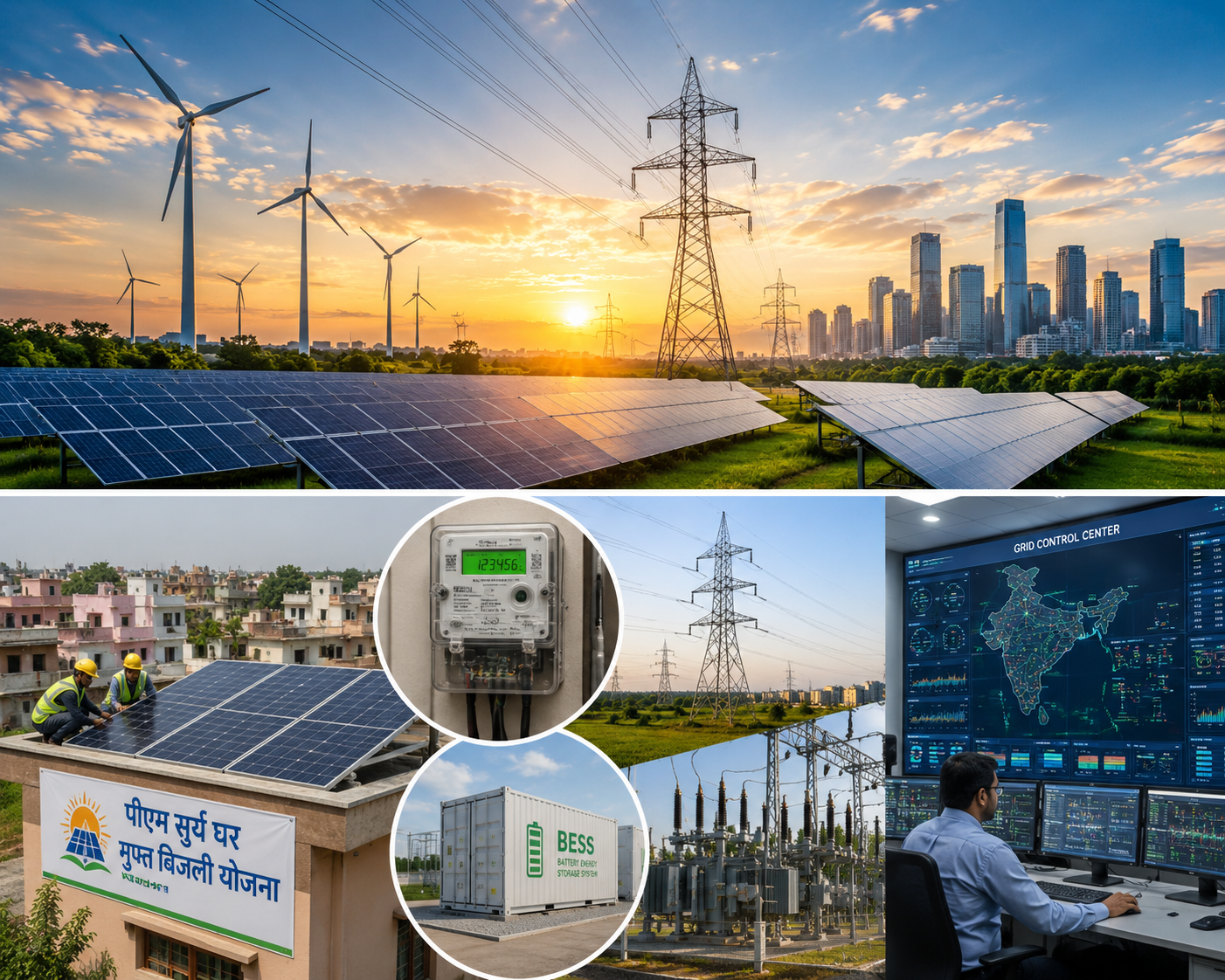
How India’s power sector is advancing sustainability through renewable energy and grid modernization. (AI Representation)
India’s power sector is at the cusp of witnessing one of the most ambitious energy transitions underway anywhere in the world. For decades, the country’s electricity system relied overwhelmingly on coal, which fuelled industrialisation and economic growth, but also made the power sector one of the largest contributors to greenhouse gas emissions and resultant air pollution. Today, that landscape is changing at an unprecedented pace compared to what many would have imagined a decade ago. This energy transition is reshaping India’s power sector by accelerating the adoption of sustainable energy solutions and supporting long-term climate change mitigation.
From sprawling solar parks in Rajasthan and Gujarat to wind farms along the coastline of Tamil Nadu and Karnataka, and smart meters steadily replacing conventional electromechanical meters in both urban and rural areas, India is gradually transitioning towards a more sustainable, environmentally conscious energy ecosystem. As India accelerates this transition, the journey presents both formidable challenges and unprecedented opportunities. This article explores what greening the grid entails, the progress made so far, the obstacles that remain, and the policy priorities that will determine the success of India’s clean energy future.
The phrase “greening the grid” extends far beyond simply adding solar panels and wind turbines to the electricity mix. It signifies a comprehensive transformation of the entire electricity ecosystem, beginning from generation and transmission to distribution and end-use consumption, to enable the seamless integration of renewable energy while preserving grid reliability, affordability, and resilience. At its core, greening the grid is about building a cleaner, smarter, and more flexible power system that reduces carbon emissions across every stage of the electricity value chain. This transformation is anchored mainly by four pillars.
Renewable Energy lies at the heart of the transition towards a low-carbon power sector. In particular, Solar & Wind Power have seen dramatic cost reductions in recent years, making them dominant sources of new electricity generation and a lucrative investment opportunity for the power sector stakeholders.
Intermittency is the greatest challenge that comes with renewable energy sources, particularly solar and wind, which do not produce power consistently throughout the day or year. Technologies such as Battery Energy Storage Systems (BESS), Pumped Hydro Storage (PHS), and emerging solid-state batteries play a pivotal role in bridging this gap by storing surplus electricity and releasing it when renewable generation declines. In doing so, they transform variable renewable energy into a reliable, round-the-clock source of power.
While renewable energy is crucial for achieving carbon neutrality, it is unlikely to be able to decarbonise all aspects of the power sector in the near future. For this reason, CCUS technologies are being considered as potential tools in reducing emissions from hard-to-abate sectors, such as coal-fired and natural gas plants.
CCUS technologies capture CO2 emissions from power plants and industrial sources, preventing them from entering the atmosphere. The captured CO2 is further stored underground or utilised in key industrial processes. CCUS is expected to play a supporting role in the decarbonisation of electricity sector by reducing emissions from conventional power generation while renewable energy capacity continues to expand.
Improving Energy efficiency in the power sector can significantly reduce the amount of energy required to produce electricity, thereby decreasing emissions. This can be achieved through more efficient power plants that operate at 100% CUF (Capacity Utilisation Factor), better infrastructure that reduces Transmission & Distribution losses, and improved energy codes and rating standards.
India’s clean energy transition has been driven not only by technological advances but also by an enabling policy architecture. Flagship initiatives such as PM Surya Ghar Muft Bijli Yojana are accelerating rooftop solar adoption, PM-KUSUM is promoting solar-powered agriculture, the National Green Hydrogen Mission is fostering decarbonisation in hard-to-abate sectors, and the Revamped Distribution Sector Scheme (RDSS) is strengthening distribution infrastructure through smart metering and network upgrades. Together, these initiatives are expanding renewable energy deployment while improving the efficiency and resilience of the power sector.
Complementing these policy measures are sustained efforts to modernise the grid.
Investments in Advanced Metering Infrastructure (AMI), real-time grid monitoring, and improved load-forecasting tools (SCADA) are helping grid operators manage the increasing complexity of a system with many more variable, distributed sources of power than it was originally designed for. Together, these interventions are gradually transforming India’s electricity network into a smarter, more flexible, and resilient system capable of supporting a green grid future.
While the transition to a carbon-neutral power sector presents numerous opportunities, it also faces severe challenges.
The transition to renewable energy is not without political and economic challenges. It often encounters resistance from entrenched fossil fuel interests and governments that remain dependent on coal, oil, or gas revenues. At the same time, lobbying by established energy industries, concerns over employment in traditional energy sectors, and the social and economic implications of a “just transition” can potentially slow the pace of reform. Addressing these challenges will require carefully designed policies that balance decarbonisation with economic stability and workforce reskilling.
Despite rapid advancements, several renewable energy-backed technologies such as long-duration energy storage and advanced grid management systems are still in nascent stages of development and will require sustained investment and innovation to become commercially viable. Moreover, financing large scale revenue energy projects can be challenging, particularly in developing countries where access to affordable capital is limited. Bridging these technological and financial gaps will be critical to sustaining the pace of the energy transition.
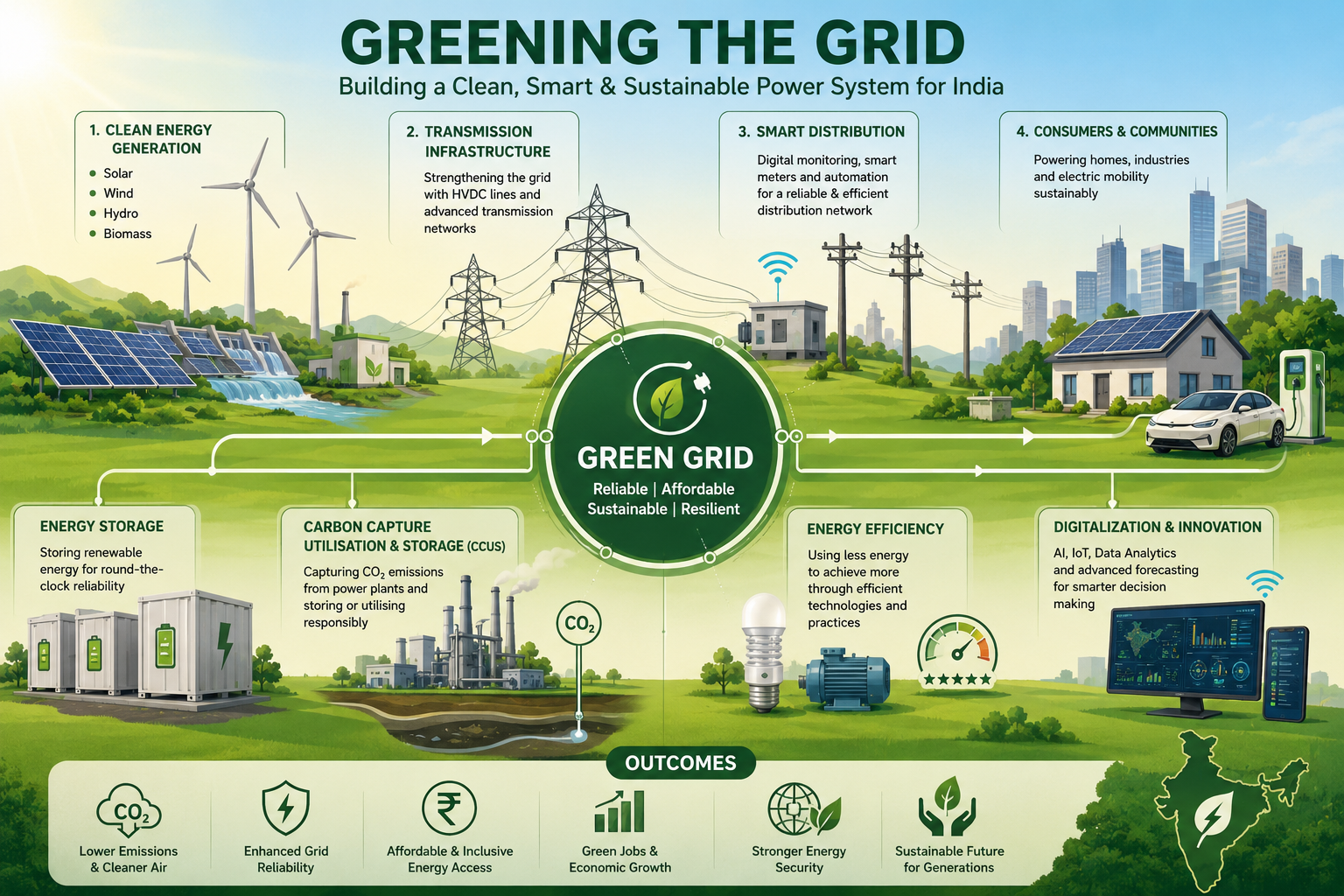
Key technologies driving a cleaner, smarter, and more resilient power grid. (AI Representation)
India’s clean energy transition is underpinned by ambitious national commitments and measurable progress on the ground. The “Panchamrit” Action plan announced by our Hon’ble Prime Minister Shri Narendra Modi at COP26, Glasgow, has provided a clear policy direction, with targets ranging from expanding non-fossil fuel capacity to reducing carbon intensity and achieving net-zero emissions by 2070.
This momentum is also reflected across key sectors; for instance, the Indian Railways, one of the country’s largest electricity consumers, is pursuing its own goal of becoming a net-zero carbon emitter by 2030 through complete electrification and greater reliance on renewable energy. Meanwhile, the rapid growth of solar and wind capacity, supported by continued investments in transmission infrastructure and energy storage, signals that India’s electricity system is steadily moving towards a cleaner, greener and more sustainable future and is touted to play a bigger role in the global quest to mitigate climate change while balancing twin objectives of economic development and environmental sustainability.
India’s power sector is undergoing one of the world’s most significant energy transitions, driven by renewable energy, grid modernization, energy storage, and policy reforms. While challenges remain, continued investments in sustainable energy, technological innovation, and climate change mitigation will be essential to building a resilient green grid and achieving the long-term decarbonisation of the electricity sector.
References
(1) Ministry of Power, Govt. of India (2023). National Electricity Plan, 2022-23
2) National Solar Mission. (2023).Progress Report on Solar Energy Deployment.
3) MNRE Annual Report (2022-23).
4) Press Information Bureau (PIB)
From Diyas to Solar Panels: India’s Journey of Lighting Up Homes
A Forgotten Civil Surgeon of India: Dr KD Ghose
Resilience Personified: Ramendra Kumar Crowned ‘Mr. India Cancer Warrior 2025’
Ba: The Forgotten Mother of the Nation
(The views expressed are personal)


Got a poem, story, musing or painting you would like to share with the world? Send your creative writings and expressions to editor@learningandcreativity.com
Learning and Creativity publishes articles, stories, poems, reviews, and other literary works, artworks, photographs and other publishable material contributed by writers, artists and photographers as a friendly gesture. The opinions shared by the writers, artists and photographers are their personal opinion and does not reflect the opinion of Learning and Creativity- emagazine. Images used in the posts (not including those from Learning and Creativity's own photo archives) have been procured from the contributors themselves, public forums, social networking sites, publicity releases, free photo sites such as Pixabay, Pexels, Morguefile, etc and Wikimedia Creative Commons. Please inform us if any of the images used here are copyrighted, we will pull those images down.