Stay tuned to our new posts and updates!
Click to join us on WhatsApp


If you’re a budding filmmaker who likes the idea of producing a short film, there are probably a lot of ideas buzzing around in your head. You need to think about actors, cameras, lights, and writing a script – there’s a lot to do when you’re making a movie!
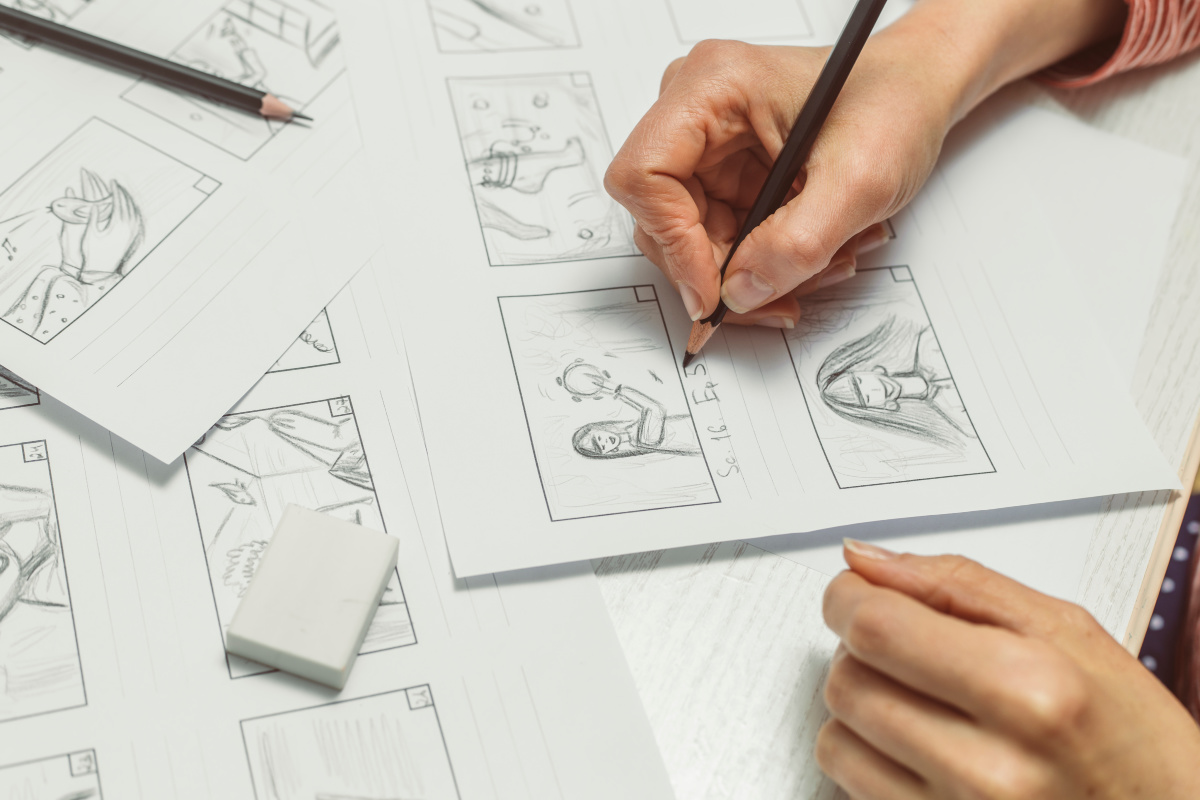
You know what makes creating films a lot easier? A storyboard.
Storyboards are a series of panels and writing where you can draw scenes and camera shots from your film, writing the dialogue and talking about the action on the lines next to each panel. It’s a bit like a comic book that helps to plan out your film with drawings and text.
So, how do you make your first storyboard?
First things first, you need a good storyboard template. There are many websites like Celtx when you can get a template for storyboards for free, filling in the blanks with your own pictures and words. A good storyboard template gives you plenty of space to draw pictures and write all the necessary information.
If you’ve already got a script, take a look at your writing and imagine how the words will translate to visual film. How do you see the very opening of the film? Is there a wide establishing shot of the setting? Perhaps there is an extreme close-up on a prop that’s very important to your main character.
Go through your script line by line and imagine how it’s going to be filmed. What camera angles are you going to use? Will the characters be walking? Are there certain props you need to focus on? What setting will the scenes be in and what does it say about the characters’ lives?
Get drawing on your storyboard! You don’t need to be Picasso – stick people are fine if you’re not a natural artist. Don’t worry about keeping all of the shots exactly like your drawings – it’s just good to get your visual ideas down on paper.
Once you draw the opening of your movie, shot by shot, you might decide that it doesn’t look quite right. If so, start again or make changes. It’s all a learning process!
When you’re writing next to your pictures, make sure you include any dialogue that the characters say to each other.
Do they speak to each other while both in the same camera shot or does it cut back-and-forth? Are they looking at each other as they speak, or looking at a landscape in the distance? Do they shout angrily or speak calmly? All these details matter.
Think about different camera angles and whether they suit your film. Are the angles wide or close-up? Do you want to show the scenery or hone in on the characters? Remember that different camera angles represent different themes and emotions.
For example, high-up angles make people look small or inferior, while low-down angles make people seem powerful and dominant. A shot with 2 characters in at the same time often implies that they’re stiff and distant, but showing them from 2 separate single shots makes them appear closer or more comfortable with each other.
It’s often forgotten about, but lighting is very important in film! When drawing your storyboard, consider how you want each scene to be lit. Is it dark and moody or bright and optimistic? Even on a shoestring budget, it’s possible to make cool and unique lighting setups for your film.
I hope you enjoyed this guide on how to storyboard a short film for beginners. Good luck and stay creative!

Got a poem, story, musing or painting you would like to share with the world? Send your creative writings and expressions to editor@learningandcreativity.com
Learning and Creativity publishes articles, stories, poems, reviews, and other literary works, artworks, photographs and other publishable material contributed by writers, artists and photographers as a friendly gesture. The opinions shared by the writers, artists and photographers are their personal opinion and does not reflect the opinion of Learning and Creativity- emagazine. Images used in the posts (not including those from Learning and Creativity's own photo archives) have been procured from the contributors themselves, public forums, social networking sites, publicity releases, free photo sites such as Pixabay, Pexels, Morguefile, etc and Wikimedia Creative Commons. Please inform us if any of the images used here are copyrighted, we will pull those images down.