Stay tuned to our new posts and updates!
Click to join us on WhatsApp


HQ Chowdhury reflects on how Chowringhee and its legendary author, Sankar, left an indelible mark on his life.
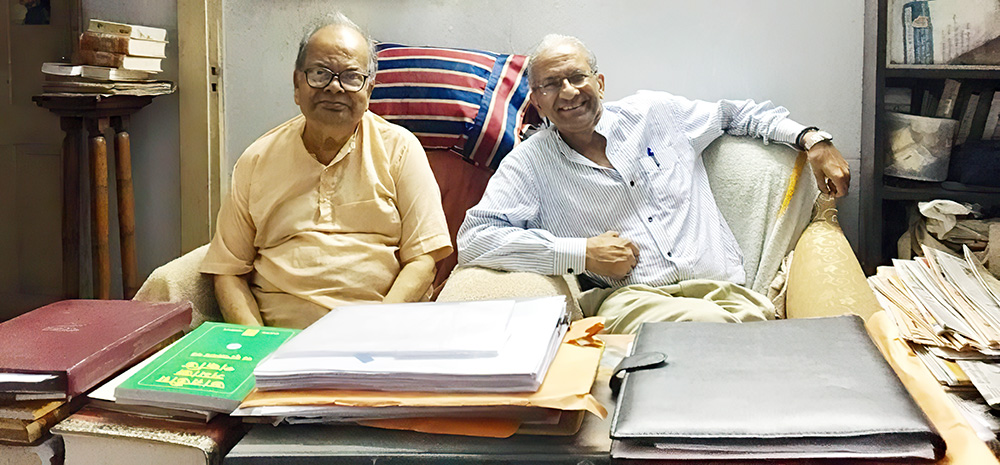
With Sankar (L)
It happened on a November afternoon flight. I was in the enclave where the seating arrangement had a 2 x 2 x 2 matrix, giving each passenger either an aisle seat or by the window. Drinks were served along with a generous amount of almonds. In the front row, I noticed an ex-minister of the present regime with his lady wife and daughter. As the plane was about to take off, the lady took a tissue paper, formed it into a cone and in it went all the almonds that were in her plate and her husband’s. Two twists, one at the bottom and the other on top, it was now a package which went straight into her ‘vanity’ bag. Uhhhhhhhh…I said to myself. In moments, it reminded me of a somewhat similar incident years back.
At a well-known hotel, the ever popular Dhaka’s ‘Kutchi Biryani’ dinner being over, the lady opposite me took a poly bag out of nowhere like the unforgettable PC Sorcar, filled it up with the leftovers and coolly left the place. It was for her pet, I was told. Uhhhhhhhhhhhh…were my reactions then too! Minutes later, I was in my old days.
My Japanese colleague, Koichi Tanaka, who got a Nobel Prize in Chemistry in 2006 shared this story of his mother: “She had this habit of saying, ‘What a waste!’ whenever there was an opportunity! Once, I was trying to solve a maths problem and binned some used sheets of paper. ‘What a waste’, sounded she. Her rationale was, I could have used a pencil and an eraser to re-use the discarded sheets. I accepted it. But a few days later, she was back with some more used sheets that I binned after multiple use. ‘Son, you could have stashed these in the cupboard to wipe your nose, in case of a cold.’” Curiosity now led me to ask my friend if his mother was born during World War II. ‘Yes, around 1940’ was Tanaka san’s (san means sahib in Japanese) reply.
That explained the issue. The lady had lived through Japan’s post-war trauma. After Japan was (atom) bombed out of the war, for years the country had a scarcity of everything and the people led their lives painstakingly, making sure there was no waste. So, weren’t the actions of the above two ladies justified, even though they were eyesores for me? After all, the almonds and Kutchi Biryanis would have been disposed of anyway.
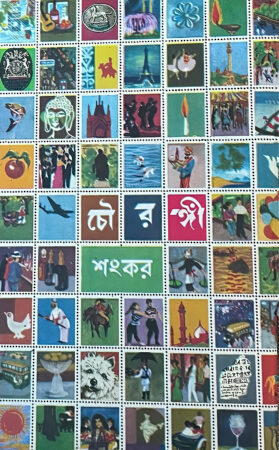
Shankar’s Chowringhee
As I turned around, my fellow passenger greeted me with a smile. He was reading a book of which I was very familiar. I remember my father carrying it during his trip to Tokyo in 1964. A few weeks later, I found my mother with the book and then my two elder sisters. It was now intriguing for an ‘English medium’ teenager who thought the best of books were only written by Ian Fleming, Carter Brown, James Hardly Chase, Harold Robbins and a few more. I flipped through some pages of the book and said to myself, ‘By Jove, this is groovy, saucy’. Sixty years now since its first print, the craving for the book still remains with the Bangalees.
Chowringhee or this ‘Golper Boi’ (fiction), is on record, the most widely read Indian book after Sarat Babu’s Devdas. Now in its 112th edition since 1962, the book has been translated into 16 languages, including English, French and Russian with the Italian version, pending print. On October 09, 2017, I met ‘the man’ behind the book – the soft-spoken Mani Shankar Mukherjee, popularly known as ‘Sankar’ thanks to my friend, Goutam Ghose, the celebrated film director, who made it happen.
Just to let readers know, ‘Sankar’-like Tanaka san’s mother led a life of immense austerity as he had to go through the turbulent days of World War II and the 1943 Bengal famine when he was a hawker, a typewriter cleaner to make ends meet. And on a personal note, I would like to add, he was also responsible for two major turning points in my life — ‘Introduction to contemporary Bengali literature’ and the ‘Development of a private science laboratory.’
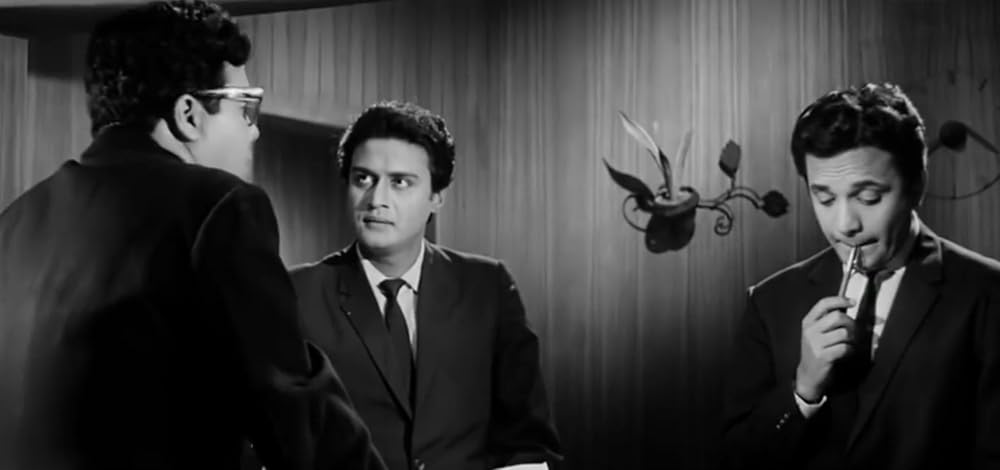
Shubhendu Chatterjee and Uttam Kumar in the Bengali film Chowringhee, adapted from the novel
Extracted from
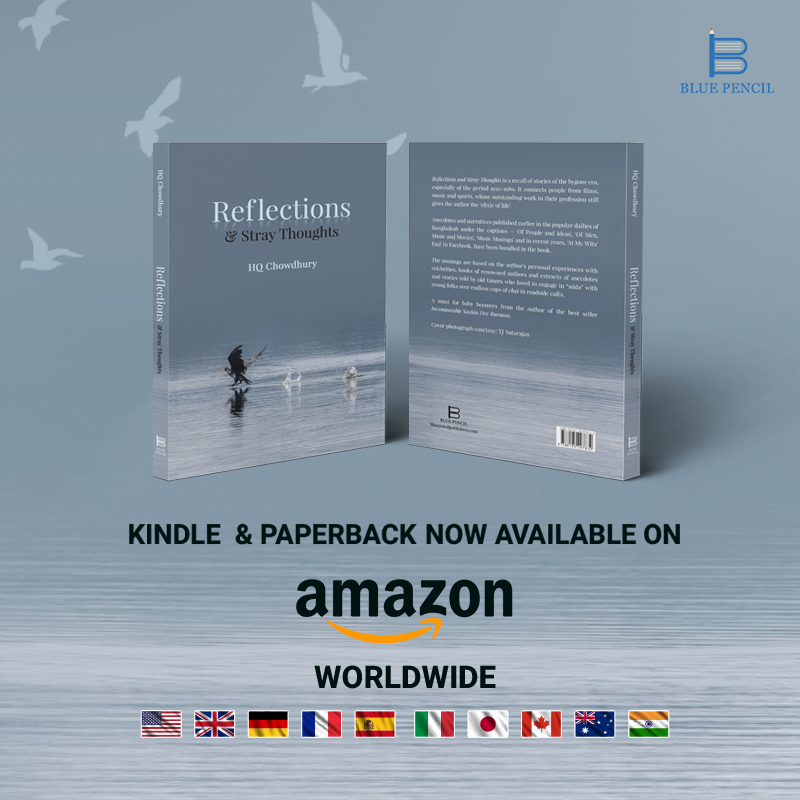
Reflections & Stray Thoughts
By HQ Chowdhury
Published by Blue Pencil 2021
ISBN: 978-81-952978-3-2
Pages: 167
Available on Amazon India | Amazon Worldwide | Blue Pencil | Virasat Art Publication, Kolkata
More Must Read in LnC
A Taxi Tête-à-Tête with Sankar
When Stray Thoughts Become Captivating
Rabindranath Tagore: The Poet Prophet
A Poetic Elegy: ‘Rabihara’ — Kazi Nazrul’s Ode to Tagore

Got a poem, story, musing or painting you would like to share with the world? Send your creative writings and expressions to editor@learningandcreativity.com
Learning and Creativity publishes articles, stories, poems, reviews, and other literary works, artworks, photographs and other publishable material contributed by writers, artists and photographers as a friendly gesture. The opinions shared by the writers, artists and photographers are their personal opinion and does not reflect the opinion of Learning and Creativity- emagazine. Images used in the posts (not including those from Learning and Creativity's own photo archives) have been procured from the contributors themselves, public forums, social networking sites, publicity releases, free photo sites such as Pixabay, Pexels, Morguefile, etc and Wikimedia Creative Commons. Please inform us if any of the images used here are copyrighted, we will pull those images down.







Sir, when we met initially not knowing anything about you I found you to be an interesting person. Now through your various posts I came to know your knowledge and passion.
Send me your address again I want to meet you. See you soon. Stay blessed.