Stay tuned to our new posts and updates!
Click to join us on WhatsApp


Silence also helps you to realize your strengths and weaknesses. It allows you to connect to your inner-self and bring self-improvement.
 Speech is silver but silence is gold – we must have heard this from our teachers, parents or grandparents. People, since ages, are practicing ‘maun vrata’ or the vow of silence to control their senses and attain a spiritual state of mind.
Silence and Spirituality are as interrelated as the speech and the civilization. While reading an article, ‘Silence is Blissful’, in the Speaking Tree, I got some real insight into the significance of silence.
Almost every religion including Hinduism, Jainism, Buddhism, Christian and Muslim recommend the ‘vow to silence’ or ‘Maun Vrata‘ as an effective technique for self realization or attaining the state of salvation.
In the 16th shaloka of 17th chapter of Bhagvad Geeta is written, “Speech that is non-offensive, truthful, pleasant, beneficial and is used for the regular study of scriptures is called austerity of word.”
According to the Bible, even fools are thought wise if they keep silent, and discerning if they hold their tongues. (17:28 psalm)
When you weigh your words by controlling your speech, you can prevent yourself from hurting others, which will help in establishing universal harmony and peace.
Swami Vivekananda has said, “The seeker’s silence is the loudest form of prayer.”
Practicing silence doesn’t mean keeping your mouth shut and being quiet. It’s a state of mind when can listen and appreciate the sounds of silence, seek the solace that silence streams and rejoice with silence.
Mother Teresa has said, “God is the friend of silence. See how nature – trees, flowers, grass—grows in silence; see the stars, the moon and the sun, how they move in silence… We need silence to be able to touch souls.”
Silence also helps you to realize your strengths and weaknesses. It allows you to connect to your inner-self and bring self-improvement.
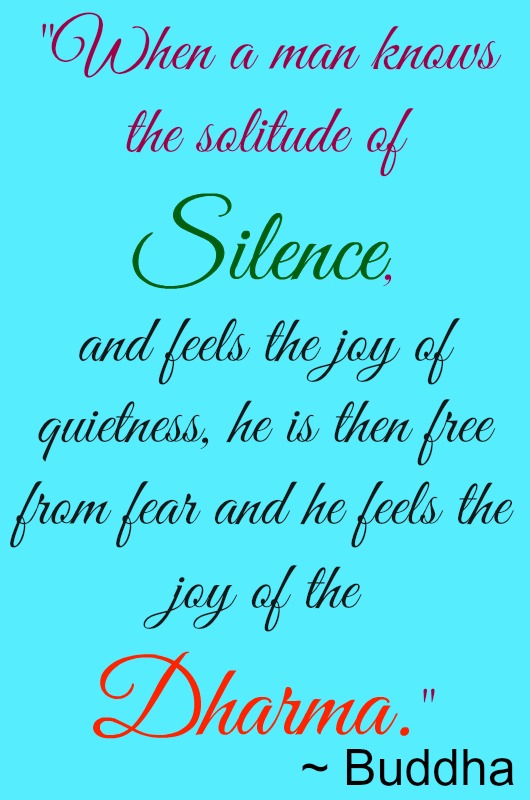
As Buddha says, “When a man knows the solitude of silence, and feels the joy of quietness, he is then free from fear and he feels the joy of the Dharma.”


Got a poem, story, musing or painting you would like to share with the world? Send your creative writings and expressions to editor@learningandcreativity.com
Learning and Creativity publishes articles, stories, poems, reviews, and other literary works, artworks, photographs and other publishable material contributed by writers, artists and photographers as a friendly gesture. The opinions shared by the writers, artists and photographers are their personal opinion and does not reflect the opinion of Learning and Creativity- emagazine. Images used in the posts (not including those from Learning and Creativity's own photo archives) have been procured from the contributors themselves, public forums, social networking sites, publicity releases, free photo sites such as Pixabay, Pexels, Morguefile, etc and Wikimedia Creative Commons. Please inform us if any of the images used here are copyrighted, we will pull those images down.