Stay tuned to our new posts and updates!
Click to join us on WhatsApp


Jagannath Culture offers an elevating and enchanting collage of philosophy, literature, wisdom and lots more. It covers the entire gamut from timeless tales to ageless credos. It provides to the young generation a glimpse of our rich and glorious heritage as well as paradigms of value.
To commemorate the Rath Yatra, Learning and Creativity presents 10 Tales of Lord Jagannath written by Ramendra Kumar.
Ramendra Kumar has been doing research on Jagannath Culture for more than a decade. What makes this book unique is that though these tales have been around for centuries in oral form, they have not found a place in any anthology for children in English. Besides, subtly interwoven in each of these stories is a value which is relevant even today. The anthology thus aims to enthrall as well as elevate by offering the children eternal tales with a contemporary sensibility.

The three images of Lord Jagannath, Goddess Subhadra and Lord Balabhadra represent the three colours of humankind
Jagannath Culture is not merely a religious belief, it is a way of life. Given below are a few nuggets which illustrate what makes Jagannath Culture an all encompassing consciousness:
Today when planet earth is being rocked by violence and intolerance the concept of Vasudhaiv Kutumbakam, if internalised, can provide the healing touch.
In modern India the joint family system is slowly breaking up and the nuclear family is becoming more and more the norm. This is leading to several social and psychological problems. By embracing the ethos of family values our society can once again usher in the era of brotherhood and peace for which it was famous.
Nature is fast becoming the first casualty in man’s quest for prosperity. Man should draw inspiration from the Jagannath Culture and go back to preserving and nurturing nature.
It is often found and modern society that today’s leaders rather than reaching out to the people prefer to be in their cocoons of arrogance and power. As a result they get alienated from those whom they are supposed to serve. Rath Yatra teaches us the importance of achieving a connect between different layers of society.
Tribals have long been marginalised by the society. However, the Jagannath Culture doesn’t believe in excluding anyone, rather it encourages the participation of one and all.
The Jagannath Culture crosses the boundaries of caste, creed, religion and race to embrace the entire humankind.


 Tales of Lord Jagannath: Experience of Goswami Tulsidas
 Tales of Lord Jagannath: Chera Panhara, The Royal Sweeper
 Tales of Lord Jagannath: The Legend of Bandhu Mohanty
 Tales of Lord Jagannath: Margashira Guruvar Puja
 Tales of Lord Jagannath: The Tale of Mania Das
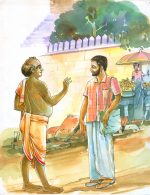 Tales of Lord Jagannath: The Account of Ganapati Bhatta
Got a poem, story, musing or painting you would like to share with the world? Send your creative writings and expressions to editor@learningandcreativity.com
Learning and Creativity publishes articles, stories, poems, reviews, and other literary works, artworks, photographs and other publishable material contributed by writers, artists and photographers as a friendly gesture. The opinions shared by the writers, artists and photographers are their personal opinion and does not reflect the opinion of Learning and Creativity- emagazine. Images used in the posts (not including those from Learning and Creativity's own photo archives) have been procured from the contributors themselves, public forums, social networking sites, publicity releases, free photo sites such as Pixabay, Pexels, Morguefile, etc and Wikimedia Creative Commons. Please inform us if any of the images used here are copyrighted, we will pull those images down.