Stay tuned to our new posts and updates! Click to join us on WhatsApp  & Telegram
  Channel
& Telegram Channel & Telegram Channel 




One Saturday in the early 1970s, Ameen Sayani drew Nabendu Ghosh into a conversation in ‘Saridon Ke Saathi’ radio programme. On the birth anniversary of the much-loved voice of Indian radio, Ameen Sayani, Ratnottama Sengupta translates the evocative throwback on Ghosh’s companions – Bimal Roy, Shailendra, Hrishikesh Mukherjee and Asit Sen.
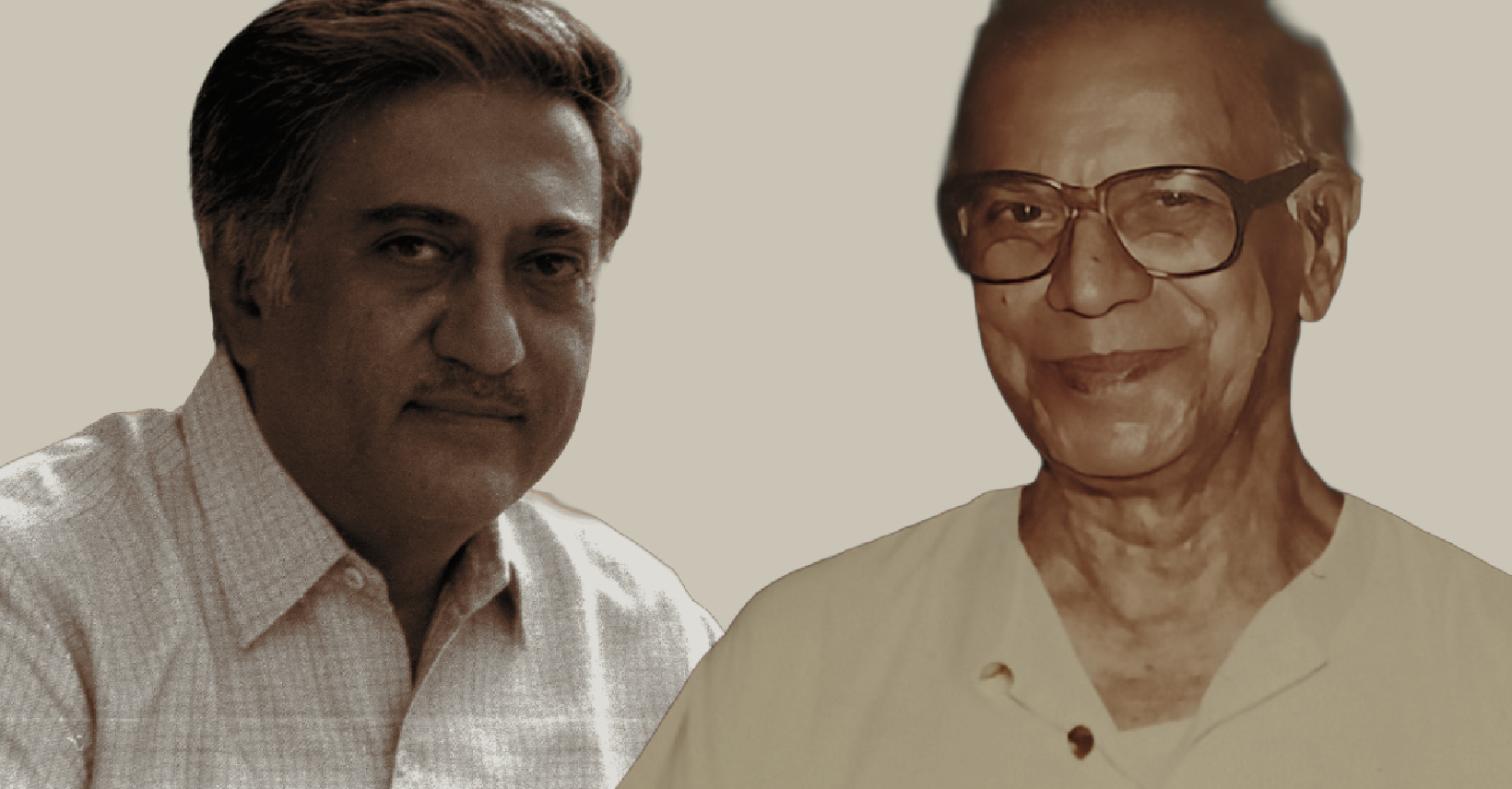
(L) Ameen Sayani and (R) Nabendu Ghosh
Ameen Sayani: So Nabendu Da, our listeners are very eager to know about your three companions.
Nabendu Ghosh: Ameen Sahab, a shloka in Sanskrit says, Aahu saptapadi bhava/ Walk the seven steps with me. A companion is a person who has walked seven steps with you, sharing happiness and sorrow, hardships and hurdles. These are the foundation of friendship.
Then, there are different compartments in a person’s life, and there are different co-passengers in each compartment.
AS: But Nabendu Da, I think the biggest compartment of your life is that of the film line. So please tell our listeners about your three film companions.
NG: The first place among the film companions is that of the great producer-director whose teachings, thoughts, loyalty and dedication have left a deep imprint on my heart. And that is Bimal Roy.

Bimal Roy (1903 – 1966)
AS: Okay, Bimal Roy! So Nabendu Da, when did you forge a bonding with Bimal Roy?
NG: Ameen Saab in 1944, when my second book Daak Diye Jaai/ The Clarion Call was published, I had to quit my government job because this novel was on the Quit India Movement. Since then, there was only one path for me: The pen’s labour.
I went to Kolkata from Patna to work as a writer. I earned a lot of fame. After reading my novels Bimal Roy was keen to meet me. We met for the first time in 1949. And in 1951, when he came to Bombay, I was with him.
AS: You mean, Bimal Da came to Bombay with his entire unit?
NG: No sir. Among those who came with him on the same train were myself, director-comedian Asit Sen, editor Hrishikesh Mukherjee, and actor-dialogue writer Paul Mahendra.
AS: Okay.
NG: Then came cameraman Kamal Bose and Nazir Hussain followed by art director Sudhendu Roy.
AS: Dada, all the people you have named are famous!
NG: Ameen Bhai, this is where Bimal Roy’s talent lies! He was a distinguished person as well as an institution. The people who walked in step with him, have all made a name for themselves. Just listen to the names: Salil Chowdhury, Mani Bhattacharya, Basu Bhattacharya, and now Gulzar.
AS: Hmmm!
NG: Ameen Sahab, Bimal Roy was an honest, kind-hearted, and sensitive person. And so sensitive that if someone used an abusive word in his presence, he would go red in the face!

Bimal Roy busy in work
AS: Really?!
NG: But when it came to his work, this soft-spoken sensitive man would be as staunch and unyielding as iron. He worked with great dedication and meticulousness. He would work till midnight, and the next morning he would be raring to go to work. He would be oblivious to all else – whether his wife or children were sick, or he was required to attend to some other engagement. Everything could wait if he had a shoot. He wouldn’t share his pain with anyone, nor would he pry into the woes of others.
AS: I see…
NG: Day and night he would think only about the film. Ameen Sahab, I have not come across another person as hard-working, and as dedicated to cinema as Bimal Roy. Even today, when I think of him, this song effortlessly comes to my lips…
O jaanewale ho sake to laut ke aana/ O dear departed one, come back if you can…
O jaanewale ho sake to laut ke aana (Bandini, 1963) SD Burman / Shailendra / Mukesh
**
NG: My second saathi is Shailendra.
AS: Shailendra!
NG: Yes, Shailendra. We were both attached to IPTA, the Indian People’s Theatre Association. So we had the same mindset. My bonding with Shailendra came from our shared philosophy. We were linked by our ways of thinking. We had the same perspective, the same view of humanism. We thought along the same lines about life. The bonding was reinforced when Shailendra joined Bimalda’s unit as lyricist.
One day Shailendra came to me and said, “Dada I’m producing a film, and you will write the screenplay for it.”
“What’s the story?” I asked him.
“Teesri Kasam,” he replied.
“Arre wah! A story about a bullock cart driver,” I responded.
“Why Dada? Isn’t the life of a gaariwan worth projecting on the screen? Isn’t their love worthy of a lyric? We progressive artistes – poets, writers, singers – we lionise life regardless of the class the person belongs to.”
“Well said!” I reached out for his hand and said, “This is one screenplay I will certainly write.”

Raj Kapoor and Shailendra at the Bina Police Station (Pic: Dinesh Shailendra)
AS: Magnificent! But Nabenduda I’ve heard that he had to face great difficulty in completing the film?
NG: Ameen Bhai the difficulties Shailendra had to face is a story in itself. But what’s most noteworthy is that Shailendra did not lose courage and give up. He was neck deep in loan. He had to flee from usurers. His friends started advising him to change the ending of the movie. But he did not budge from the resolution. Even in a drunken state he refused to listen to any suggestion to unite the nautch girl and the gaariwan. “I’d rather die than compromise for commercial reasons,” he kept asserting.
Unfortunately he had to go before his time. I visited him a day before he breathed his last, and guess what he said to me? “Dada I’ve decided that the next film I make will be on the life of tribals.” I was speechless. This man was dreaming way beyond Teesri Kasam! You can count on your fingers how many have this determination, this courage!! With this single creation Shailendra has become an immortal filmmaker.
AS: Bahut khoob Dada! Terrific. Which song would you like to play in his remembrance?
NG: In his memory, please play the song he wrote for Sachin (Dev Burman) Da in Guide – Wahan kaun hai tera, musafir…
Wahaan kaun hai tera (Guide, 1965) SD Burman / Shailendra / SD Burman
**
AS: Sisters and brothers, today you are meeting the renowned story and screenplay writer of the film world, Nabendu Ghosh. So now Dada, it is the turn of your third Saathi…
NG: My third saathi is the Disciple no 1 of my first saathi.
AS: And who would that be?
Hrishikesh Mukherjee at work
NG: Hrishikesh Mukherjee.
AS: Achha!
NG: We travelled together, in the same compartment, from Kolkata to Bombay. And in Bombay we stayed together in the same room at Van Vihar. We would spread out our beds on the floor at night. In fact the beds were spread out 24X7, and we would sweep only the floor between the beds. It was like people in the 3rd class waiting room of a railway station!
AS: Oh! Achha..
NG: The whole day we would chat and talk and discuss, and when everyone went off to sleep for the night, I would settle down to write.
AS: Hmm…

Asit Sen, Nabendu Ghosh and Nazir Hussain (Pic: Rare photo from family collections of Ratnottama Sengupta)
NG: Asit Sen was also in the same room. I would stay up to write but Asit would hit the bed and start snoring. Hrishi couldn’t sleep because of this!
One day I settled down to write after Asit had gone to bed and started snoring. Hrishi could not bear it: he went to the veranda and started pacing! When the snoring reached a crescendo, he walked up to Asit, lowered his voice and chanted in his ears: Mosh pora kha, mosh pora kha, mosh pora kha! I said, “What’s on Hrishi?” He said, “It’s a mantra to stymie the snoring of a sleeping giant!”
AS: But Dada, what did Hrishida say in his ears?
NG: Better not ask Ameen Bhai! But if you must know: It says, ‘Chew on charred buffalo!’
AS: Achha!
NG: And, as if by some magic, Asit stopped snoring! Hrishi looked at me victoriously and smiled, as if to say, “Look! I’ve worked a wonder!” Just then Asit started snoring even more loudly. It was so loud that he himself woke up and said, “Who’s it? Who’s snoring??” Hrishi couldn’t stop himself from pestering Asit, “Motumal! You’re startled by your own snoring!”

Helen in vintage Saridon ad – the brand behind AIR’s first sponsored programme Saridon Ke Sathi (Pic: Movies N Memories on X.com)
AS: This is such a funny anecdote Dada!
NG: Those were the days! Despite the fact that, when we finished lunch we would worry about where to find dinner. And once we finished dinner, we would wonder what we should do for the next day’s meals.
Ameen Sahab, Hrishi was the exact opposite of Bimalda. If our guru was silent thunder, Hrishi spoke incessantly. When Bimalda was deep in thought he would puff on his cigarette. And when Hrishi starts thinking he tugs at his tuft. Small wonder that he has lost almost all the tresses that were his crowning glory when he set out from Kolkata. And if he completes another ten films he might be the proud owner of a shining pate Ameen Saab!
AS: You mean Hrishida makes films at the expense of his hair?!
NG: Ameen Bhai, Hrishi’s dedication to cinema is no less than Bimalda’s. It would do his guru proud. Indeed, Bimalda at least had his meals. Hrishi forgets to do that when he is shooting a film. Well, there are quite a few carrying forward Bimalda’s tradition. Hrishi heads that list. Most recently his film Namak Haram has released. And Hrishi has proven once again that you can make a romantic film without a single scene of physical intimacy.
My heart swells with pride when I see Hrishi’s success – because Hrishi is my friend, my saathi.
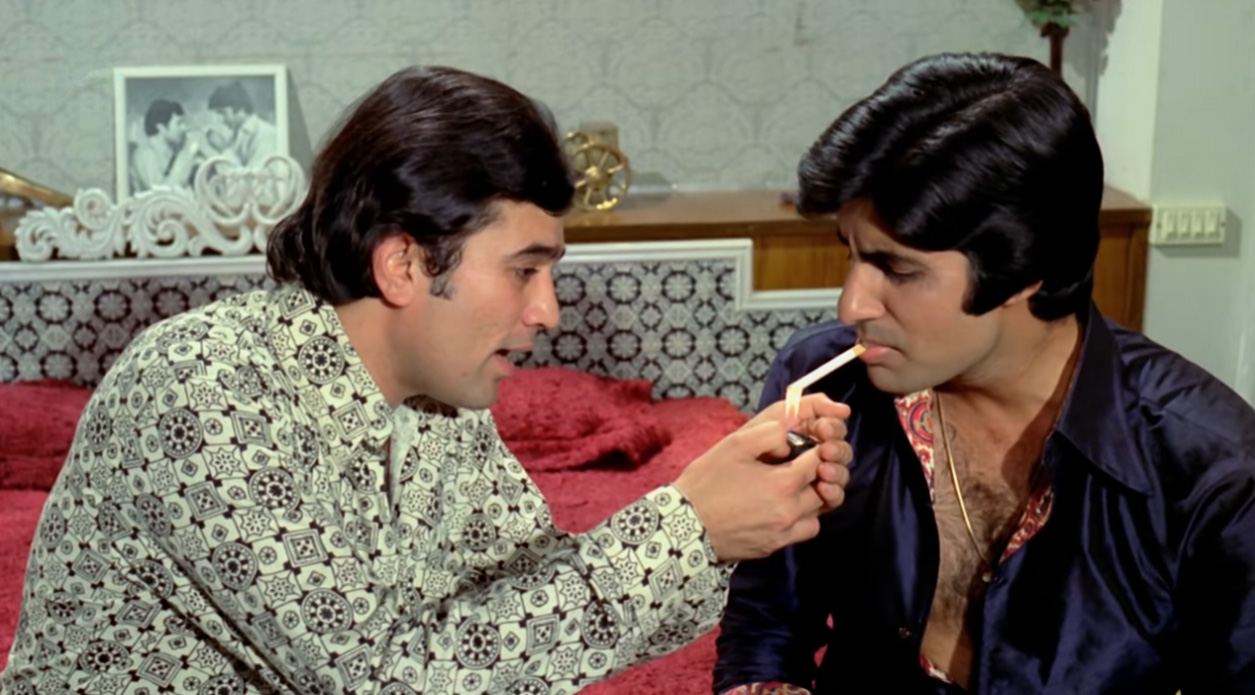
Rajesh Khanna and Amitabh Bachchan in Namak Haram
Translated from Hindi by Ratnottama Sengupta. Pictures are courtesy the author.
Ameen Sayani photo courtesy Rajil Sayani
More Must Read in Silhouette
The Making of Maa: Bimal Roy’s Debut in Bombay
Asit Sen: The Director Who Became an Unforgettable Comedian
Shailendra: When the Poet is a Lyricist
Hrishikesh Mukherjee: In a Humane Genre of His Own

Whether you are new or veteran, you are important. Please contribute with your articles on cinema, we are looking forward for an association. Send your writings to amitava@silhouette-magazine.com

Silhouette Magazine publishes articles, reviews, critiques and interviews and other cinema-related works, artworks, photographs and other publishable material contributed by writers and critics as a friendly gesture. The opinions shared by the writers and critics are their personal opinion and does not reflect the opinion of Silhouette Magazine. Images on Silhouette Magazine are posted for the sole purpose of academic interest and to illuminate the text. The images and screen shots are the copyright of their original owners. Silhouette Magazine strives to provide attribution wherever possible. Images used in the posts have been procured from the contributors themselves, public forums, social networking sites, publicity releases, YouTube, Pixabay and Creative Commons. Please inform us if any of the images used here are copyrighted, we will pull those images down.